Product Description
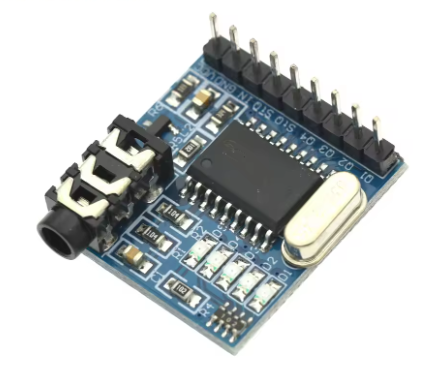
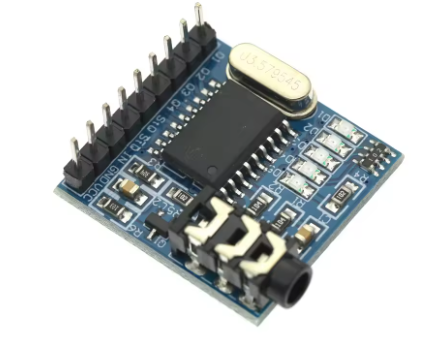
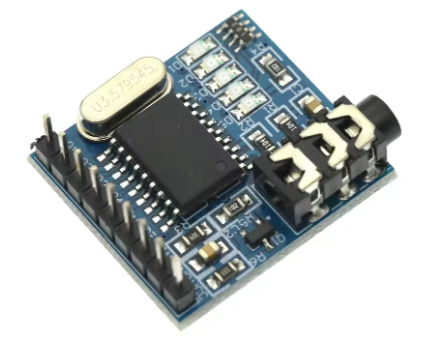
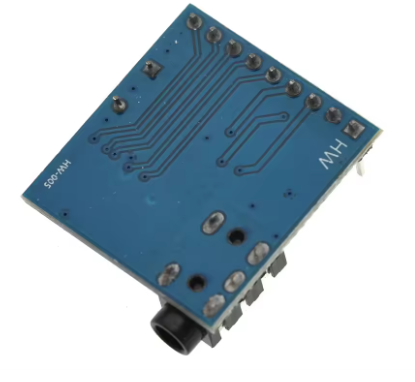
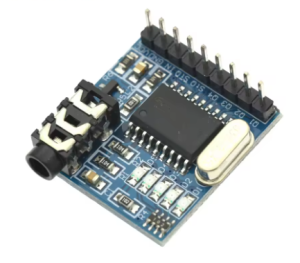
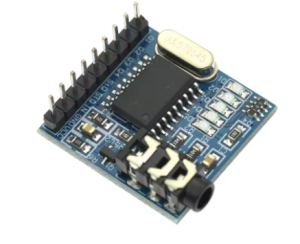
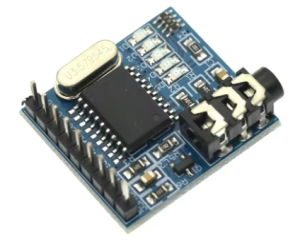
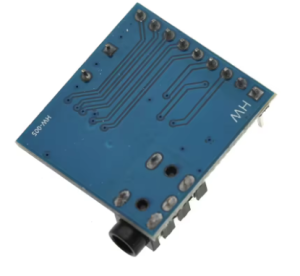
The XD-61 MT8870 DTMF Decoder Module is a high-precision audio processing board designed to decode Dual-Tone Multi-Frequency (DTMF) signals into digital data. Based on the industry-standard MT8870 monolithic filter/decoder, this module is the go-to solution for interpreting telephone touch-tone signals.
Whether you are building a remote-controlled home automation system via a phone line, a mobile-triggered security gate, or an automated IVR (Interactive Voice Response) prototype, the XD-61 provides a clean, stable interface. It features onboard LED indicators that provide real-time visual confirmation of the decoded digit (0–9, *, #, A, B, C, D). With its standard 2.54mm pin headers, it integrates seamlessly with Arduino, Raspberry Pi, and industrial PLC systems, allowing your hardware to “listen” and react to phone keypad inputs.
Key Features
- Complete DTMF Interpretation: Decodes all 16 standard DTMF tones (digits 0–9 and symbols *, #, A, B, C, D).
- Onboard Visual Feedback: Features five LEDs to indicate the binary state of the decoded output and a “Data Valid” (DV) status LED.
- Integrated Audio Input: Includes a standard 3.5mm audio jack for direct connection to phones, radios, or audio players.
- Low Power Design: Optimized for low power consumption, making it ideal for battery-operated remote monitoring stations.
- High Sensitivity: Built-in differential input amplifier and internal band-split filters ensure accurate decoding even with weak signals.
- Digital Output: Provides a 4-bit binary output (Q1–Q4) that maps directly to the decoded tone, simplifying microcontroller coding.