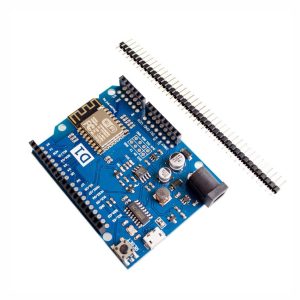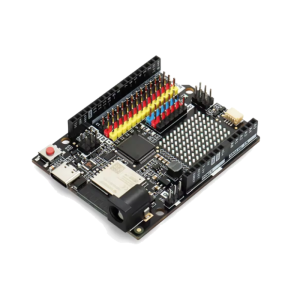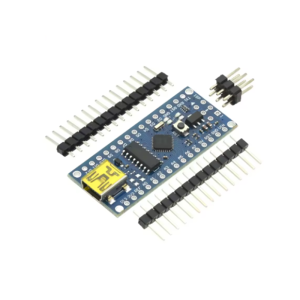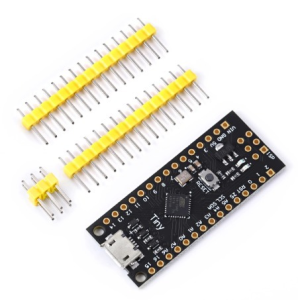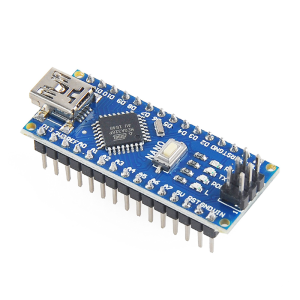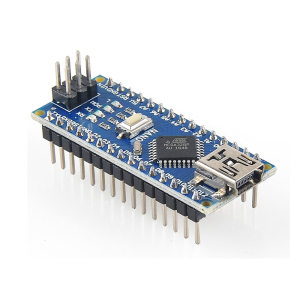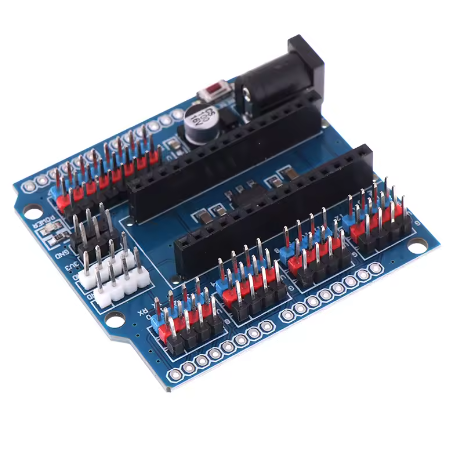
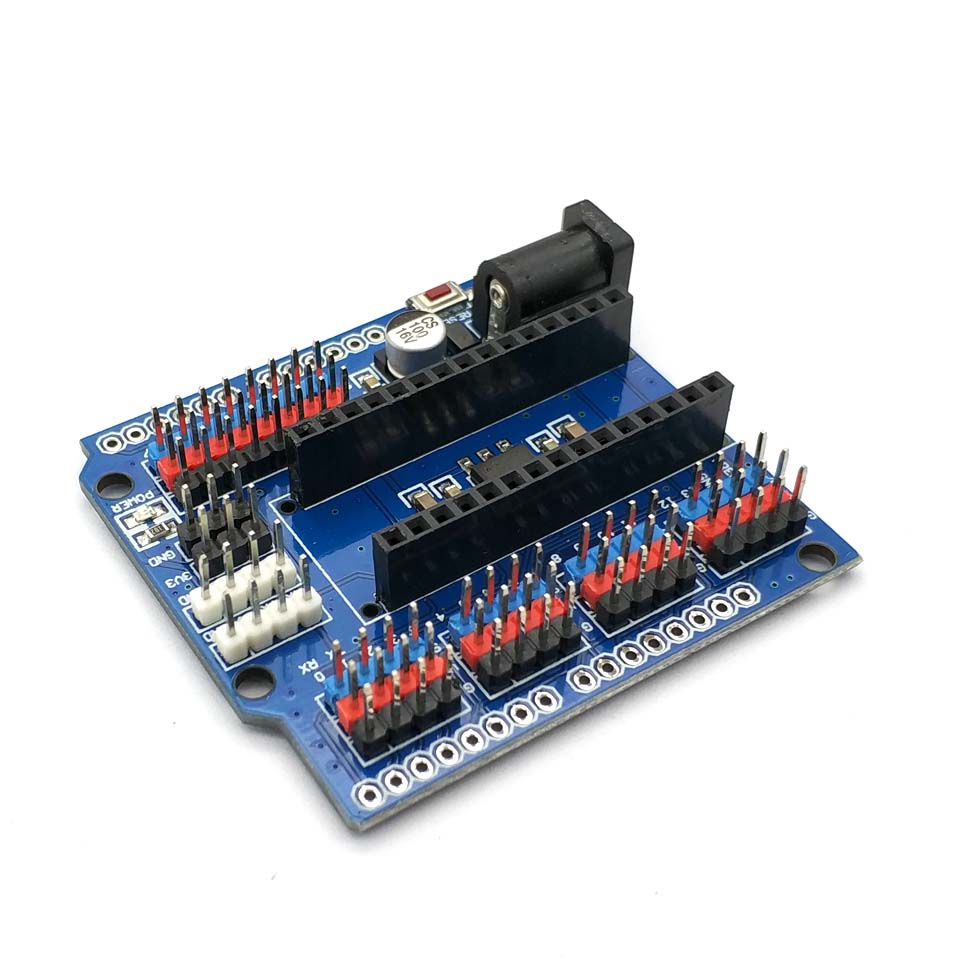
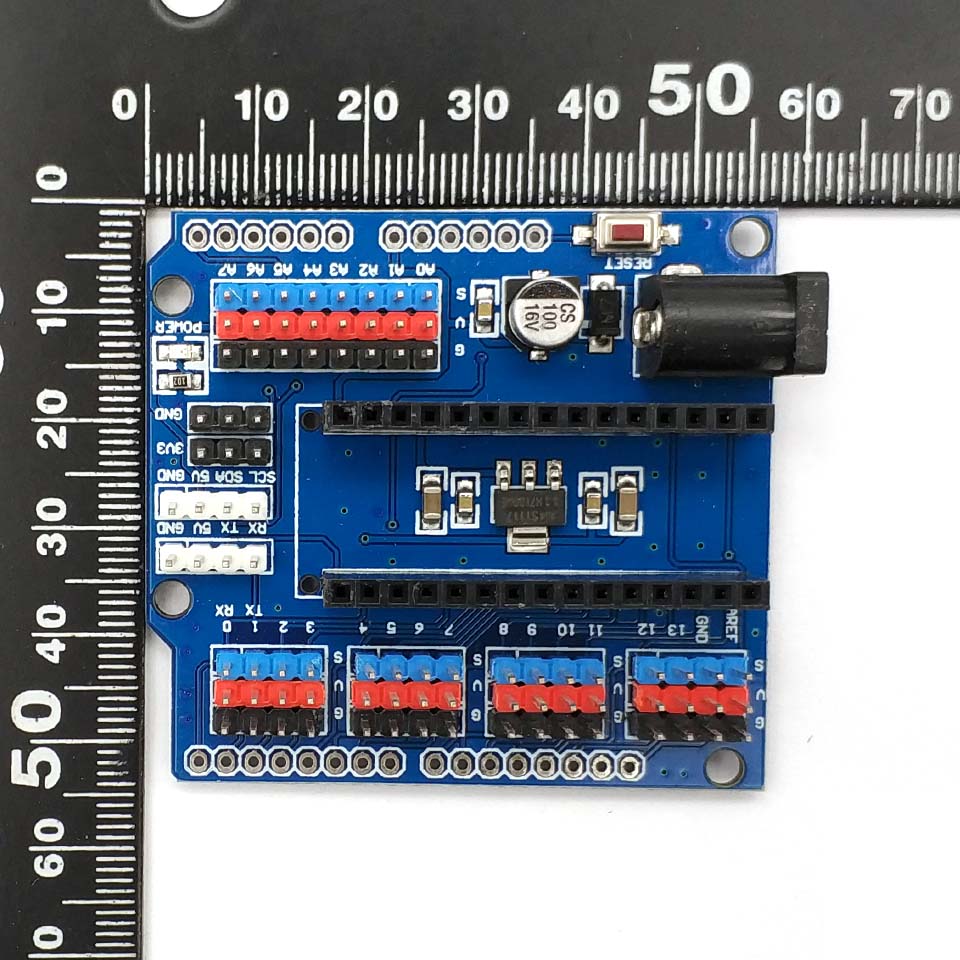
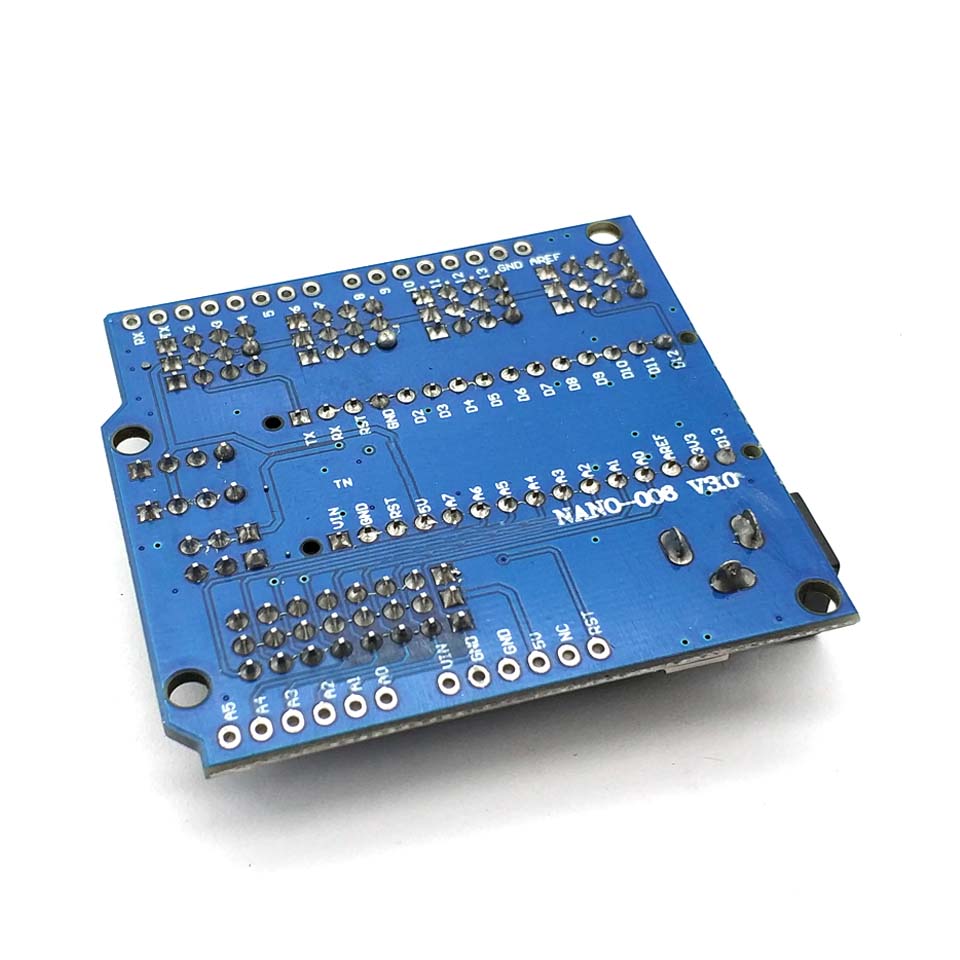
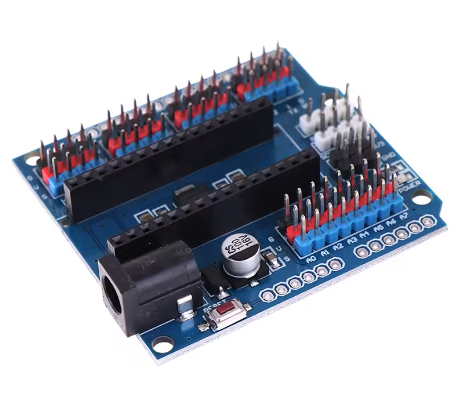
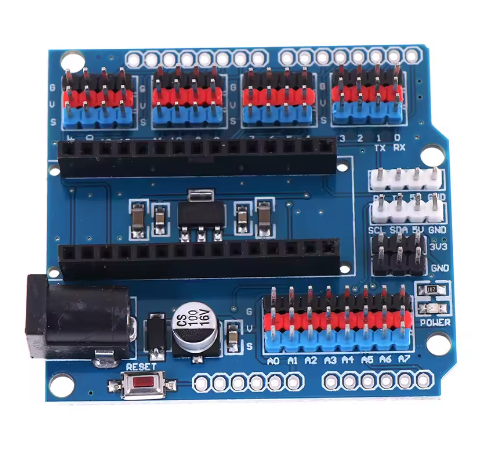
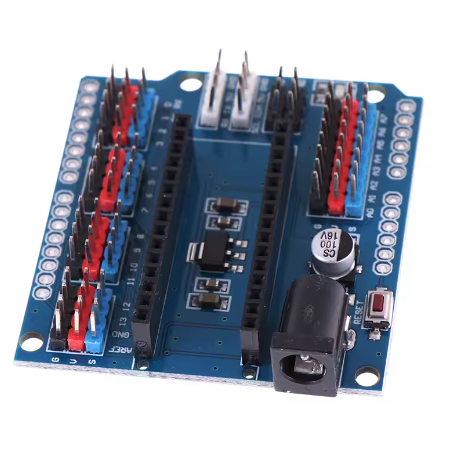
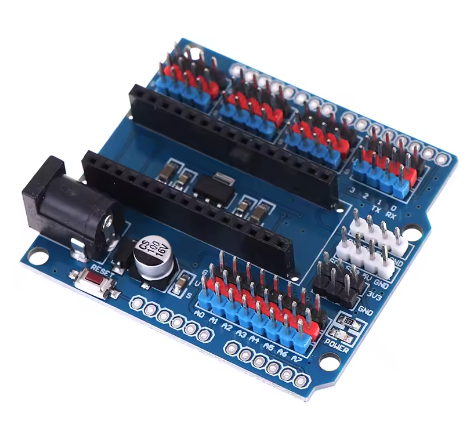
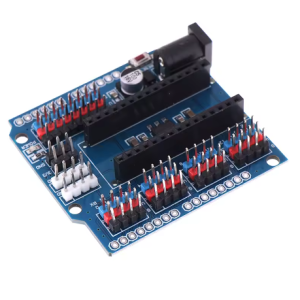
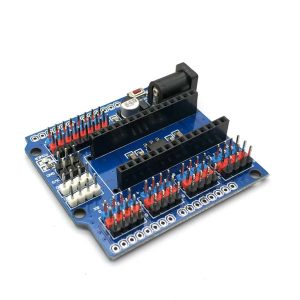
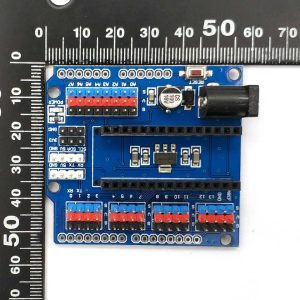
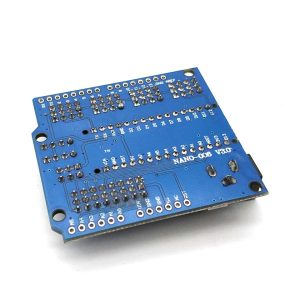
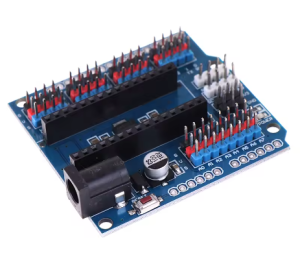
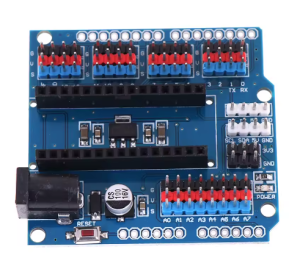
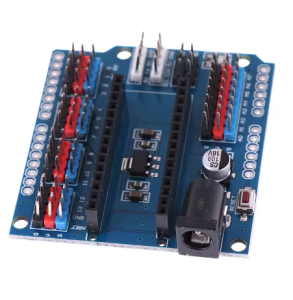
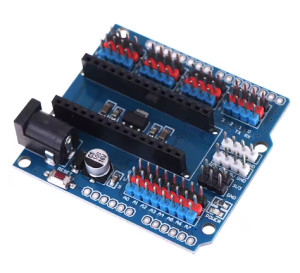
The Arduino Nano Sensor Shield is an expansion board designed to simplify wiring, power distribution, and sensor connection for the Arduino Nano and compatible microcontrollers. While the Nano’s compact form factor makes it ideal for space-constrained projects, its dense pin layout can make connecting multiple sensors and modules challenging. This shield solves that problem by reorganizing every available pin into convenient three-wire interfaces (Signal, Power, Ground), allowing you to plug sensors and servos directly without messy jumper wire configurations.
The shield adopts the same form factor as the Arduino UNO and Arduino Leonardo, providing a familiar, spacious layout for prototyping. Every pinout includes dedicated 5V and GND connections, making it compatible with plug-and-play sensor modules as well as standard jumper wires for traditional breadboard-style experiments. This dual compatibility means you can use it with Gravity-style sensors or with any standard three-pin module.
An independent power supply option sets this shield apart from basic breakout boards. The shield can provide extra current for servos and other high-draw sensors through a separate power input, helping to isolate board logic power from higher-load modules. A jumper allows you to connect the 5V rail to the VCC pins, or you can power VCC pins externally when the jumper is left open.
Dedicated space is provided for wireless modules and I2C expansion, making it suitable for IoT projects and compact robotics control. The fully assembled board also includes a reset button and a DC power jack for convenient external power input.
Features
-
Three-wire pin breakout — Every digital, analog, and power pin is reorganized into convenient Signal-Power-Ground triplets for direct sensor connection.
-
Independent servo power input — Separate power supply option for servos and high-current sensors, with a jumper to select between board 5V and external supply.
-
Gravity and jumper wire compatible — Supports both plug-and-play sensor modules and standard jumper wires for maximum flexibility.
-
Wireless module space — Dedicated mounting area for Bluetooth modules and compatible wireless add-ons.
-
Expanded I2C pins — Additional I2C breakout for connecting multiple I2C devices simultaneously.
-
DC power jack included — On-board barrel jack accepts 7–12V external power input.
-
Reset button on board — Convenient reset access without reaching for the Nano’s small button.
-
UNO-compatible form factor — Same footprint as Arduino UNO/Leonardo for a familiar, spacious layout.
Technical Specifications
| # | Parameter | Specification |
|---|---|---|
| 1 | Compatibility | Arduino Nano, DFRduino Nano, Bluno Nano, and compatible boards |
| 2 | Digital I/O Pins | 14 pins broken out (including 6 PWM) |
| 3 | Analog Input Pins | 8 pins with power output and GND |
| 4 | I2C Expansion | Independent I2C port (SDA, SCL, GND, VCC) |
| 5 | UART Expansion | UART port (RX, TX, VCC, GND) |
| 6 | Power Input | 7–12V DC via barrel jack; +5V logic |
| 7 | Servo Power Input | Independent power input for servos/high-current devices |
| 8 | Dimensions | 69 × 54 mm (2.7 × 2.1 in) |