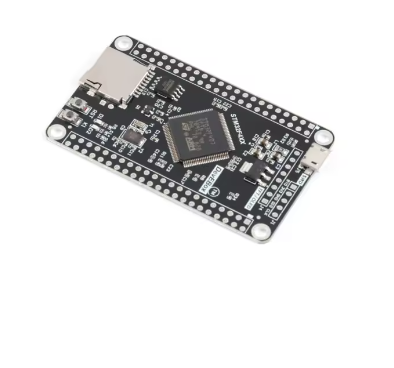
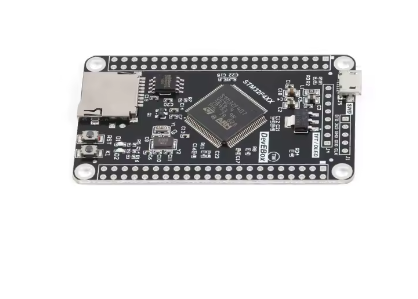
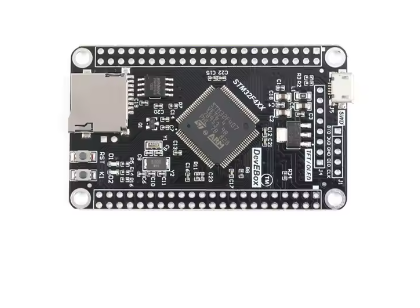
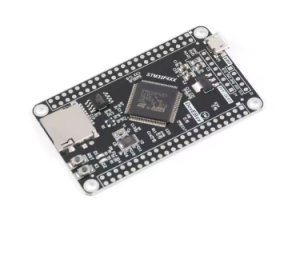
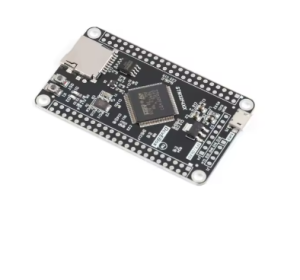
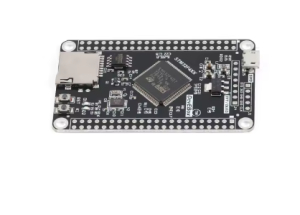
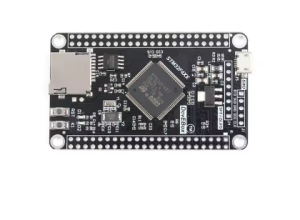
STM32F407VET6 MCU Minimum System Board – ARM Cortex-M4 Based [512kb]

SKU: FA1074-3
Microcontroller

STM32F407VET6 (ARM Cortex-M4 with FPU and DSP)

Maximum Clock Speed

168 MHz (210 DMIPS)

Flash Memory

512 KB

SRAM

192 KB (including 64 KB CCM)

GPIO Count

82 pins (up to 138 5V-tolerant I/Os)

Operating Voltage

1.8V – 3.6V

ADC / DAC

3×12-bit ADC (16 channels) / 2×12-bit DAC

Package / Debug

LQFP-100 / JTAG, SWD

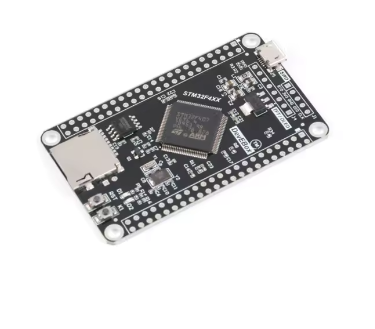
The STM32F407VET6 MCU Minimum System Board is a compact, high-performance core platform built around STMicroelectronics’ STM32F407VET6 microcontroller. It is designed for developers, students, and engineers who need serious processing power in a minimal, accessible form factor without unnecessary onboard peripherals. Whether you are learning ARM embedded development, building control systems, or prototyping connected devices, this board provides a solid foundation.

At its heart is an ARM Cortex-M4 32-bit RISC core with a Floating Point Unit (FPU) and DSP instructions, running at up to 168 MHz and delivering 210 DMIPS of processing power. This makes it well suited for applications requiring real-time signal processing, motor control algorithms, and floating-point calculations that would overwhelm slower microcontrollers.

The chip integrates 512 KB of Flash memory and 192 KB of SRAM (including 64 KB of Core Coupled Memory), providing ample space for complex firmware, data buffers, and runtime variables. A 3×12-bit ADC with up to 16 channels and 2×12-bit DAC handle analog signal conversion, while 14 timers (including two 32-bit timers and two advanced motor-control timers) support precise timing and PWM generation.

Connectivity is a major strength. The board exposes multiple communication interfaces, including USART, UART, SPI/I2S, I2C, CAN, USB OTG (full-speed and high-speed), and a 10/100 Ethernet MAC. A parallel camera interface and SDIO support add flexibility for imaging and storage applications.

The board follows a minimum system design, exposing all available GPIO pins on standard headers for easy integration into custom setups or breadboard prototypes. This minimalist approach keeps the board compact and affordable while giving you full access to the MCU’s capabilities. An onboard voltage regulator and USB power management simplify powering the board, while boot mode selection and a reset button provide convenient control.

Development is supported by STM32CubeIDE, ST’s free integrated development environment, along with Keil MDK and IAR toolchains. The HAL library and CubeMX graphical configuration tool make peripheral setup accessible to beginners, while experienced developers can work at the register level when needed.

Whether you are building a motor control system, a data acquisition device, a network gateway, or an educational project, the STM32F407VET6 Minimum System Board offers the performance and flexibility to bring your ideas to life. It is suitable for individual makers, students, and businesses purchasing in bulk for education, research, or product development.


Features

  • ARM Cortex-M4 @ 168 MHz with FPU and DSP — 210 DMIPS processing power for demanding applications.

  • 512 KB Flash / 192 KB SRAM — Generous memory for complex firmware and data processing.

  • Full I/O expansion — All available GPIO pins exposed on standard headers for flexible integration.

  • Multiple communication interfaces — USART, UART, SPI/I2S, I2C, CAN, USB OTG, and Ethernet MAC.

  • 3×12-bit ADC / 2×12-bit DAC — Up to 16 analog input channels and dual analog outputs.

  • 14 timers including 2 advanced motor-control timers — Precise PWM, input capture, and encoder interface support.

  • Onboard voltage regulation and USB power management — Simplifies powering from USB or external supply.

  • JTAG/SWD debug interface — Standard programming and debugging via external debugger.

  • Minimum system design — Compact form factor with full pin access for custom integration.

  • Boot mode selection and reset button — Convenient control for flexible operation.


Technical Specifications 

# Parameter Specification
1 Microcontroller STM32F407VET6 (ARM Cortex-M4 with FPU and DSP)
2 Maximum Clock Speed 168 MHz (210 DMIPS)
3 Flash Memory 512 KB
4 SRAM 192 KB (including 64 KB CCM)
5 GPIO Count 82 pins (up to 138 5V-tolerant I/Os)
6 Operating Voltage 1.8V – 3.6V
7 ADC / DAC 3×12-bit ADC (16 channels) / 2×12-bit DAC
8 Package / Debug LQFP-100 / JTAG, SWD

Usage

Getting Started

  1. Power the board — Connect via USB or supply 5V through the VIN pin. The onboard voltage regulator provides stable 3.3V to the MCU.

  2. Connect a debugger — Use an ST-Link, J-Link, or DAP-Link programmer connected to the JTAG/SWD interface.

  3. Set up the development environment — Install STM32CubeIDE, Keil MDK, or IAR. STM32CubeIDE is recommended for beginners.

  4. Configure peripherals — Use the built-in CubeMX graphical tool to assign pins, enable peripherals, and set clock speeds.

  5. Write your code — Add application logic in the designated user code sections.

  6. Flash and debug — Build the project and program the chip via SWD or JTAG.

Typical Applications

  • Learning ARM embedded development — A powerful platform for advancing from simpler MCUs to Cortex-M4.

  • Motor control and robotics — Advanced timers, FPU, and DSP instructions support complex control algorithms.

  • Industrial control systems — CAN, Ethernet, and multiple serial interfaces for equipment and automation.

  • IoT gateways — Ethernet MAC and USB OTG for network connectivity and device integration.

  • Data acquisition — Multiple ADC channels and high-speed interfaces for sensor data collection.

  • Audio processing — I2S interfaces and DSP instructions for digital audio applications.

  • Camera and imaging — Parallel camera interface for vision-based projects.

  • Evaluation and product development — Assess the STM32F4 series for suitability in commercial designs.

Notes for Business Buyers

  • Proven high-performance platform — The STM32F407VET6 is widely used in industrial and commercial applications, with extensive documentation and community support.

  • Standard ARM toolchain support — STM32CubeIDE, Keil MDK, and IAR are all supported, easing integration into existing workflows.

  • Full pin access supports custom integration — All GPIOs are exposed for use as a core module in larger systems.

  • Suitable for bulk deployment — Ideal for educational institutions, research labs, and product development teams.

Q: Does this board come with a built-in programmer?

No. The minimum system board does not include an onboard debugger. You need an external ST-Link, J-Link, or DAP-Link programmer connected via the JTAG/SWD interface.

Q: What software do I need to program this board?

You can use STM32CubeIDE (free from ST), Keil MDK-ARM, or IAR Embedded Workbench. STM32CubeIDE includes a graphical configuration tool for pin assignment and peripheral setup.

Q: Is the STM32F407VET6 compatible with the Arduino IDE?

Not natively. It is an ARM Cortex-M4 MCU that requires a standard embedded toolchain (STM32CubeIDE, Keil, or IAR). Some community projects have explored Arduino compatibility, but official support is not available.

Q: What is the difference between this board and a standard Arduino?

The STM32F407VET6 is a 32-bit ARM Cortex-M4 running at 168 MHz with an FPU and DSP instructions, compared to the Arduino Uno’s 8-bit ATmega328P at 16 MHz. It offers vastly more processing power and peripheral connectivity.

Q: Can I use 5V sensors with this board?

Many of the GPIO pins are 5V-tolerant, meaning they can accept 5V logic signals without damage. However, the board itself operates at 3.3V for power.

Q: How much memory does the board have?

It has 512 KB of Flash for program storage and 192 KB of SRAM for runtime data, including 64 KB of Core Coupled Memory.

Q: Does the board have an onboard voltage regulator?

Yes. Most versions include an onboard linear regulator that provides 3.3V from a 5V input source.

Q: What communication interfaces are available?

The board provides USART, UART, SPI/I2S, I2C, CAN, USB OTG (FS/HS), and a 10/100 Ethernet MAC.

Q: Can I use this board as a core module in a custom PCB?

Yes. The board is designed as a minimum system with all GPIOs exposed on headers, allowing it to be plugged into custom application boards.

Q: Can I purchase in bulk for a school or company?

Yes. This board is suitable for both individual users and business purchasing, including classroom kits, evaluation labs, and volume production.