Description
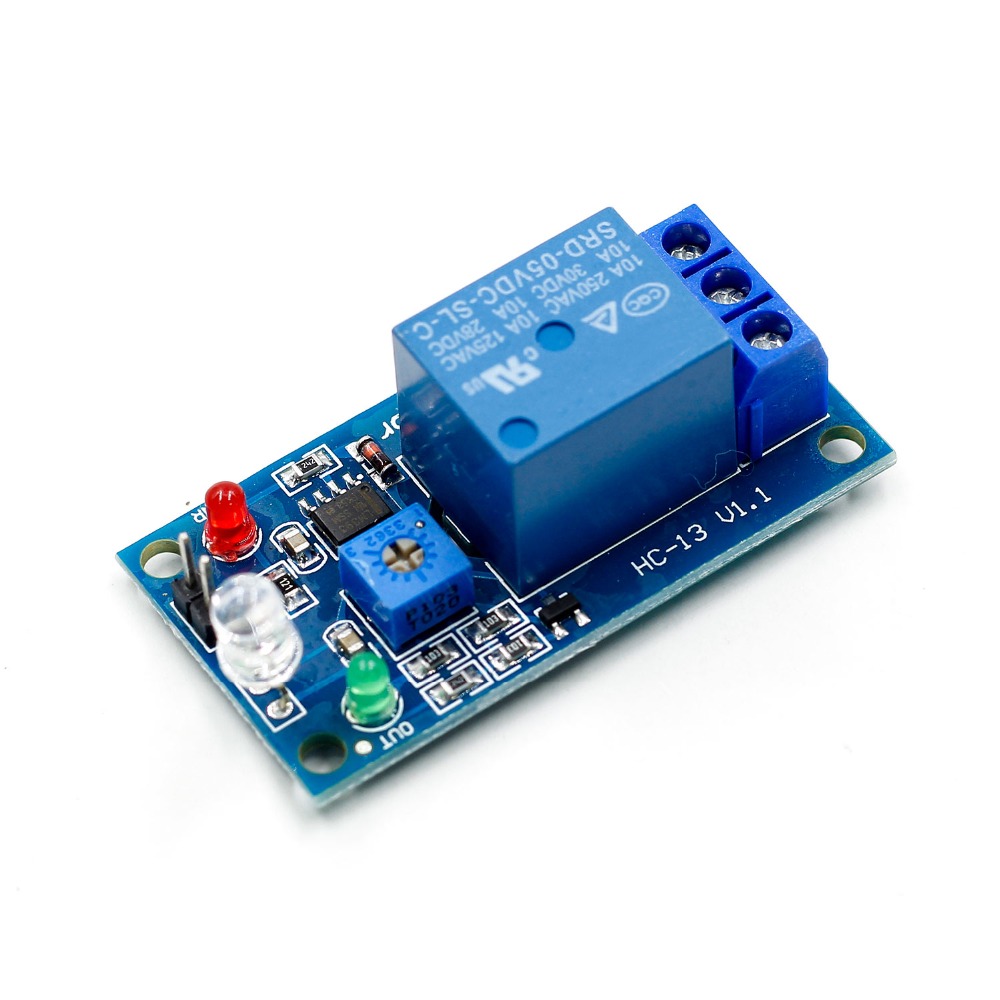
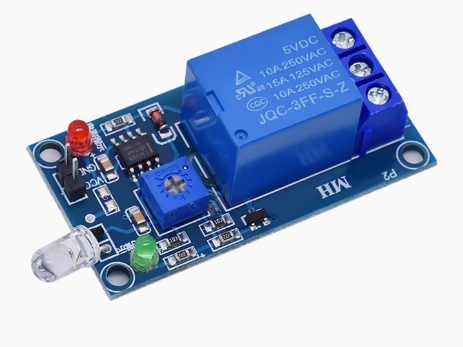
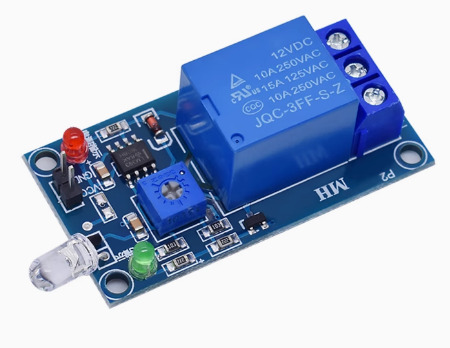
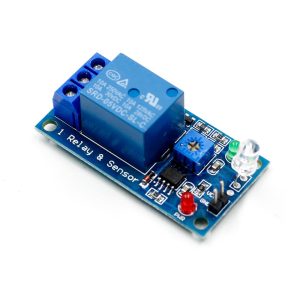
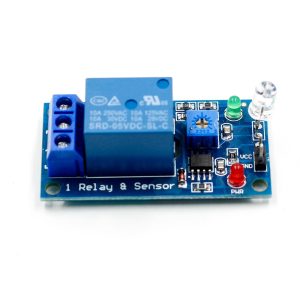
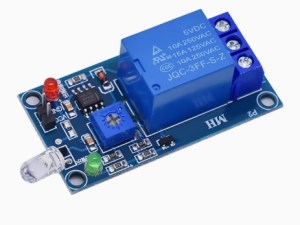
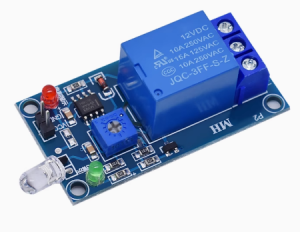
The Photodiode Relay Module is a standalone light-activated switch that automatically controls an electrical load based on ambient light intensity. Unlike photoresistor-based modules, it uses a photodiode sensor with superior directionality—it responds primarily to light coming from directly in front of the sensor, making it ideal for applications where directional light detection is important, such as laser receivers, light-seeking robots, and automotive headlight automation .
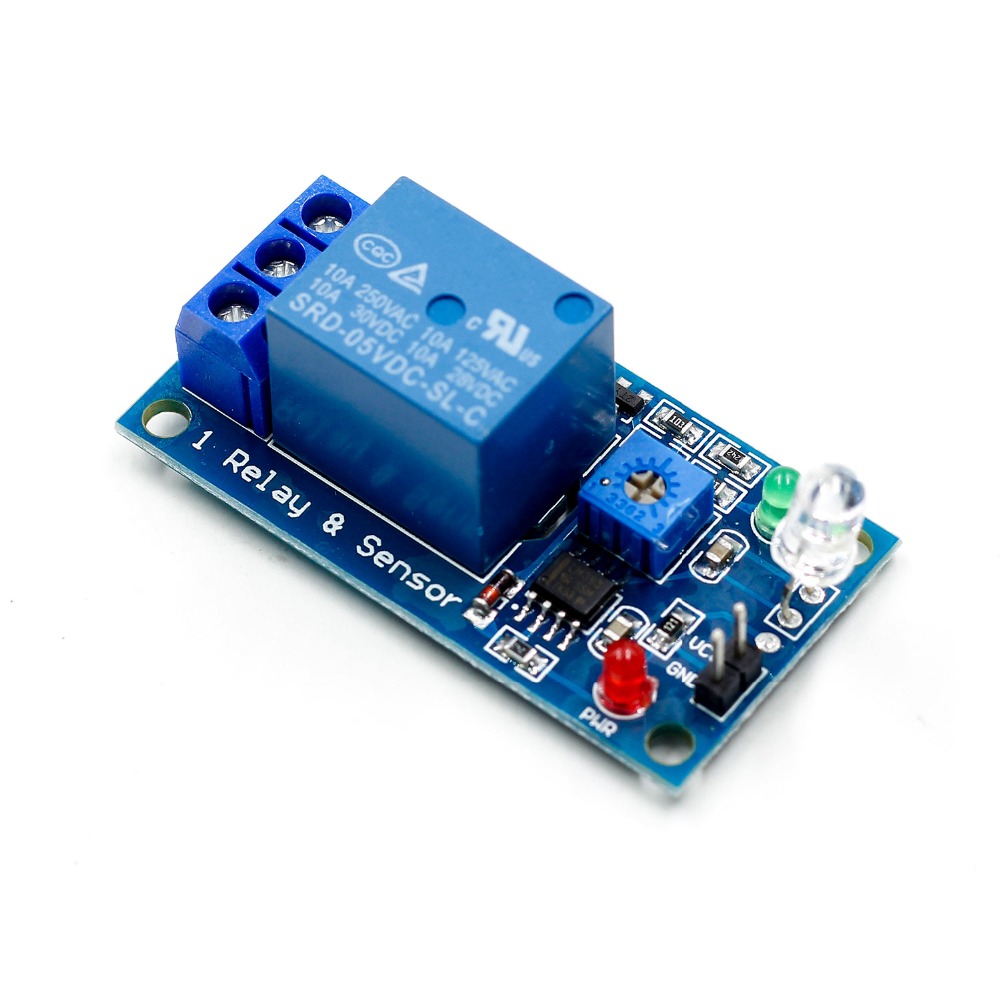
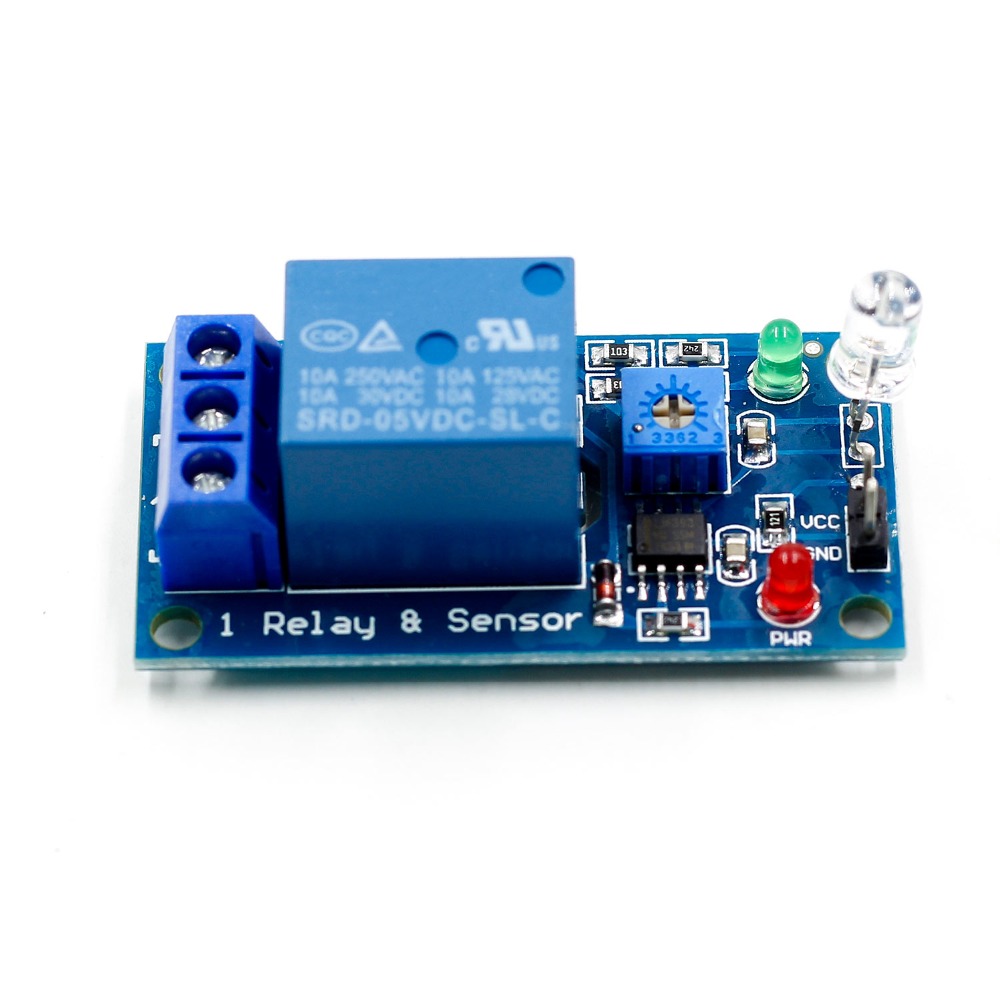
The module combines the photodiode with an LM393 comparator and an electromagnetic relay, allowing direct switching of AC or DC loads without a microcontroller. An onboard potentiometer sets the light threshold at which the relay activates: when ambient light exceeds the threshold, the relay energizes (connecting COM to NO); when light falls below the threshold, the relay de-energizes (connecting COM to NC) . This makes the module suitable for both “on at night” and “on during day” configurations depending on which relay contact is used.
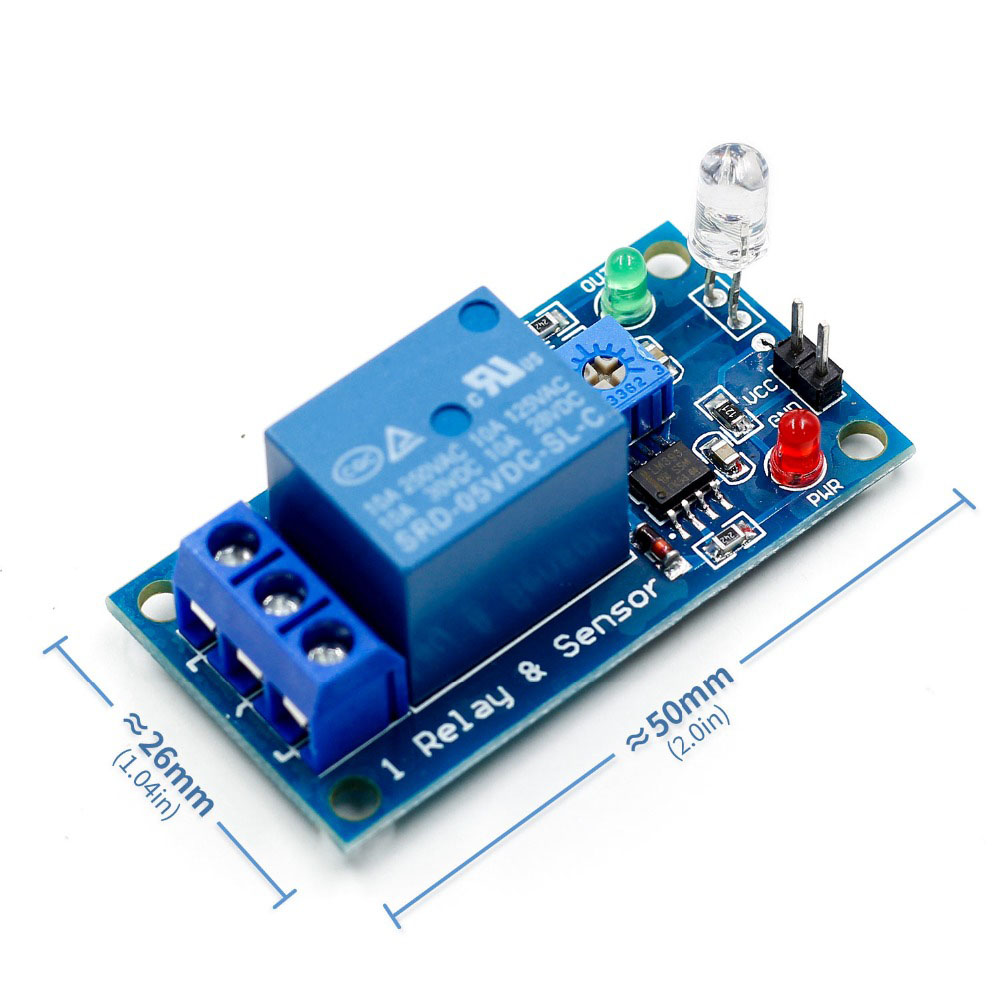
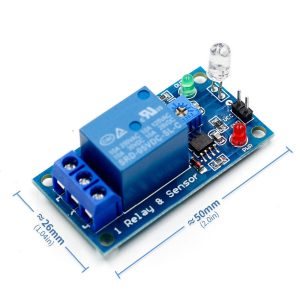
The module operates from a 5V or 12V DC supply (variant-dependent) and provides isolated relay contacts rated for 10A at 250V AC or 30V DC. Power and relay-status indicator LEDs provide visual feedback during calibration. The compact PCB measures approximately 50 × 26mm (5V variant) or 56 × 34mm (12V variant), with four mounting holes for secure installation .
Critical limitations: This is a budget-tier module with no calibration certificate. The photodiode’s narrow detection angle is an advantage for directional sensing but a limitation for general ambient light detection—it will not reliably detect light from the sides. The relay provides on/off switching only, not proportional control. For applications requiring calibrated lux measurement, a dedicated light sensor with digital output is more appropriate.
Features
-
Directional Photodiode Sensing: Narrower detection angle than photoresistors; responds primarily to light directly in front of the sensor .
-
Standalone Operation: No microcontroller required—connect power and load, adjust potentiometer, and the module switches automatically .
-
Isolated Relay Output: 10A @ 250V AC or 30V DC contact rating for direct control of lamps, relays, and small appliances .
-
Adjustable Light Threshold: Onboard potentiometer sets the trigger point for relay activation .
-
Dual LED Indicators: Power LED (red) and relay-status LED (blue) for calibration feedback .
-
LM393 Comparator: Provides clean, stable switching with good noise immunity .
-
Compact PCB with Mounting Holes: Four bolt holes for secure installation .
-
Screw Terminal Connections: Secure wiring for power, sensor, and load connections .
Technical Specifications
| Parameter | Specification (5V Variant) | Specification (12V Variant) |
|---|---|---|
| Sensor Type | Photodiode (directional) | Photodiode (directional) |
| Supply Voltage | 5V DC | 12V DC |
| Supply Current | >100mA (relay energized) | >100mA (relay energized) |
| Relay Contact Rating | 10A @ 250V AC / 30V DC | 10A @ 250V AC / 30V DC |
| Comparator IC | LM393 | LM393 |
| Threshold Adjustment | Onboard potentiometer | Onboard potentiometer |
| PCB Dimensions | Approx. 50 × 26mm | Approx. 56 × 34mm |
| Indicator LEDs | Power (red), Relay (blue) | Power (red), Relay (blue) |


Reviews
There are no reviews yet.