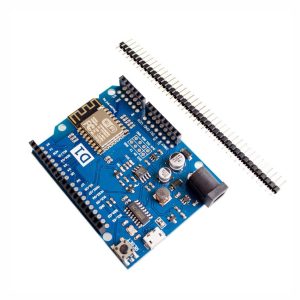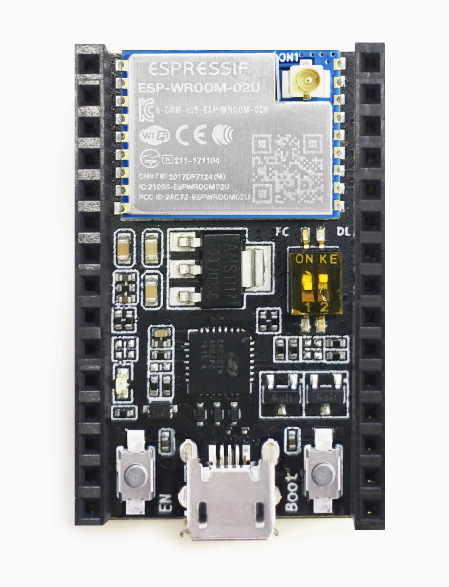
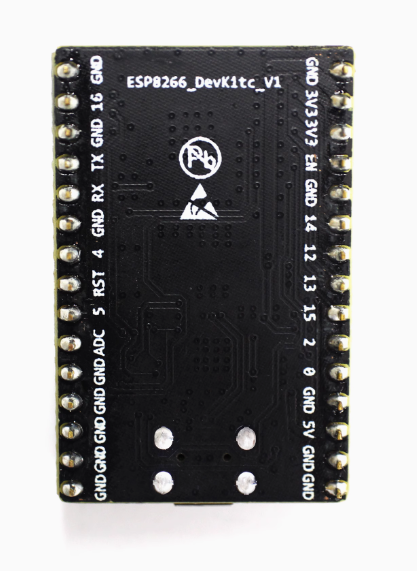
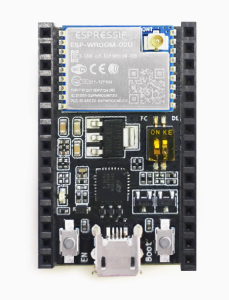
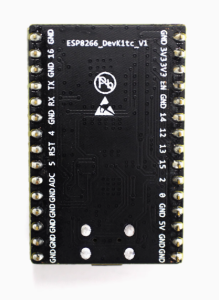
Espressif ESP8266-DevKitC Development Board with ESP-WROOM-02U Module

SKU: FA1055-1
Microcontroller

ESP8266EX (32-bit Tensilica L106)

Clock Speed

80 MHz (Up to 160 MHz)

Wireless Protocol

Wi-Fi 802.11 b/g/n (2.4 GHz)

Antenna Interface

U.FL / IPEX Connector (Required for operation)

Memory

2MB or 4MB SPI Flash (Batch dependent)

SRAM

160 KB

USB Interface

Micro-USB (via CP2102 or similar bridge)

I/O Logic Level

3.3V

Operating Voltage

3.0V ~ 3.6V (Handles 5V via USB input)

The ESP8266-DevKitC-02U is a specialized version of Espressif’s official development series, featuring the ESP-WROOM-02U module. Unlike standard boards with PCB antennas, this version is equipped with a U.FL (IPEX) connector, making it the definitive choice for 2026 industrial IoT applications that require external antennas for maximum range or signal penetration through metal enclosures.
Long Description
The ESP8266-DevKitC-02U is designed to provide professional-grade Wi-Fi connectivity in challenging environments. By utilizing the ESP-WROOM-02U module, this board allows developers to bypass the limitations of internal antennas. Users can connect high-gain external antennas to maintain stable 2.4GHz Wi-Fi links in industrial settings, outdoor enclosures, or long-distance monitoring stations.
For business purchasers, this board is a low-risk, highly reliable solution for commercial appliances and industrial “internet-of-things” upgrades. It features the mature ESP8266EX chipset, which offers years of field-proven stability and global regulatory certifications. For individual makers, it provides the same ease of use as the classic ESP8266, including a built-in USB-to-Serial converter and voltage regulator, but with the added flexibility of custom antenna configurations for advanced hobbyist projects.
Key Features
  • External Antenna Support: Integrated U.FL (IPEX) connector for connecting specialized 2.4GHz antennas.
  • Industrial-Grade Stability: Features the ESP-WROOM-02U, designed to operate reliably in temperatures ranging from -40°C to +85°C.
  • Breadboard Friendly: Slim form factor ensures that the board fits into standard breadboards while leaving pins accessible for jumper wires.
  • Automatic Bootloader: One-click programming via Micro-USB; no need to manually hold buttons to enter Flash mode.
  • Mature Ecosystem: Full compatibility with the Arduino IDE, MicroPython, and the Espressif RTOS SDK.
Usage Instructions
  1. Antenna Installation: Important: You must attach a 2.4GHz antenna to the U.FL connector before powering the board. Operating without an antenna can result in extremely poor signal and potential damage to the RF transmitter.
  2. Hardware Connection: Connect the board to your PC using a high-quality Micro-USB data cable.
  3. Driver Setup: Ensure the USB-to-Serial driver (typically Silicon Labs CP210x) is installed to recognize the COM port.
  4. Software Setup:
    • In the Arduino IDE, select “Generic ESP8266 Module” or “NodeMCU 1.0”.
    • Write your code and click Upload. The auto-reset circuit will handle the programming process.
  5. Powering: For remote use, you can supply 5V to the VIN pin or use the Micro-USB port with a power bank.
Q: Does this board work without an external antenna?

No. The “02U” module does not have a built-in PCB antenna. It relies entirely on an antenna connected via the U.FL port.

Q: What type of antenna should I buy?

You need a 2.4GHz antenna with a U.FL (also called IPEX MHF1) connector. Common choices include flexible “sticker” antennas for inside plastic boxes or dipole “rubber ducky” antennas with a U.FL-to-SMA pigtail for external mounting.

Q: Can I use 5V logic with the GPIO pins?

No. The ESP8266 is strictly a 3.3V device. Connecting 5V sensors directly to the pins will likely destroy the board. Use a logic level shifter for 5V compatibility.

Q: Is this board compatible with the latest Wi-Fi 6 routers?

Yes, it is backward compatible with Wi-Fi 6 (802.11ax) routers as they still support the 2.4GHz 802.11b/g/n protocols.

Q: Why choose this over an ESP32?

The ESP8266 remains a cost-effective choice for simple Wi-Fi-only projects that do not require Bluetooth, dual-core processing, or high-security features like those found in the ESP32 series.

Q: Can I use this for battery-powered sensor nodes?
Yes. The ESP8266 supports a “Deep Sleep” mode that consumes approximately 20μA, making it ideal for devices that wake up periodically to send data and then go back to sleep.