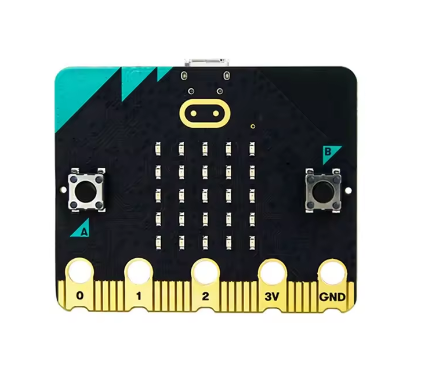
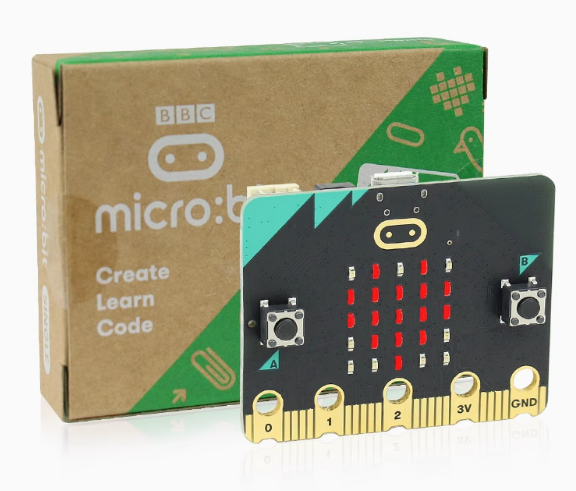
The BBC micro:bit V2 (Compatible/Copy Version) is the high-performance successor to the original micro:bit, offering a more powerful processor and integrated audio capabilities. This “Copy Version” is a cost-effective, neutral-manufactured alternative that maintains full hardware and software parity with the official V2 specification, making it ideal for budget-conscious educational institutions and industrial IoT prototyping.
Long Product Description
The BBC micro:bit V2 (Copy Version) is a significant leap forward in portable computing. Powered by the Nordic nRF52833 processor, it offers double the flash memory and eight times the RAM of the previous V1.5 models. This version is specifically designed to handle more complex tasks such as Machine Learning (AI), advanced data logging, and real-time audio processing.
Unlike its predecessors, the V2 comes standard with a built-in MEMS microphone and a speaker, allowing students and engineers to create voice-activated projects or musical instruments without external hardware. It also features a touch-sensitive logo, a dedicated power indicator, and a “Power Off” mode that allows the board to remain connected to batteries for long periods without draining them. For business and educational procurement, this board offers the most modern feature set at a competitive price point, ensuring longevity in any curriculum or development roadmap.
Key Features
- Enhanced Processing Power: Features the 64MHz ARM Cortex-M4 with FPU, capable of running complex algorithms and basic AI models.
- Integrated Audio: Onboard microphone for sound sensing and a built-in speaker for audio playback (beeps, melodies, and speech).
- Touch Sensing: The gold micro:bit logo on the front now functions as a capacitive touch sensor.
- Power Management: Includes a dedicated sleep/off mode to conserve battery life; wake the board with a single press of the reset button.
- Full Software Parity: Works perfectly with Microsoft MakeCode, MicroPython, and Scratch using the V2 device targets.
- Increased Connectivity: Bluetooth 5.0 support for faster, long-range wireless communication with mobile devices and other micro:bits