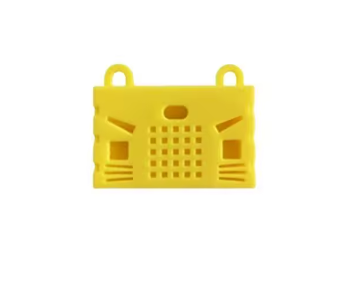
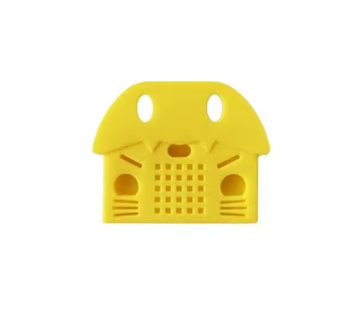
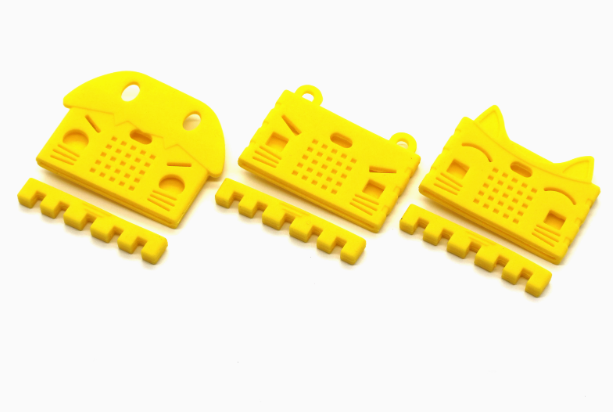
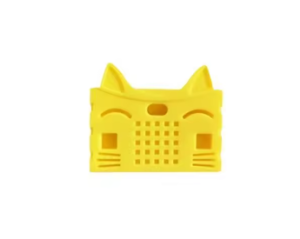
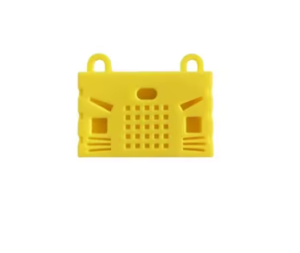
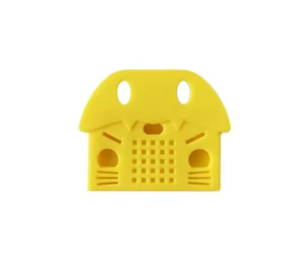
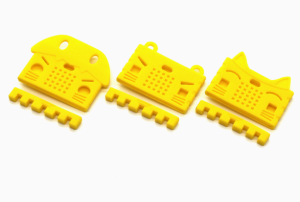
BBC micro:bit go NRF51822 development board Python connector silicone protective shell

SKU: FA1079-2
Microcontroller

Nordic nRF51822 (32-bit ARM Cortex-M0)

Clock Speed

16MHz

Memory

256KB Flash / 16KB RAM

Wireless Protocols

Bluetooth 4.0 (BLE) / 2.4GHz Radio

Sensors

ST LSM303 (Accelerometer & Magnetometer)

Shell Material

High-Grade, Anti-Static Silicone

I/O Interface

20-Pin Edge Connector + Micro-USB

Power Supply

3.3V via USB or JST Battery Connector

the BBC micro:bit Go V1.5 (nRF51822) Bundle with Silicone Protective Shell remains a staple in STEM education and industrial prototyping. This specific configuration is optimized for users who require a balance of software flexibility (via MicroPython) and hardware durability.
Long Product Description
The BBC micro:bit Go Bundle is an all-in-one starter kit designed to bridge the gap between abstract code and physical hardware. Powered by the Nordic nRF51822 32-bit ARM processor, this board is fully compatible with the official MicroPython editor, allowing users to write professional-grade scripts for data logging and wireless communication. 
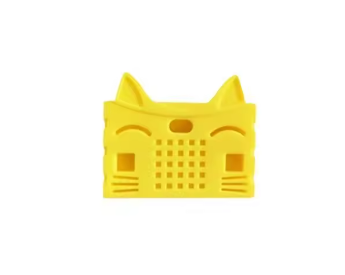
To address the common issue of hardware damage in high-traffic environments, this set includes a Premium Silicone Protective Shell. This “skin” provides a shock-absorbent barrier and protects the exposed circuitry from electrostatic discharge (ESD) and short circuits—common risks when working on metallic workbenches or in busy classrooms. The shell is precision-molded to ensure that the 5×5 LED matrix, physical buttons, and the edge connector remain fully accessible. This bundle is the ideal choice for business purchasers outfitting training labs or individuals seeking a ruggedized entry point into the world of IoT. 
Key Features
  • Python-Ready Platform: Seamlessly integrates with the MicroPython Editor, supporting real-time debugging and complex logic scripts.
  • Ruggedized Protection: The custom silicone shell cushions against drops and prevents “shorting out” the board on conductive surfaces.
  • Integrated Wireless: Features built-in Bluetooth Low Energy (BLE) and 2.4GHz radio for board-to-board communication or smartphone pairing.
  • Onboard Sensor Suite: Includes a 3-axis accelerometer for motion sensing and a magnetometer (compass) for orientation tracking.
  • 5×5 LED Display: A programmable 25-LED matrix for scrolling text, animations, and visual sensor readouts.
  • Edge Connector Portability: The shell leaves the bottom pins exposed for immediate connection to alligator clips or expansion shields
Usage Instructions
  1. Assembly: Gently pull the silicone shell over the micro:bit board. Ensure the A and B buttons click freely and the LED matrix is visible through the window.
  2. Coding: Connect the board to your computer via the Micro-USB cable. Visit the micro:bit Python Editor.
  3. Flashing: Write your code and click “Download.” Drag the resulting .hex file into the drive named “MICROBIT.”
  4. Interaction: Use the onboard sensors to trigger events (e.g., “On Shake”). The silicone shell provides a better grip during these motion-based tests.
  5. External Circuits: Use alligator clips to connect the gold pads at the bottom to LEDs or sensors. The shell acts as a safety guard to prevent clips from touching other surface-mount components
Q: Is this V1.5 board compatible with V2.0 code?

Most standard MakeCode and Python scripts will run on both. However, V1.5 does not have the built-in speaker or microphone found on V2. If your code requires those specific hardware features, it will not function on this board

Q: Why is the silicone shell recommended for business/bulk purchasing?

In 2026, hardware longevity is a priority for businesses. The shell reduces failure rates caused by static electricity and physical handling by students or technicians, protecting your investment over long-term use

Q: Does the silicone shell interfere with Bluetooth signal?

No. Silicone is transparent to RF signals at 2.4GHz, so your Bluetooth and radio range will remain unaffected.

Q: Can I wash the silicone shell?

Yes. Remove the micro:bit board first. The shell can be washed with warm soapy water and must be dried completely before re-installing the electronics