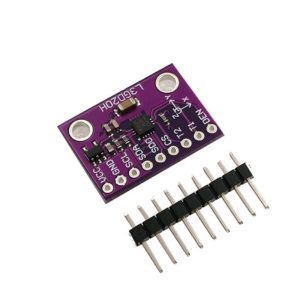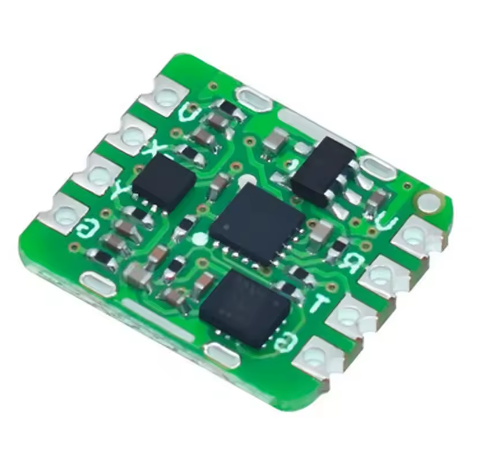
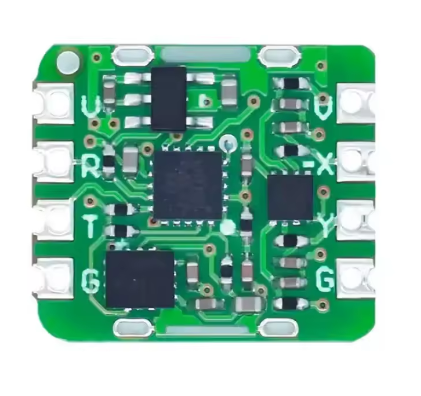
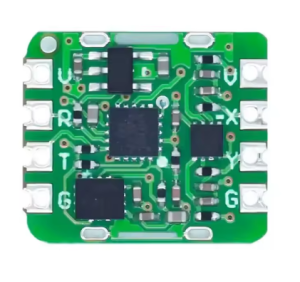
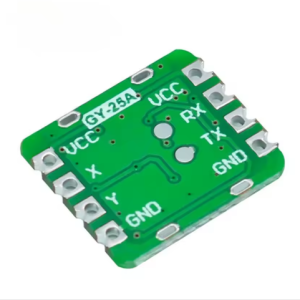
The GY-25A SCA60C Dual-Axis Tilt Sensor Module is a high-precision inclination detection module offering flexible analog and serial communication outputs, making it ideal for various angle measurement projects in robotics, automation, and industrial monitoring. It serves as a direct replacement for the original SCA60C sensor module while offering enhanced integration capabilities.
Product Description
The GY-25A SCA60C Dual-Axis Tilt Sensor Module provides a compact and versatile solution for accurately measuring tilt angles along the X and Y axes. Designed as an effective replacement for the legacy SCA60C, this module simplifies the process of integrating precise tilt detection into electronic projects. It operates on a wide 3.3V to 5V power supply, making it compatible with most standard microcontrollers like Arduino and Raspberry Pi.
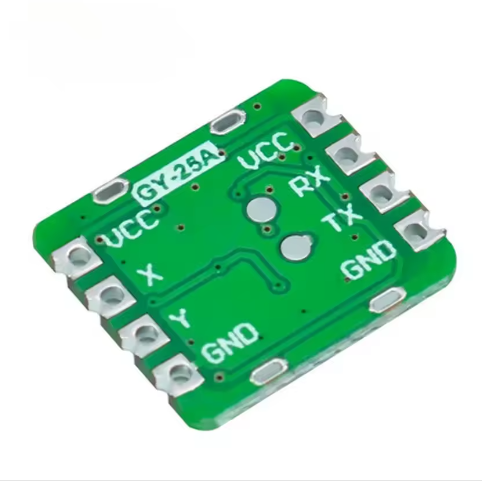
A key advantage of the GY-25A is its dual output capability: it provides dedicated analog voltage pins for immediate readings and also supports serial (UART) communication for potentially higher precision digital data or more structured information. The module is capable of dynamic inclination measurement, ensuring reliable performance even when the orientation changes frequently. Its small physical size is advantageous for space-constrained applications, and it features multiple mounting holes for secure installation. This balance of performance, ease of use, and durability makes it suitable for both hobbyist use and professional product development.
Key Features
- High-Precision Dual-Axis Measurement: Measures tilt along both X and Y axes with high accuracy.
- Dual Output Modes: Offers both analog voltage output and serial port (UART) communication for versatile integration.
- Wide Compatibility: Operates on a supply voltage range of 3.3V to 5V, compatible with most microcontrollers.
- Dynamic Measurement Capability: Suitable for applications involving movement and constant changes in orientation.
- Compact Form Factor: Small module size (approx. 15mm x 13.3mm) for easy physical integration into designs.
- SCA60C Replacement: Designed to replace SCA60C modules, offering similar functionality and enhanced precision