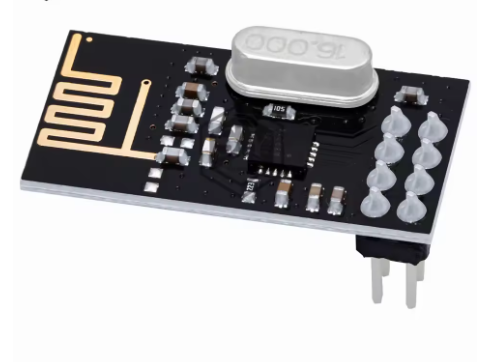
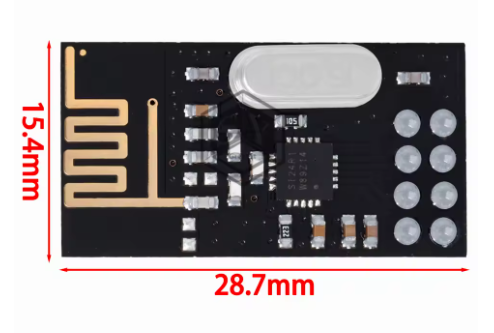
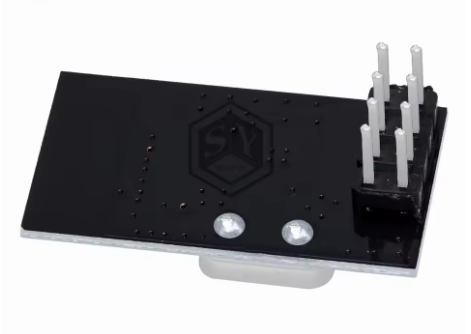
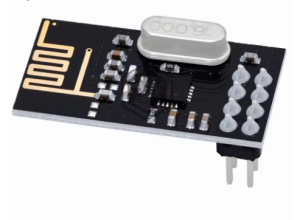
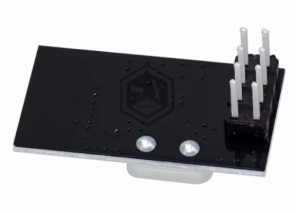
Ai-Thinker Si24R1 Wireless Module – 2.4GHz SPI Transceiver with Low-Power Mode & Data Passthrough (Made in China)

SKU: FA2017-2
Frequency Band

2.400GHz to 2.525GHz (126 selectable channels).

Air Data Rates

Programmable at 250kbps, 1Mbps, and 2Mbps.

Interface

4-wire hardware SPI (up to 10Mbps).

Sensitivity

-96dBm at 250kbps; -83dBm at 2Mbps

Current (Typical)

12mA during transmission (at 0dBm); 15mA during reception (at 2Mbps).

Operating Temperature

Industrial-grade range of -40°C to +85°C.

Antenna

Integrated high-efficiency PCB trace antenna.

The Ai-Thinker Si24R1 Wireless Module is a high-performance, cost-effective 2.4GHz RF transceiver designed for low-power wireless data communication. Fully pin-to-pin and register-compatible with the industry-standard Nordic nRF24L01+, the Si24R1 serves as a seamless “drop-in” replacement. It is engineered with an integrated Enhanced ShockBurst™ protocol engine, which offloads complex packet handling tasks from your microcontroller to the module itself, ensuring reliable communication with minimal software overhead.
Key Features
  • Enhanced RF Performance: Delivers a maximum transmit power of +7dBm, providing a more stable link and longer range compared to standard 0dBm modules.
  • Ultra-Low Power consumption: Features a deep Shutdown Mode (1μA) and a fast-waking Standby Mode (15μA), making it ideal for battery-operated IoT sensors.
  • Wide Voltage Compatibility: While it operates on 1.9V–3.6V, its digital I/O pins are 5V tolerant (up to 5.25V), allowing direct connection to 5V microcontrollers like Arduino without external level shifters.
  • Multi-Point Networking: Supports up to 6 data pipes (MultiCeiver™), allowing a single receiver to collect data from up to six transmitters simultaneously.
  • Hardware ARQ Engine: Automatically handles packet assembly, CRC error detection, and automatic retransmission of lost data.
Usage Instructions
  1. Hardware Connection: Connect the module to your microcontroller using the SPI pins (MOSI, MISO, SCK, CSN) and the Chip Enable (CE) pin. VCC must be 3.3V (max 3.6V), while data pins can connect to 5V logic.
  2. Power Stability: For reliable transmission, especially at the +7dBm setting, solder a 10µF to 100µF capacitor directly across the VCC and GND pins to prevent voltage drops during radio bursts.
  3. Software Configuration: Use standard nRF24L01+ libraries (such as RF24). To unlock the extra +7dBm power unique to the 
    Si24R1, set the lowest bit (bit 0) of the RF_SETUP register to ‘1’.
  4. Range Optimization: For maximum distance, use the lowest data rate (250kbps) and ensure the antenna is clear of metal objects or power supplies.
Q: Can I use my existing nRF24L01+ code with the Si24R1?

Yes. The Si24R1 is fully software-compatible. Your existing drivers and libraries will work without modification.

Q: Is this module suitable for industrial environments?

Absolutely. It is designed with industrial-grade components and rated for temperatures from -40°C to +85°C, ensuring stability in harsh conditions.

Q: What is the "Data Passthrough" feature?

This refers to the module’s ability to act as a transparent wireless bridge. Once configured, the host MCU simply feeds data into the SPI buffer, and the module handles the entire RF protocol (framing, error checking, and delivery) automatically.

Q: Can it communicate with Wi-Fi or Bluetooth devices?

No. While it shares the same 2.4GHz frequency band, it uses a proprietary GFSK protocol that is not compatible with standard Wi-Fi or Bluetooth hardware.

Q: How do I avoid interference from other 2.4GHz devices?

Use the software to select a channel above 2.483GHz (channels 84–125), which typically sits outside the common frequencies used by home Wi-Fi routers.

Q: Is a license required to use this module?

No, the Si24R1 operates in the global license-free ISM band, making it suitable for commercial and consumer deployment worldwide.