Product Description
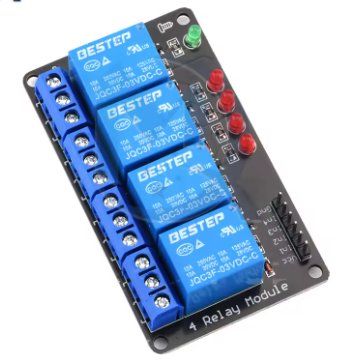
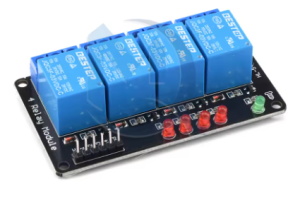
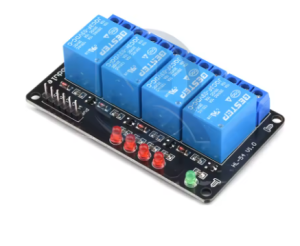
The 24V 4-Way Electromagnetic Relay Module is an industrial-grade switching interface specifically engineered for professional automation systems, control panels, and industrial machinery operating on 24V DC standards. Designed with the rigorous demands of factory automation and process control in mind, this module seamlessly integrates 24V PLCs, industrial controllers, and sensor outputs with high-power AC/DC loads. Its low-level trigger logic provides a straightforward and reliable control interface, while the absence of optocouplers offers a direct, robust signal path suitable for controlled industrial environments where electrical noise is managed.
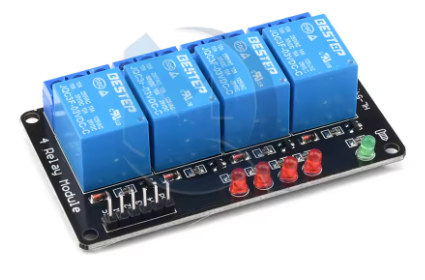
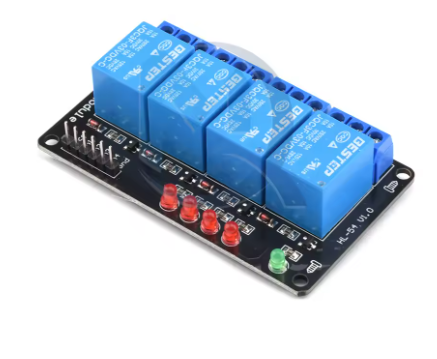
Built for durability, the module features industrial electromagnetic relays capable of handling substantial inrush currents from motors and solenoids. Each of the four independent channels is clearly indicated with status LEDs, and all connections are made through secure, vibration-resistant screw terminals. This module is the ideal solution for engineers and system integrators requiring a dependable, industry-standard component for machine control, automated production lines, and building management systems.
Key Features
-
24V Industrial Standard Compatibility: Directly interfaces with 24V DC industrial control systems, PLCs, and sensors, eliminating the need for additional signal conditioning.
-
Low-Level Trigger Design: Relays activate when the control signal is at 0V (LOW), the standard “sinking” input method for many industrial controllers, ensuring logical and safe operation.
-
Four Heavy-Duty Relay Channels: Control multiple high-power circuits independently, with each relay built for frequent switching in demanding environments.
-
High Inrush Current Handling: Robust relay contacts are designed to withstand the startup surge of inductive loads like motors, contactors, and solenoids.
-
Clear Channel Status Indicators: Bright LEDs for each relay provide immediate visual feedback on the operational state, crucial for diagnostics and monitoring.
-
Industrial-Grade Construction: Features a durable PCB, high-quality screw terminals, and relays rated for long operational life in industrial settings.
-
Non-Optocoupler, Direct Drive Circuitry: Provides fast, reliable switching and is ideal for systems with a clean, common 24V power and ground plane, typical in professional installations.
-
Dual Load Compatibility: SPDT relay contacts allow switching of both high-voltage AC (up to 250V) and DC loads, offering maximum application flexibility.
Main Parameters
-
Number of Channels: 4
-
Trigger Logic: Low Level (Active LOW / Sinking Input)
-
Control & Operating Voltage: 24V DC
-
Maximum Load Current: 10A per channel
-
Load Voltage Range: Up to 250VAC / 30VDC
-
Relay Contact Type: SPDT (1 Form C) – COM, NO, NC
-
Switching Capacity: Resistive: 10A, Inductive: 3A (at 250VAC)
-
Dimensions: ~120mm x 75mm x 20mm (L x W x H)
Typical Applications / Usage
-
Industrial Machine Control: Interface 24V PLC output cards to control actuators, motor starters, solenoid valves, and indicator lights on production machinery.
-
Building Automation Systems (BAS): Control HVAC units, exhaust fans, and lighting circuits in commercial buildings via a 24V DC building management system.
-
Process Control Panels: Used in control panels for water treatment, packaging, and assembly lines to switch pumps, heaters, and conveyors.
-
Telecommunications & Server Racks: Control backup fans, alarm systems, or peripheral devices within 24V-based rack infrastructure.
-
Agricultural & Irrigation Control: Automate 24V solenoid valves for irrigation systems or control equipment in automated greenhouses.
-
Prototyping for Industrial Equipment: Serve as a reliable output stage for prototypes of industrial controllers and automation equipment.
Wiring & Implementation Guide:
-
Power Supply: Connect a stable 24V DC power source to the module’s VCC and GND terminals. Ensure the power supply is adequately rated (approx. 100-120mA per active relay coil).
-
Control Signal: Connect the control pins (IN1 – IN4) to the digital outputs of your 24V PLC, controller, or sensor. To activate a relay, the controller must sink the input to ground (provide a 0V/LOW signal). A 24V/HIGH signal deactivates the relay.
-
Load Connection: For each channel, connect the power source for your load (e.g., 240VAC mains or a 24VDC supply) to the Common (COM) terminal. Connect the device (e.g., contactor coil, lamp) to either the Normally Open (NO) or Normally Closed (NC) terminal based on the desired fail-safe state. Important: Always follow lock-out/tag-out procedures and ensure all power is disconnected before performing any wiring.
Q: Is this module compatible with standard 24V PLCs like Siemens S7-1200 or Schneider Electric models?
Yes, directly. It is designed for this exact purpose. The module’s 24V operating voltage and low-level (sinking) trigger logic are industry standards. Connect the PLC’s digital output (sinking) to the module’s input, and the PLC’s 24V supply to the module’s VCC.
Q: What does "Low-Level Trigger" mean in an industrial context?
Also known as “sinking input,” it means the relay activates when the control wire is connected to 0V (common ground). This is a standard and safe method in industrial controls, as an open or broken wire will default the input to a HIGH state (via an internal pull-up), turning the relay OFF—a fail-safe condition.
Q: Why no optocoupler? Isn't isolation important for industrial use?
In a well-designed industrial control panel, the 24V DC control circuit (PLC, sensors, relays) is typically isolated from the mains power circuit at the system level (e.g., via the 24V power supply). Within this clean, common 24V domain, optocouplers are often unnecessary. The direct connection provides faster response and higher reliability. For mixing voltage domains, external isolation is recommended.
Q: Can I use this with a 12V or 5V microcontroller like an Arduino?
Not directly. The module requires a 24V signal to register a proper HIGH (OFF) state. A 12V or 5V signal will likely be insufficient, causing the relay to remain constantly activated. You would need a signal level converter (like a transistor circuit or a dedicated level-shifter module) to interface lower voltage controllers.
Q: What is the expected lifetime of the relays?
The electromagnetic relays used are typically rated for 100,000 to 500,000 mechanical operations and 100,000 electrical operations at rated load. The actual lifespan depends heavily on the switched load (inductive loads are more demanding) and the switching frequency.
Q: Can I use one channel to control a 3-phase motor?
No, not directly. This module uses single-pole (SPDT) relays. A 3-phase motor requires switching all three phases simultaneously. You would use one channel of this module to control the coil of a 3-phase contactor, which is specifically designed to handle the high current of all three phases. This is a standard practice in industrial control.
Q: Do I need a heatsink for this module?
Generally, no. The heat generated by the relay coils and contacts under the rated 10A load is typically dissipated adequately through the board and relays themselves. However, if installed in a sealed enclosure with high ambient temperature or switching currents near the 10A limit continuously, additional ventilation or a small heatsink on the relay casing is advisable.
Q: Is this product suitable for OEM integration and bulk purchase?
Absolutely. This module is built to industrial standards, making it an excellent choice for Original Equipment Manufacturer (OEM) integration into machines, control panels, and automated systems. We provide volume discounts, custom labeling, and can discuss modifications to specifications (like terminal types or connectorization) for qualified business and industrial clients.