Product Description
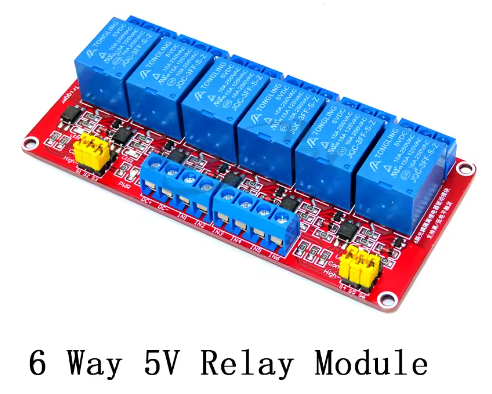
The Dual-Trigger 6CH 5V Relay Shield is a professional-grade, Arduino-compatible expansion board engineered for maximum flexibility and robust control in demanding electronic projects. Unlike standard relay modules, this shield integrates directly onto the pin headers of popular Arduino boards (Uno, Mega, Leonardo), creating a compact, stackable, and highly integrated control unit. Its defining feature is the dual-trigger capability with optical isolation, allowing each of its six channels to be independently configured for either high-level or low-level activation via simple solder jumpers. This provides unparalleled compatibility with any control logic, from simple microcontroller outputs to industrial PLC signals.
Each channel is protected by advanced optocoupler isolation, which creates a complete electrical barrier between your sensitive Arduino and the high-power load circuits. This prevents damaging voltage spikes, ground loops, and electrical noise from interfering with the microcontroller’s operation. The shield combines the convenience of a plug-and-play form factor with industrial-grade features, making it the ideal choice for developing reliable prototypes, educational kits, and final products in home automation, industrial control, and IoT applications where signal integrity and flexible control logic are paramount.
Key Features
-
Arduino Shield Form Factor: Directly plugs onto standard Arduino boards (Uno, Mega), saving space and eliminating messy wiring for control signals and power.
-
Dual-Trigger Logic per Channel: Each of the six relays can be independently configured for High-Level (active-HIGH) or Low-Level (active-LOW) trigger via onboard solder jumpers.
-
Full Optical Isolation: Integrated optocouplers on all channels provide 2500Vrms isolation, protecting your Arduino from high-voltage transients and electrical noise on the load side.
-
Six High-Current Relays: Features six industrial-quality electromagnetic relays with SPDT contacts, capable of switching both AC and DC loads.
-
Stackable Design: Includes pass-through female headers, allowing you to stack other shields (e.g., Ethernet, display) on top for more complex projects.
-
Wide Load Compatibility: Relay outputs are rated for high-current AC and DC loads, with screw terminals for secure and safe load connections.
-
Visual Status Indicators: Bright LEDs for both relay coil status and optocoupler activation provide clear feedback for each channel.
-
Integrated Protection: Includes flyback diodes across each relay coil to suppress voltage spikes and protect the driving circuitry.
Main Parameters
-
Board Format: Arduino Shield (Uno/Mega compatible)
-
Number of Channels: 6
-
Control Voltage: 5V DC (from Arduino 5V pin)
-
Trigger Logic: High or Low Level (individually selectable per channel)
-
Isolation: Optical Isolation (2500Vrms)
-
Relay Contact Rating: 10A @ 250VAC / 10A @ 30VDC
-
Contact Type: SPDT (COM, NO, NC)
-
Dimensions: Standard Arduino Shield size (~69mm x 54mm)