Description
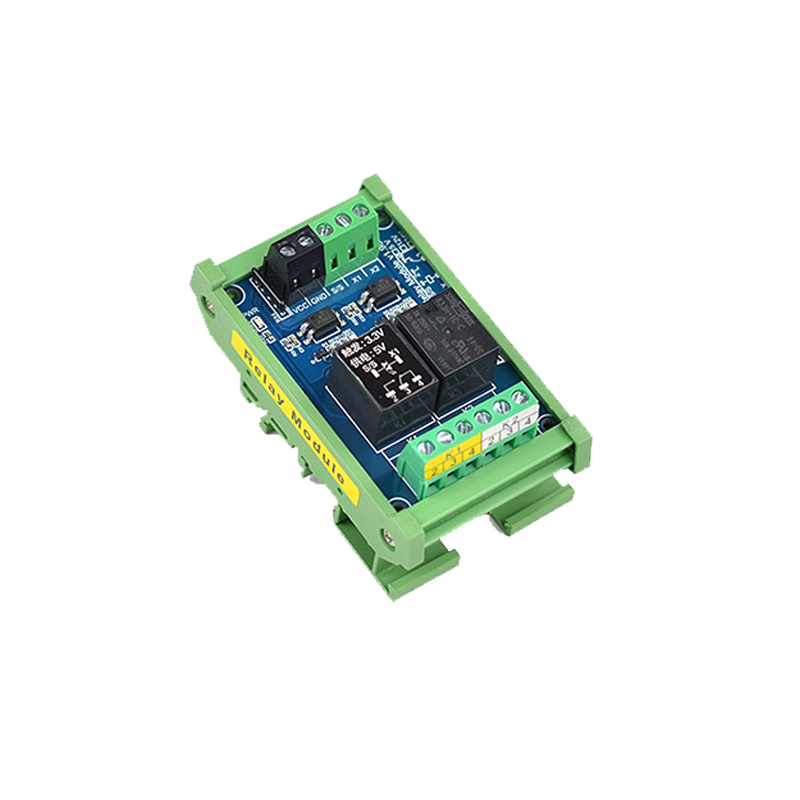
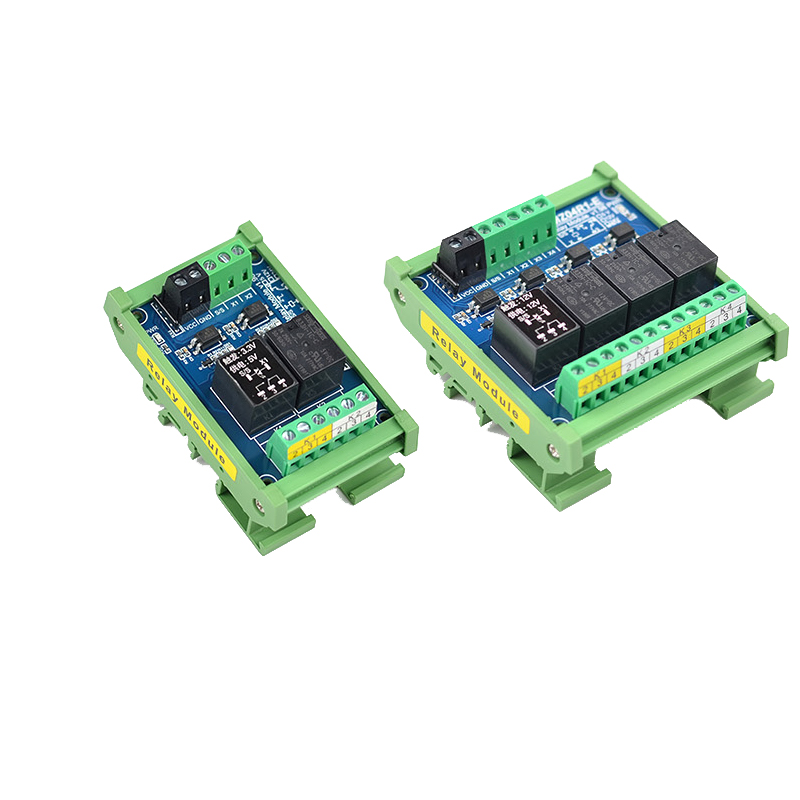
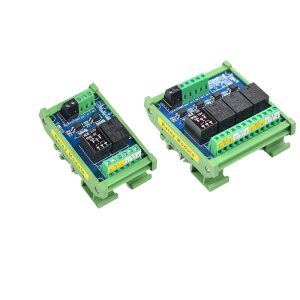
The BMZ-02R1-E is a professional 2-channel relay output module designed specifically for industrial automation, PLC signal amplification, and control system interfacing. Unlike generic open-frame relay boards, this module features a compact plastic enclosure with integrated DIN-rail mounting, making it suitable for installation in control cabinets, machine tool panels, and industrial equipment racks.
Each channel is equipped with a high-quality Songchuan relay featuring SPDT (Single Pole Double Throw) changeover contacts, capable of switching loads up to 10A at 250V AC or 30V DC. The module provides optocoupler isolation between the control inputs and the relay outputs, ensuring galvanic separation that protects your PLC or microcontroller from voltage spikes, back EMF, and ground loop noise.
A key feature of the BMZ-02R1-E is its wide input compatibility — it accepts both NPN (sinking) and PNP (sourcing) control signals within the 3.3V to 5V range. This makes it an ideal signal amplifier board for 3.3V microcontrollers (ESP32, Raspberry Pi Pico, STM32) and 5V systems (Arduino, PLCs) alike, allowing low-voltage logic to safely switch high-power industrial loads.
Common applications include CNC machine peripheral control (brakes, valves, lighting), industrial automation systems, PLC output expansion, and signal isolation for sensitive electronics.
Features
-
2 independent relay channels with optocoupler isolation
-
High-quality Songchuan brand relays (SPDT changeover contacts)
-
Wide control signal range: 3.3V – 5V DC (compatible with NPN and PNP)
-
Industrial plastic enclosure with DIN-rail mounting capability
-
Galvanic isolation between control side and load side
-
Screw terminals for both control inputs and load connections
-
LED indicators per channel for visual status
-
Suitable for NPN (sinking) and PNP (sourcing) PLC outputs
-
Compact dimensions for control cabinet installation
-
Rated for up to 10A resistive load per channel
Technical Parameters
Usage Guide
1. Understanding NPN vs. PNP Input Modes
The BMZ-02R1-E accepts both NPN and PNP control signals, making it versatile for different PLC types:
The module automatically works with either type — no jumpers or configuration needed.
2. Power Supply Connection
⚠️ The module requires 24V DC for operation — do not connect 5V or 3.3V to the power terminals. The control signals are 3.3V–5V, but the module itself runs on 24V.
3. Control Signal Wiring
Connect your PLC or microcontroller outputs to the input terminals:
4. Load Connection (Output Side)
Each relay channel provides three screw terminals:
Example (AC Lamp Control):
AC Live ──→ COM (Relay 1)
Lamp Neutral ──→ AC Neutral
Lamp Live ──→ NO (Relay 1)
5. PLC Connection Examples
Example 1: NPN PLC Output (e.g., Mitsubishi FX Series)
PLC Output Y0 ──→ IN1
PLC 0V Common ──→ COM (Input)
Module VCC ──→ 24V Supply
Module GND ──→ 24V Supply GND
Example 2: PNP PLC Output (e.g., Siemens LOGO!)
PLC Output Q1 ──→ IN1
PLC 0V Common ──→ COM (Input)
Module VCC ──→ 24V Supply
Module GND ──→ 24V Supply GND
6. Microcontroller Connection (3.3V or 5V)
For Arduino, ESP32, or Raspberry Pi Pico:
Microcontroller GPIO Pin ──→ IN1
Microcontroller GND ──→ COM (Input)
Module VCC ──→ 24V Supply
Module GND ──→ 24V Supply GND
The microcontroller’s GND and the module’s input COM must be connected to establish a common reference for the control signals.
7. DIN-Rail Mounting
The BMZ-02R1-E features a standard 35mm DIN-rail mounting channel on the rear of the enclosure. To install:
-
Hook the top edge of the module onto the DIN rail
-
Press the bottom edge downward until the clip snaps into place
-
To remove, pull down on the release tab (usually at the bottom) and lift off
8. Important Notes
-
Control signals are 3.3V–5V — do not apply 24V to IN1/IN2 terminals.
-
Module power is 24V DC — do not apply AC or higher voltage to VCC/GND.
-
The optocoupler provides isolation, but proper safety practices (enclosures, fusing) are still required for AC load wiring.
-
For inductive loads (motors, solenoids, contactors), consider adding external snubber or flyback diode protection.
Q: What is the difference between this BMZ-02R1-E and a generic open relay board?
The BMZ-02R1-E is designed for industrial and professional use with several key advantages:
-
Plastic enclosure with DIN-rail mounting (not an open PCB)
-
Optocoupler isolation on every channel
-
NPN/PNP compatibility — works with any PLC type
-
Songchuan relays — industrial-grade brand with proven reliability
-
Screw terminals for all connections (no soldering required)
Generic open relay boards are fine for benchtop prototypes but not suitable for control cabinet installation.
Q: What is the control signal voltage range?
The BMZ-02R1-E accepts control signals from 3.3V to 5V DC. This makes it compatible with:
-
3.3V microcontrollers (ESP32, Raspberry Pi Pico, STM32, Teensy)
-
5V microcontrollers (Arduino Uno/Nano/Mega, PIC, 8051)
-
5V PLC outputs
-
3.3V sensor and logic outputs
Q: Can I use 24V control signals directly?
No. The input circuit is designed for 3.3V–5V only. Applying 24V to IN1 or IN2 will damage the optocoupler input. If your PLC has 24V outputs, please see our BMZ-02R1-E 24V version (separate product).
Q: What is the purpose of the optocoupler isolation?
Optocouplers provide galvanic separation between the low-voltage control side (your PLC/microcontroller) and the high-voltage relay outputs. This means:
-
No electrical connection exists between input and output
-
Your controller is protected from voltage spikes, back EMF, and ground loops
-
You can safely switch AC mains while keeping your control circuit isolated
This is essential for industrial safety and reliable operation.
Q: What is the current consumption of the module?
-
Idle (no relays active) : ~20–30mA at 24V
-
One relay active : ~50–60mA at 24V
-
Both relays active : ~80–100mA at 24V
A standard 24V DIN-rail power supply (e.g., 24V / 0.5A) is more than sufficient.
Q: Why does the module require 24V power if the control signals are 5V?
The 24V supply powers the relay coils and optocoupler output circuits. Relays require significantly more current than a microcontroller can provide, and the 24V supply ensures consistent, reliable switching even when both channels are active. This is standard for industrial relay modules.
Q: Can I mix AC and DC loads on different channels?
Yes. Each relay channel is independent. You can control an AC lamp on Channel 1 and a DC solenoid on Channel 2, as long as each load stays within the relay’s ratings (10A / 250V AC or 30V DC).
Q: Is the BMZ-02R1-E suitable for controlling inductive loads (motors, pumps, contactors)?
Yes, but with precautions. Inductive loads generate back EMF (voltage spikes) when switched off. While the relay contacts are rated for 10A resistive, inductive loads require derating (use ≤5A for motors). For best reliability, we recommend adding an external snubber circuit (RC snubber) across the load or using a varistor (MOV) for AC motors.
Q: Can I use this module for business / industrial applications?
Absolutely. The BMZ-02R1-E is designed specifically for professional use, including:
-
CNC machine peripheral control (brakes, coolant valves, work lights)
-
PLC output expansion (adding relay outputs to systems with insufficient relay capacity)
-
Industrial automation systems (conveyors, packaging machines, assembly lines)
-
Signal isolation (protecting sensitive PLC inputs from noisy field devices)
-
Control cabinet installations (DIN-rail mounting, enclosed design)
Q: What brand is the relay? Why does it matter?
This module uses Songchuan relays, a well-respected manufacturer in the industrial relay market. Songchuan relays are known for:
-
Reliable mechanical life (10+ million operations)
-
Consistent contact resistance
-
Proven performance in industrial environments
Generic no-name relays are common on low-cost boards; we specify Songchuan to ensure quality and longevity.
Q: How do I mount the BMZ-02R1-E on a DIN rail?
The module has a standard 35mm DIN-rail channel on the back:
-
Tilt the module slightly backward
-
Hook the top edge onto the DIN rail
-
Push the bottom edge forward until the spring clip engages
-
To remove, use a flathead screwdriver to pull down the release tab at the bottom
Q: What is the mechanical life of the relay?
Songchuan relays on this module are rated for approximately 10 million mechanical operations (no load) and 100,000 to 500,000 electrical operations at rated load, depending on load type and switching frequency.
Q: Can I use this module with a Raspberry Pi (3.3V GPIO)?
Yes. The Raspberry Pi’s 3.3V GPIO outputs work perfectly with the BMZ-02R1-E’s 3.3V–5V input range. Connect as follows:
-
Raspberry Pi GPIO pin → IN1 or IN2
-
Raspberry Pi GND → COM (Input)
-
Module VCC → 24V power supply
-
Module GND → 24V power supply GND
Ensure the 24V supply GND and Raspberry Pi GND are connected through the COM terminal — they must share a common reference.
Q: What are the physical dimensions of the module?
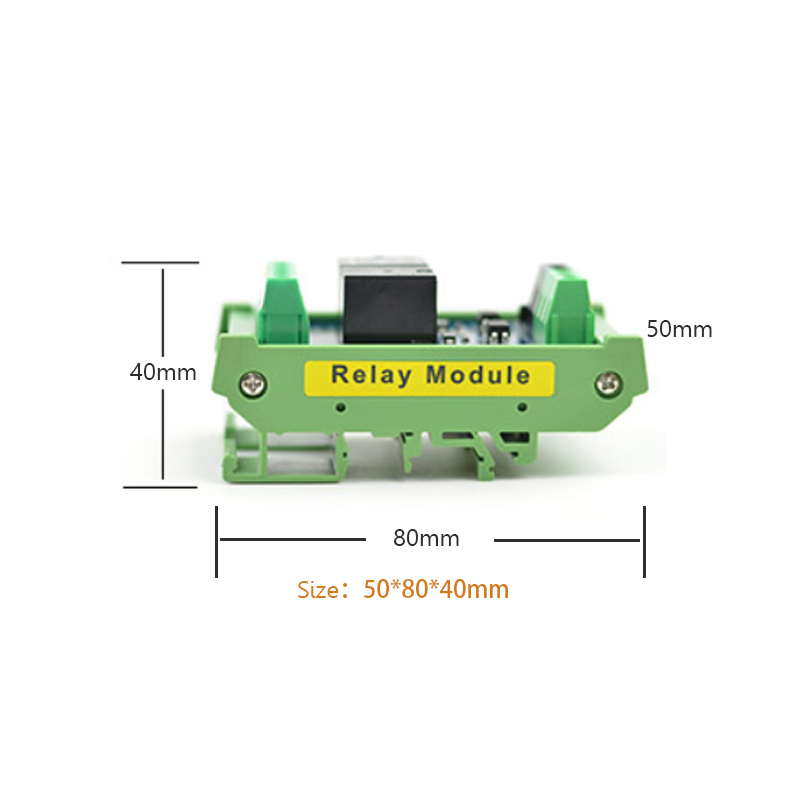
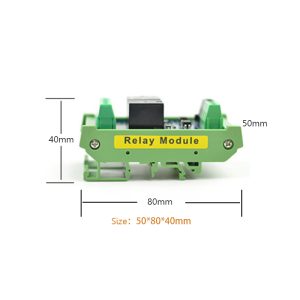
Approximate dimensions: 50mm (width) × 86mm (height) × 40mm (depth). This compact size allows mounting in crowded control cabinets alongside other DIN-rail components.
Q: Does the module have any certifications?
The BMZ-02R1-E is designed for industrial use and complies with relevant safety standards for relay modules. For specific certification details (CE, RoHS, etc.), please refer to the product datasheet or contact our support team.