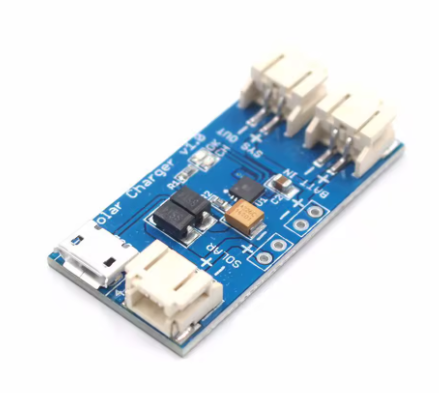
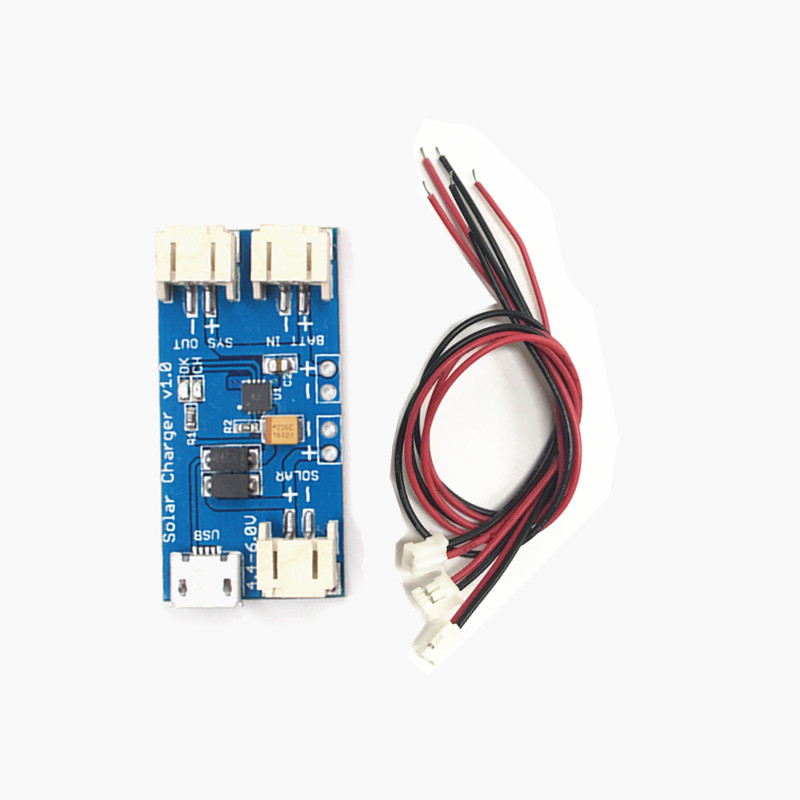
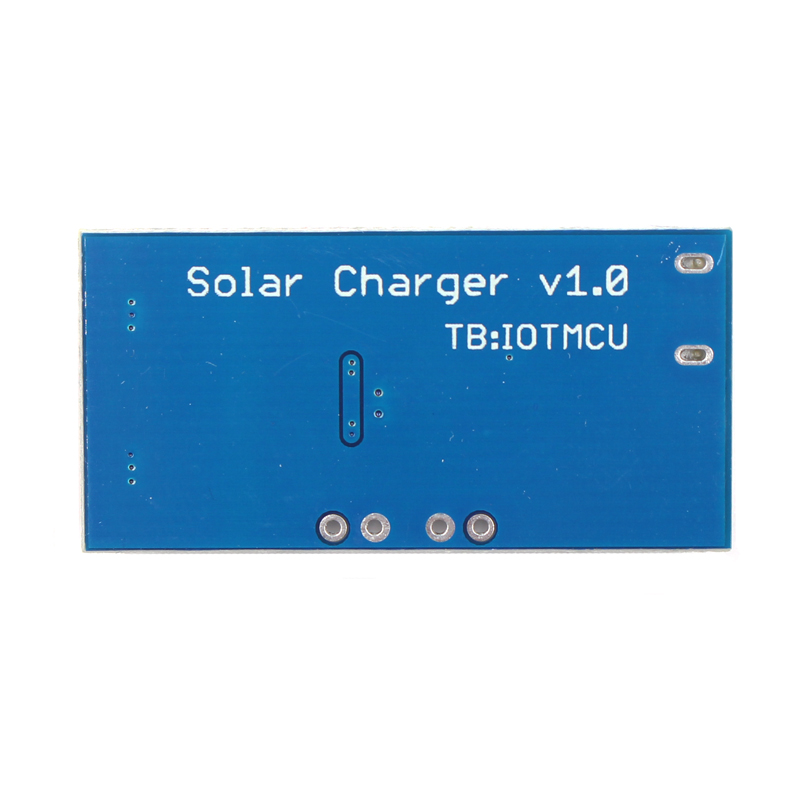
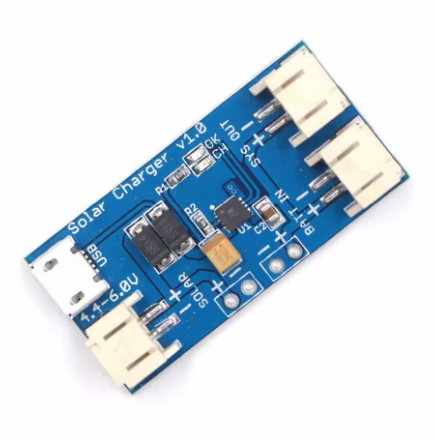
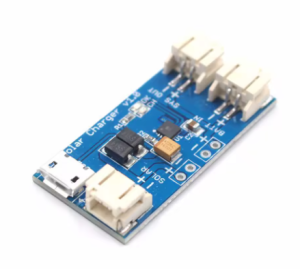
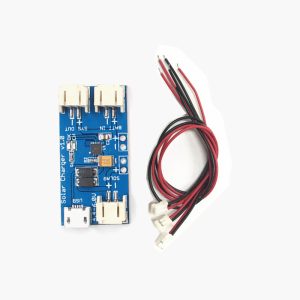
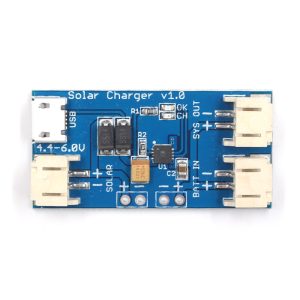
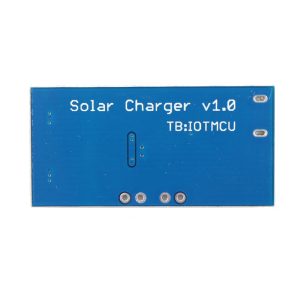
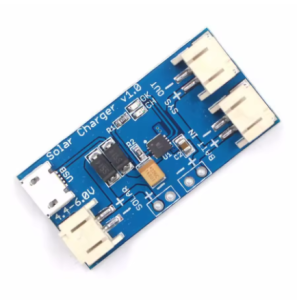
500mA Mini Solar Lithium Battery USB Charger Board – CN3065 Power Module (4.4V-6V Input, Compact Charging Circuit)

SKU: FA1068
Charge Controller IC

CN3065

Input Voltage Range

4.4V – 6V DC

Max Charge Current

500mA (Default)

Full Charge Voltage

4.2V (for 3.7V LiPo/Li-ion)

Charging Method

CC/CV (Constant Current/Constant Voltage)

Interface

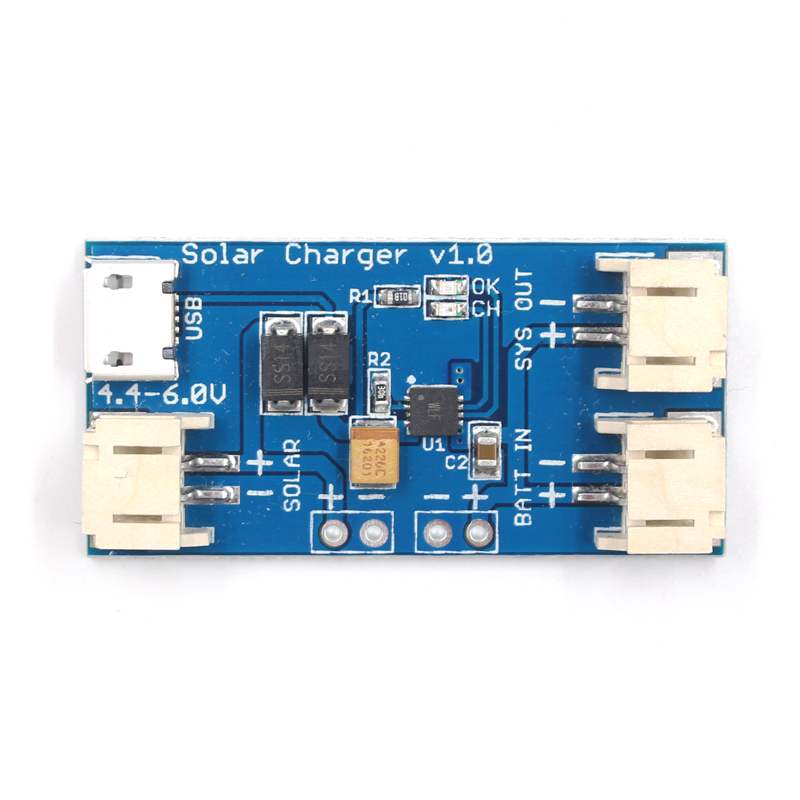
Mini USB (Input), Solder Pads (Solar Input/Battery Output)

Indicators

Red LED (Charging), Green LED (Charged/Full)

Operating Temperature

-40°C to +85°C

The 500mA Mini Solar Lithium Battery USB Charger Board (based on the CN3065 chip) is a highly integrated, compact charging module designed specifically for powering single-cell lithium-ion or lithium-polymer batteries using either solar panels or a standard USB power source. 
Long Product Description
This miniature charging module utilizes the highly efficient CN3065 single-chip lithium battery charge management integrated circuit. It is specifically designed for portable applications that require flexible power input options. The board can seamlessly draw power from a standard 5V USB source or a solar panel array with an input voltage between 4.4V and 6V. 
The charger operates on a constant-current/constant-voltage (CC/CV) mode, which is the safest and most efficient method for charging Li-ion/LiPo batteries. It automatically detects the input source, manages the charge cycle, and provides a clear LED indicator for charging status. Crucially for embedded systems, it includes deep discharge recovery and thermal regulation features, ensuring battery longevity and system safety. Its tiny footprint makes it an ideal component for IoT devices, remote sensors, and DIY electronics projects that require an efficient, self-sufficient power management solution. 
Key Features
  • Dual Power Input: Supports charging from both Mini-USB port (5V) and a dedicated solder pad/terminal for a solar panel (4.4V to 6V input range).
  • Safe Charging Profile: Uses the industry-standard Constant-Current/Constant-Voltage (CC/CV) charging method.
  • Configurable Charge Current: Capable of up to 500mA charge current by default, with easy modification possible by changing an external resistor.
  • Battery Protection: Integrated features include over-discharge recovery, ensuring the battery can be safely recharged even after deep depletion.
  • LED Status Indicators: Clear red (charging) and green (charged) LEDs provide real-time visual feedback.
  • Compact Footprint: Ultra-small size (approximately 20mm x 15mm) suitable for space-constrained applications
Usage Instructions
  1. Input Power Connection: Connect a 5V source via the Mini-USB port OR connect a compatible solar panel (4.4V-6V) to the designated SOLAR_IN+ and SOLAR_IN- solder pads.
  2. Battery Connection: Solder or connect your single-cell 3.7V Lithium Polymer/Ion battery to the BAT+ and BAT- pads. Ensure correct polarity.
  3. Load Connection: Solder your project’s load (e.g., microcontroller, sensor) to the OUT+ and OUT- pads. Note: This board is only a charger and protection circuit, not a boost converter. Output voltage will range from battery voltage (approx 3V) to 4.2V.
  4. Monitoring: The red LED illuminates during charging. The green LED lights up when the battery is full
Q: Can this board charge a 9V battery or NiMH batteries?

No. This module is strictly designed for single-cell 3.7V Lithium Polymer (LiPo) or Lithium Ion (Li-ion) batteries with a full charge voltage of 4.2V

Q: What size solar panel do I need?

You need a 6V solar panel with a current output of at least 100mA for basic charging, up to 500mA for maximum charge speed. The input voltage must stay within the 4.4V to 6V range

Q: Can I use this in my commercial IoT product?

Yes. The CN3065 chip is a reliable, industry-standard component. Its compact size and dual-input flexibility make it suitable for integration into professional products. Bulk pricing is generally available from suppliers for business procurement

Q: Does this board provide a stable 5V output for my Arduino?

No. The OUT+ and OUT- pads provide the battery voltage directly (which varies between roughly 3V and 4.2V). You will need an external 3.7V-to-5V boost converter module if your project requires a stable 5V power supply

Q: Can I change the charging current from 500mA to something else?

Yes. The charge current is determined by an external resistor (RPROG). By changing this resistor (e.g., to a 2k resistor for 500mA, or a 4k resistor for 250mA), you can set a custom charging current to better match smaller batteries