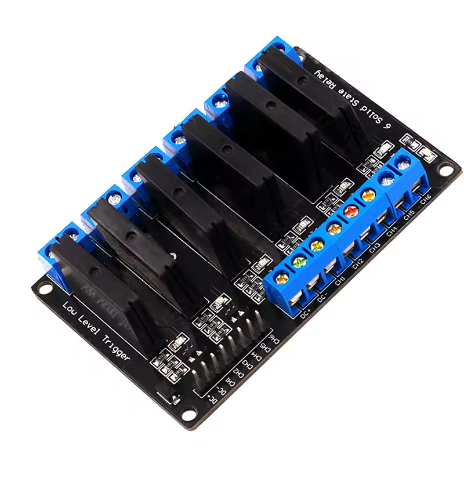
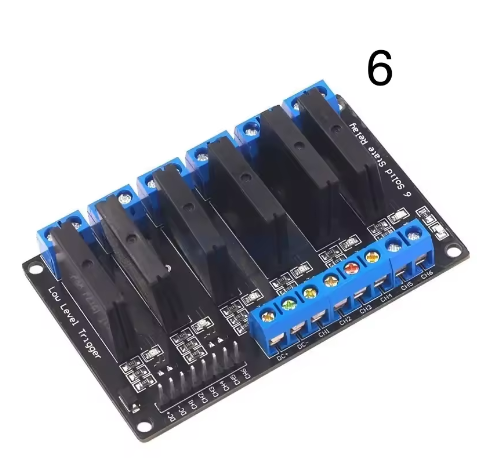
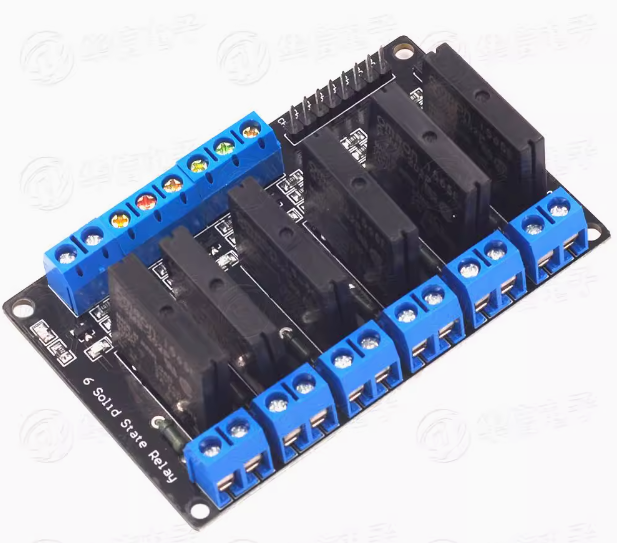
Product Description
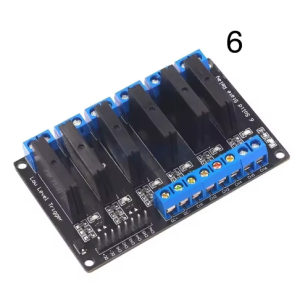
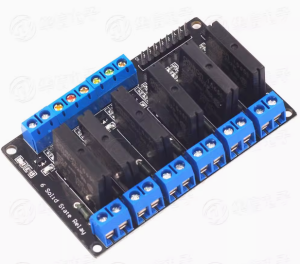
The 6-Channel Solid State Relay Module (AC to DC Control) is a sophisticated, high-density interface bridge engineered to seamlessly connect traditional AC-based control systems with modern DC-powered equipment. This advanced module enables six standard 100-240V AC control signals—such as those from wall switches, timers, or safety interlocks—to independently and safely operate low-voltage DC loads ranging from 3V to 24V. It is the ultimate solution for upgrading legacy installations, integrating mixed-voltage systems, and building reliable control panels where AC logic must command DC actuators, sensors, or electronics.
Featuring individual 2500V optical isolation on all six channels, this module ensures absolute electrical separation, protecting sensitive DC circuits from AC line transients, noise, and potential ground faults. The intelligent design includes automatic wide-range DC voltage detection, eliminating the need for manual configuration when switching between different DC power supplies. With selectable high/low-level trigger logic for flexible response to various AC signal states, and the silent, long-lasting benefits of solid-state technology, this module is indispensable for industrial automation, smart building integration, and complex multi-zone control systems requiring robust and silent switching between AC and DC domains.
Key Features
-
Six Independent AC-to-DC Channels: High-density design for controlling up to six different DC circuits or zones from AC control signals, all from a single, compact module.
-
Universal AC Input Control: Compatible with worldwide AC control voltages from 100V to 240V AC at 50/60Hz, allowing use with standard wall switches, contactors, and sensors.
-
Wide-Range DC Output (3-24V): Automatically detects and switches any DC load voltage within the 3V to 24V range, providing exceptional versatility for powering motors, LEDs, solenoids, and controllers.
-
Selectable Trigger Logic: Each channel can be individually configured via jumper for High-Level (active when AC is present) or Low-Level (active when AC is absent) trigger operation.
-
Full Optical Isolation per Channel: Advanced 2500Vrms optocoupler isolation on every channel provides complete protection, preventing AC-side noise and surges from damaging DC-side electronics.
-
Solid-State Reliability & Silence: No moving parts ensures silent operation, fast switching, zero contact bounce, and a dramatically longer lifespan than mechanical alternatives.
-
Zero-Crossing Switching: Integrated zero-crossing detection on the AC input minimizes inrush current and electromagnetic interference for cleaner, more reliable operation.
-
Clear Per-Channel Status Indicators: Bright LEDs for each channel provide instant visual feedback on the switching state, crucial for system monitoring and diagnostics.
Main Parameters
-
Number of Channels: 6 Independent Channels
-
AC Control Input: 100-240V AC, 50/60Hz
-
DC Load Output: 3-24V DC (Wide Range, Auto-detecting)
-
Maximum Load Current: 2A per channel
-
Trigger Mode: High-Level or Low-Level (Jumper Selectable)
-
Isolation Voltage: 2500V RMS (Input to Output)
-
Switching Function: Zero-Crossing
-
On-state Voltage Drop: < 1.5V DC
-
Dimensions: Approx. 145mm x 95mm x 30mm
Typical Applications / Usage
-
Industrial Machine Modernization: Upgrade existing machinery with AC-controlled safety gates, limit switches, or push-buttons to reliably trigger 24V DC PLC inputs, safety relays, or solenoid valves without rewiring the main control circuit.
-
Commercial Building Automation: Integrate standard 120/240V AC building management signals or thermostats to control modern 12V/24V DC LED lighting systems, motorized window blinds, or damper actuators.
-
Multi-Zone Safety & Interlock Systems: Create complex safety circuits where the status of multiple AC-powered machines or doors must control DC-powered alarms, warning lights, or equipment shutdown sequences in a fail-safe manner.
-
Renewable Energy System Control: Use AC output status from inverters, grid-tie sensors, or generators to automatically control DC battery chargers, diversion loads, or monitoring equipment in solar/wind installations.
-
Theatrical & Display Automation: Build silent, reliable control systems where AC dimmers or show controllers need to activate low-voltage DC motors, props, or special effects devices.
-
Prototyping Complex Control Panels: An essential tool for R&D and system integrators designing panels that require multiple, isolated interfaces between AC control logic and DC-powered subsystems.
Implementation Guide:
-
Configuration: Set the trigger jumper for each channel to “H” (activates when AC voltage is detected) or “L” (activates when AC voltage is absent) based on your control signal’s normal state.
-
AC Control Signal Wiring: Connect the AC source (e.g., from a switch, sensor, or timer output) to the AC input terminals of the desired channel. Ensure proper connection to Line and Neutral if specified.
-
DC Load Wiring: Connect your DC power source (3-24V) to the module’s DC input terminals. Connect your DC device (e.g., 12V fan, 24V solenoid) to the output terminals of the corresponding channel. The module auto-adapts to the supplied DC voltage.
-
Critical Safety: Always disconnect ALL power sources (both AC and DC) before making or modifying any connections. Use appropriate enclosures, follow all local electrical codes, and verify wiring with a multimeter.
Q: What is the core function of this AC-to-DC SSR module?
It acts as an isolated, signal-converting interface. It allows a high-voltage AC signal (like a wall switch at 120VAC) to safely turn on/off a low-voltage DC device (like a 12VDC pump). It’s the reverse of a standard DC-controlled AC SSR, solving integration challenges in modernized or mixed systems.
Q: Can I use this module to switch AC loads, like a lamp or heater?
No, this module is designed exclusively for switching DC loads on its output side. The output terminals provide a switched DC voltage. To control an AC load, you would need our standard DC-to-AC SSR module.
Q: How does the automatic 3-24V DC wide range work? Do I need to set anything?
No configuration is needed. The module’s output stage automatically adapts to the DC voltage you supply to it, within the 3-24V range. You can connect a 5V, 12V, or 24V power supply, and the module will switch it correctly. Just ensure your connected DC device matches that supply voltage.
Q: I have a simple wall switch. Should I use High or Low-Level trigger?
For a standard wall switch that provides 120VAC when ON (closed) and 0V when OFF (open), you would typically use Low-Level trigger. This means the DC output will be ON (active) when the switch is OFF (0VAC) and vice-versa, which is often the desired logic for lighting. Use High-Level trigger for the opposite behavior.
Q: Can I control a DC motor's speed with this using PWM?
No. This module is designed for on/off switching only. The zero-crossing circuitry and solid-state design are not compatible with the high-frequency switching of Pulse Width Modulation (PWM) needed for speed control. A dedicated DC motor speed controller (PWM driver) is required.
Q: What if my DC load requires more than 2A per channel?
Do not exceed the 2A rating, as it will cause overheating and failure. For higher-current DC loads, you can use one channel of this module to control the coil of a high-current DC-rated mechanical contactor or relay, which is designed to switch the larger load.
Q: Do the six channels share a common DC output or are they separate?
The DC output sides are typically separate. You can power each channel with a differentDC voltage (e.g., 5V on channel 1, 24V on channel 2) as long as each is within the 3-24V range. They do not share a common DC bus unless you wire them that way externally.
Q: Is this suitable for OEM integration into our commercial product?
Absolutely. Its professional specifications—including high channel count, wide voltage range, optical isolation, and robust construction—make it ideal for OEM integration into industrial control equipment, building automation panels, and specialized machinery. We offer volume pricing, custom labeling, and technical collaboration for qualified business clients. Contact our sales team for detailed OEM specifications.