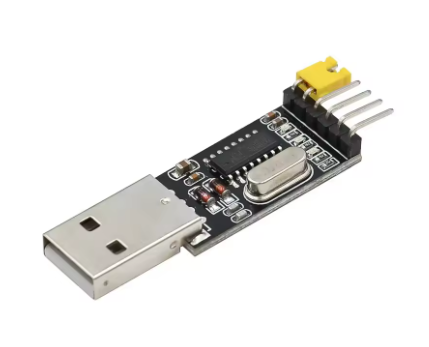
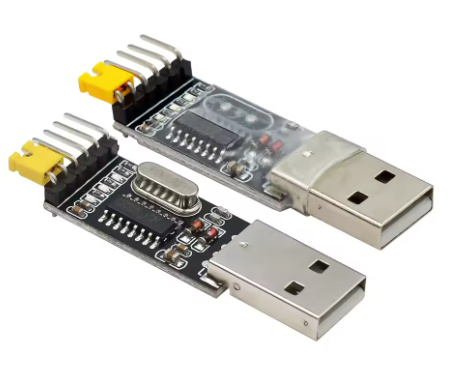
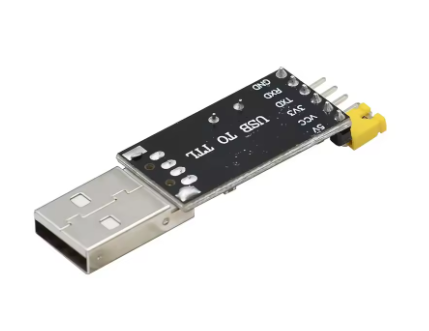
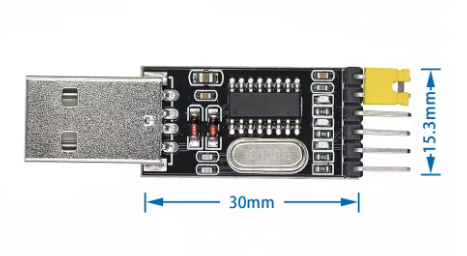
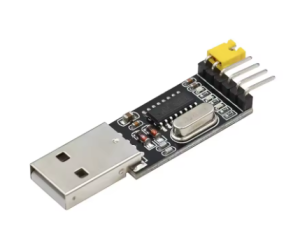
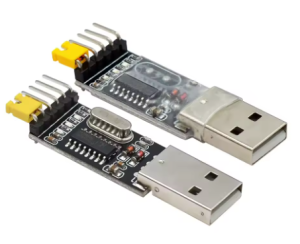
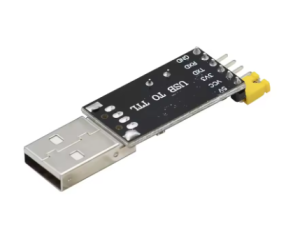
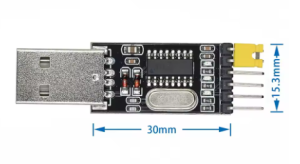
CH340G flash board module USB to TTL STC microcontroller download line nine flash machines

SKU: FA2046-1-1
Main Chipset

CH340G (With External 12MHz Crystal)

Interface Type

USB Type-A (Male)

Logic Output

3.3V or 5V (Selectable via Jumper)

Baud Rate Range

50 bps to 2 Mbps

Output Power

5V (Up to 500mA) / 3.3V (Up to 100mA)

Supported OS

Windows 7/8/10/11, macOS, Linux, Android

Standard Pinout

5V, 3V3, TXD, RXD, GND

PCB Dimensions

~33mm x 16mm

Product Description
The CH340G USB to TTL Flash Module is an essential high-stability tool designed for firmware deployment and hardware debugging. Powered by the industry-standard CH340G chipset with a dedicated external 12MHz crystal oscillator, this module provides the precise timing accuracy required for “flashing” operations—the process of uploading or recovering system software on microcontrollers, routers, hard drives, and satellite receivers.
Specifically optimized as an STC Microcontroller Download Line, it handles the unique power-cycling requirements of STC chips with ease. The module acts as a transparent bridge between your computer’s USB port and the TTL serial interface of your target hardware. With its integrated jumper for switching between 3.3V and 5V logic, it is a “universal” solution for everything from 5V legacy systems to modern, low-power IoT devices like the ESP8266 and STM32.
Key Features
  • Industrial CH340G Core: Features an external 12MHz crystal for high-precision baud rate synchronization, significantly reducing data errors during high-speed flashing.
  • STC Optimized: Engineered for stable “cold start” downloads required by STC microcontrollers.
  • Multi-Platform Flashing: The go-to tool for “unbricking” or upgrading firmware on routers, hard drives, set-top boxes, and 3D printer boards.
  • Dual-Voltage Logic Toggle: Onboard jumper allows instant switching between 3.3V and 5V power and signal levels to prevent overvoltage damage to sensitive chips.
  • Integrated Protection: Features an onboard 500mA self-restoring fuse to protect your computer’s USB port from accidental shorts or current spikes.
  • Visual Status Feedback: High-brightness LEDs for Power (PWR), Transmit (TX), and Receive (RX) provide real-time confirmation of data activity.
Usage & Applications
  • STC Microcontroller Programming: Reliable “Download Line” for the entire STC89 / STC12 / STC15 series.
  • Firmware Flashing (Unbricking): Recovering corrupted firmware on networking equipment (routers/switches) and consumer electronics.
  • Hardware Debugging: Monitoring real-time serial logs from embedded systems during development.
  • Satellite & Radio Maintenance: Programming and configuring radio base stations and satellite receiver consoles.
  • IoT Device Setup: Flashing AT firmware or custom code to ESP8266, ESP32, and LoRa modules.
Q: Can I use this to program an Arduino?
Yes. This module can program Arduino Pro Mini or custom AVR boards. Note: If your board requires an “Auto-Reset” pin (DTR), ensure your wiring connects to the DTR pin on the module (if available) or manually press the reset button during the upload.
Q: Why is the external crystal important for flashing?
Firmware “flashing” is timing-sensitive. The external 12MHz crystal on the CH340G provides a much more stable clock signal than internal oscillators, ensuring that the baud rate doesn’t drift during large file transfers.
Q: Does this work with Windows 11?

Absolutely. The CH340G is one of the most compatible serial chips in the world. Windows 10 and 11 usually recognize and install the driver automatically.

Q: Is it safe for 3.3V devices like the Raspberry Pi or ESP8266?

Yes, but you must set the onboard jumper to the 3.3V position before connecting. Sending 5V signals to a 3.3V device can permanently damage it.

Q: My STC chip won't download. What is the trick?

STC chips require a power-cycle to enter download mode. Click “Download” in the software first, then apply power to the STC microcontroller (or toggle its power switch) to start the process.