ESP32-C3 SuperMini Development Board – 4MB Flash, Unsoldered (Compact IoT & Wireless PCB)

SKU: FA1053-1-1
Microcontroller

ESP32-C3FN4 (32-bit RISC-V single-core)

Clock Speed

Up to 160 MHz

Flash / SRAM / ROM

4 MB Flash / 400 KB SRAM / 384 KB ROM

Wireless

WiFi 802.11 b/g/n (2.4 GHz), Bluetooth 5.0 (LE)

GPIO / ADC

11 digital I/O (PWM), 4 analog inputs (ADC)

Operating Voltage

3.3V logic; 5V via USB-C or 3.3–6V external

Deep Sleep Current

Approximately 43 µA

Dimensions

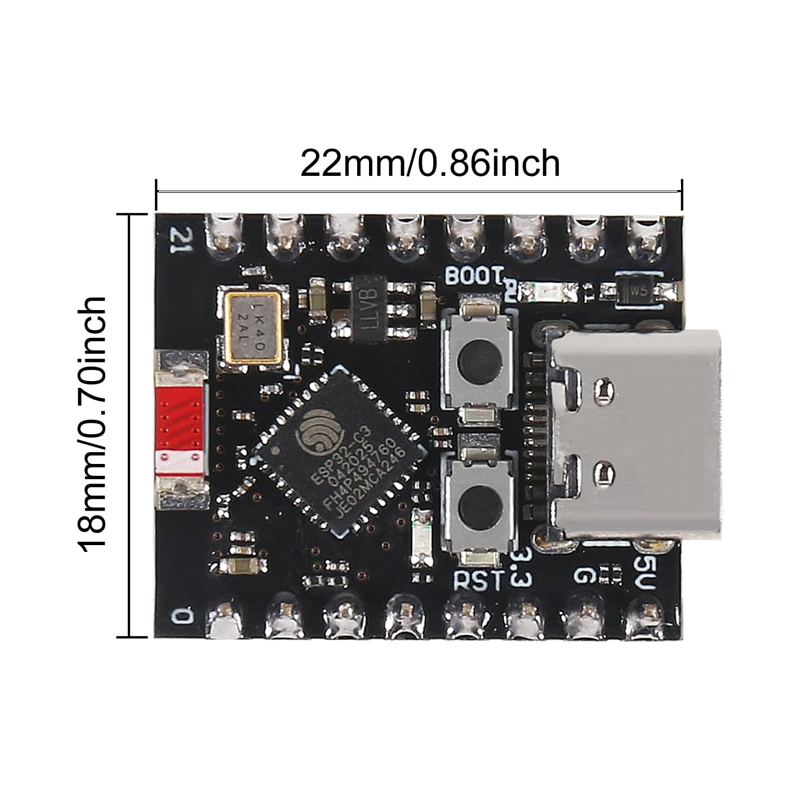
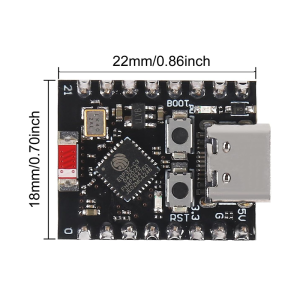
22.5 × 18 mm

The ESP32-C3 SuperMini Development Board is an ultra-compact, high-performance IoT platform built around Espressif’s ESP32-C3 RISC-V microcontroller. Designed for space-constrained applications, this board packs WiFi, Bluetooth 5.0, and a capable 32-bit processor into a thumb-sized form factor measuring just 22.5 × 18 mm — small enough to embed into wearables, sensor nodes, and portable devices where traditional development boards simply won’t fit .

At its core is a 32-bit RISC-V single-core processor running at up to 160 MHz, featuring a Floating Point Unit (FPU) for efficient 32-bit single-precision calculations . The chip includes 400 KB SRAM, 384 KB ROM, and 4 MB of onboard Flash for program and data storage . This RISC-V architecture provides a modern, efficient alternative to traditional ARM-based microcontrollers, with strong performance and low power consumption.

The board supports WiFi 802.11 b/g/n on the 2.4 GHz band and Bluetooth 5.0 (LE), enabling versatile wireless connectivity for IoT applications . It supports Station mode, SoftAP mode, SoftAP+Station mode, and promiscuous mode for flexible network configurations . The deep sleep current is approximately 43 µA, making it exceptionally well-suited for battery-powered and energy-conscious applications where extended operational life is essential .

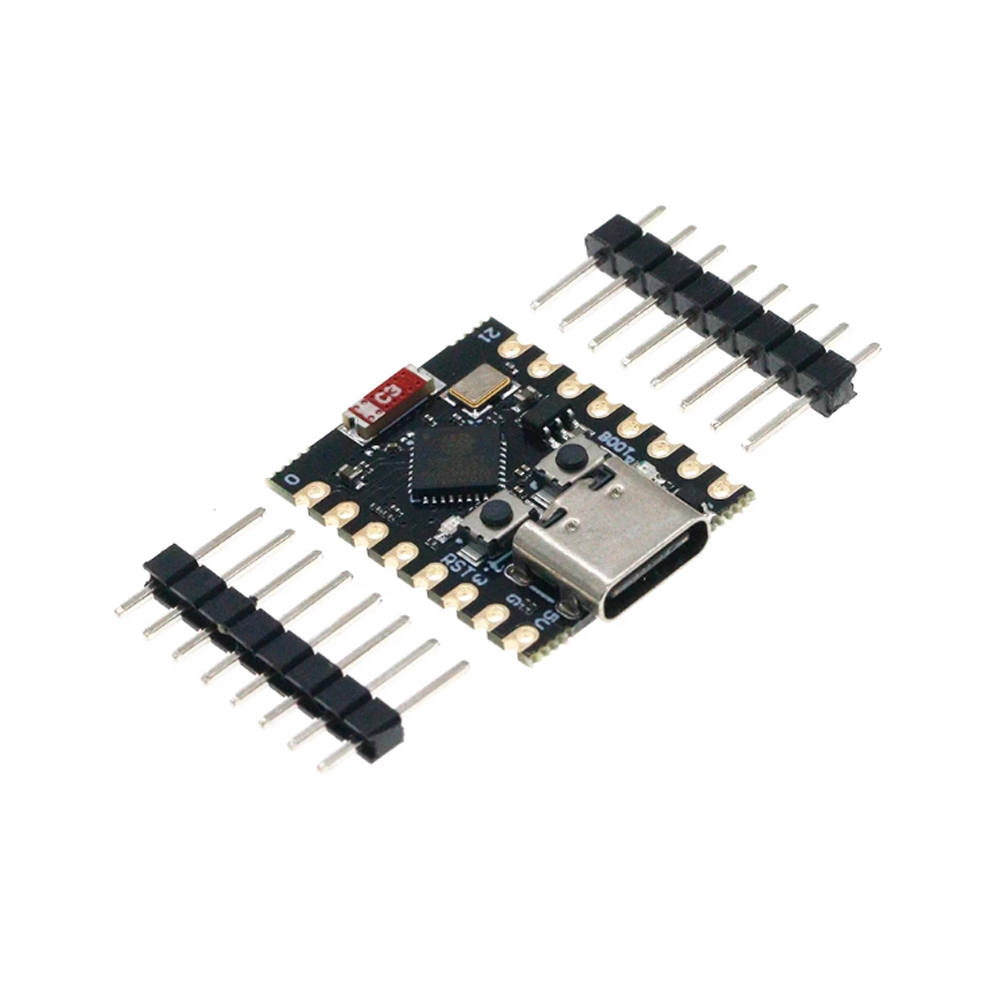
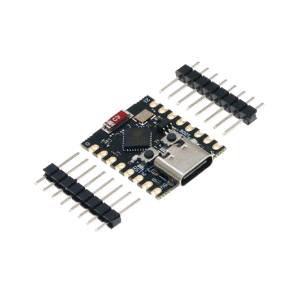
The “Unsoldered” designation means the board ships without pin headers attached, giving you the flexibility to choose your connection method. You can solder headers for breadboard use, or leverage the board’s castellated holes to solder it directly onto a carrier PCB for a low-profile, permanent installation . This makes the SuperMini ideal for both prototyping and production integration.

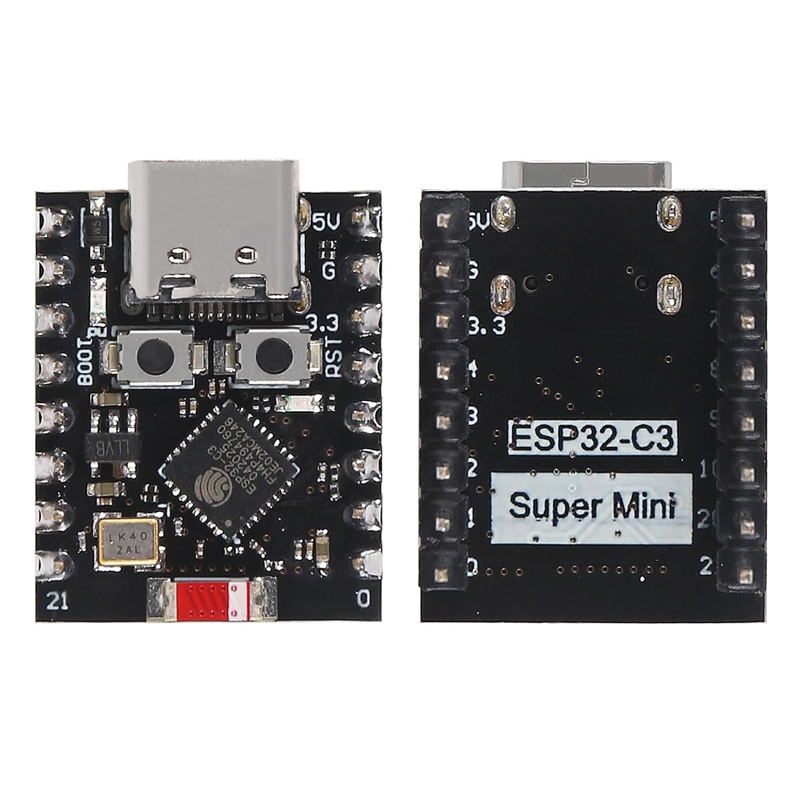
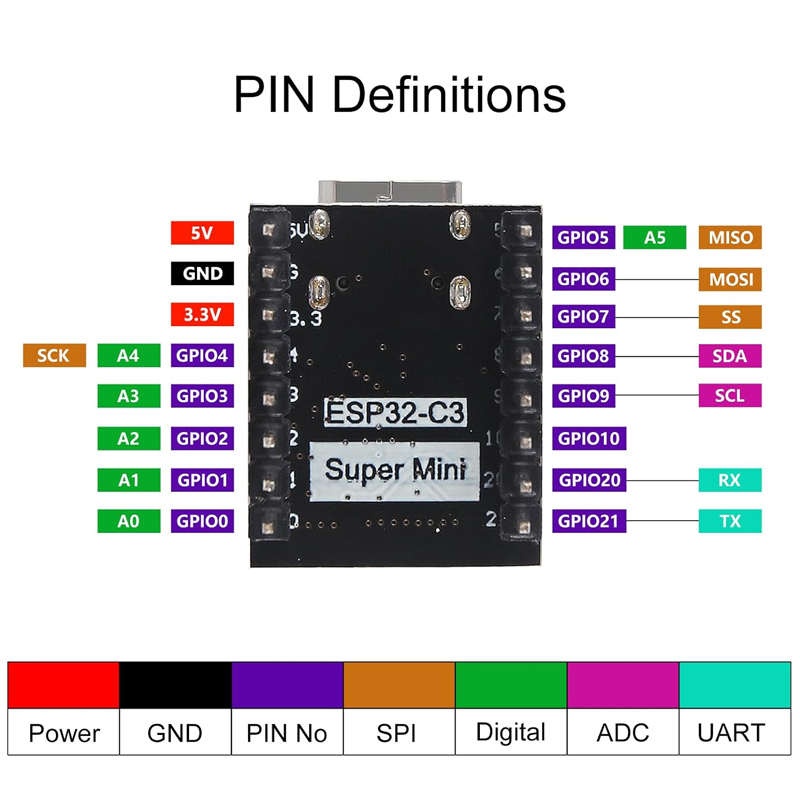
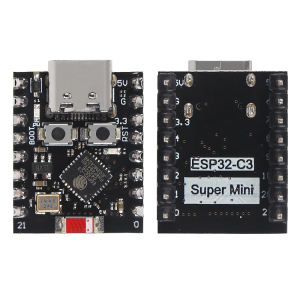
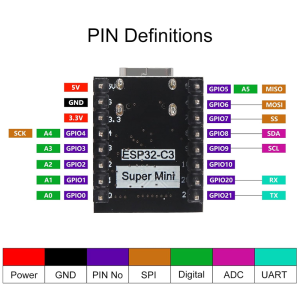
The board exposes 11 digital I/O pins (all PWM-capable) and 4 analog input pins (ADC-capable), along with UART, I2C, and SPI interfaces for connecting sensors, displays, and peripherals . A USB Type-C connector handles power and programming, and the board includes a reset button and a BOOT button for entering download mode . An onboard blue LED on GPIO8 provides visual feedback for testing and debugging .

The ESP32-C3 SuperMini is supported by the Arduino IDE, ESP-IDF, and MicroPython, with extensive community libraries and examples available. Whether you are building a smart home sensor, a wearable device, a wireless controller, or a compact IoT gateway, this board provides a powerful, cost-effective foundation in an exceptionally small package. It is suitable for individual makers, students, and businesses purchasing in bulk for product development or educational programs .

Features

  • ESP32-C3 RISC-V single-core processor — 32-bit architecture at up to 160 MHz with FPU for efficient computation

  • Ultra-compact form factor — Thumb-sized at 22.5 × 18 mm, ideal for wearables and space-constrained designs

  • WiFi & Bluetooth 5.0 — 802.11 b/g/n and BLE 5.0 for versatile wireless connectivity

  • 4MB onboard Flash — Sufficient storage for programs and data

  • Ultra-low power consumption — Deep sleep current approximately 43 µA for battery-powered applications

  • Castellated holes & unsoldered headers — Flexible mounting options for prototyping or direct PCB soldering

  • Rich I/O interface — 11 PWM-capable GPIOs, 4 ADC inputs, 1× I2C, 1× SPI, 2× UART

  • USB Type-C connector — Modern, reversible connector for power and programming

  • Onboard LED & buttons — Blue LED on GPIO8, plus reset and BOOT buttons for easy operation

  • Wide development support — Arduino IDE, ESP-IDF, and MicroPython compatible

Technical Specifications 

# Parameter Specification
1 Microcontroller ESP32-C3FN4 (32-bit RISC-V single-core)
2 Clock Speed Up to 160 MHz
3 Flash / SRAM / ROM 4 MB Flash / 400 KB SRAM / 384 KB ROM
4 Wireless WiFi 802.11 b/g/n (2.4 GHz), Bluetooth 5.0 (LE)
5 GPIO / ADC 11 digital I/O (PWM), 4 analog inputs (ADC)
6 Operating Voltage 3.3V logic; 5V via USB-C or 3.3–6V external
7 Deep Sleep Current Approximately 43 µA
8 Dimensions 22.5 × 18 mm

Usage

Getting Started

  1. Solder headers (optional) — The board ships without headers. Solder the included pin headers if you plan to use it on a breadboard. Alternatively, use the castellated holes to solder the board directly onto a carrier PCB .

  2. Connect via USB-C — Use a USB-C cable to connect the board to your computer. The board is powered and ready for programming .

  3. Install board support — In Arduino IDE, install the ESP32 board package via Boards Manager. For ESP-IDF or MicroPython, follow the respective setup guides.

  4. Select the board — Choose an appropriate ESP32-C3 board definition (e.g., “ESP32C3 Dev Module”).

  5. Upload your sketch — If uploading fails, hold the BOOT button, press and release RESET, then release BOOT to enter download mode .

  6. Test the onboard LED — The blue LED on GPIO8 can be used for quick “Blink” tests to verify your setup .

Power Options

  • USB-C power — 5V via the USB-C port (default for programming and testing).

  • External power — 3.3V to 6V via the 5V and GND pins. Do not connect USB and external power simultaneously .

Typical Applications

  • Wearable devices — Compact size and low power consumption suit fitness trackers, smart watches, and portable electronics

  • IoT sensor nodes — WiFi and BLE connectivity for remote monitoring and data collection

  • Smart home devices — Connected switches, sensors, and controllers

  • Wireless controllers — BLE-based peripherals and remote controls

  • Space-constrained prototypes — When a standard development board is too large

  • Educational projects — Learning RISC-V and ESP32 development with an affordable, capable board

Notes for Business Buyers

  • Unsoldered headers provide flexibility — Choose between breadboard use or direct PCB integration via castellated holes .

  • Ultra-low power consumption — Ideal for battery-powered products where operational life is critical .

  • RISC-V architecture — Modern, efficient processing with strong toolchain support.

  • Suitable for bulk purchasing — Compact form factor and low cost make it practical for product development and volume deployment.

Q: What is the ESP32-C3 SuperMini used for?

It is a compact IoT development board for wireless projects including wearables, sensor nodes, smart home devices, and space-constrained applications requiring WiFi and Bluetooth connectivity

Q: What does “Unsoldered” mean for this product?

The board ships without pin headers attached. This gives you the flexibility to solder headers for breadboard use, or to solder the board directly onto a carrier PCB using its castellated holes .

Q: Is the ESP32-C3 compatible with the Arduino IDE?

Yes. It is supported through the Arduino-ESP32 board package. Select an appropriate ESP32-C3 board definition in the Tools menu .

Q: What is the deep sleep current of this board?

The deep sleep current is approximately 43 µA, making it suitable for battery-powered applications that require extended operational life .

Q: How do I enter download mode?

Hold down the BOOT button, press and release the RESET button, then release the BOOT button. The board will enter download mode for firmware flashing .

Q: What is the difference between the ESP32-C3 and ESP32-WROOM-32?

The ESP32-C3 uses a RISC-V single-core processor at 160 MHz, while the ESP32-WROOM-32 uses a dual-core Xtensa LX6 at up to 240 MHz. The C3 is more compact and power-efficient, while the WROOM-32 offers more processing power and GPIOs.

Q: Does this board support Bluetooth 5.0?

Yes. The ESP32-C3 supports Bluetooth 5.0 (LE) with features including Bluetooth mesh .

Q: What is the operating voltage?

The board operates at 3.3V logic. It can be powered via USB-C (5V) or through the 5V pin with an external supply of 3.3V to 6V .

Q: Can I use external power while the USB is connected?

No. Do not connect USB and external power simultaneously. Choose one power source only .

Q: Can I purchase in bulk for a product development project?

Yes. This board is suitable for both individual users and business purchasing, including product development, IoT integration, and volume production. The compact form factor and low cost make it practical for deployment in commercial products .