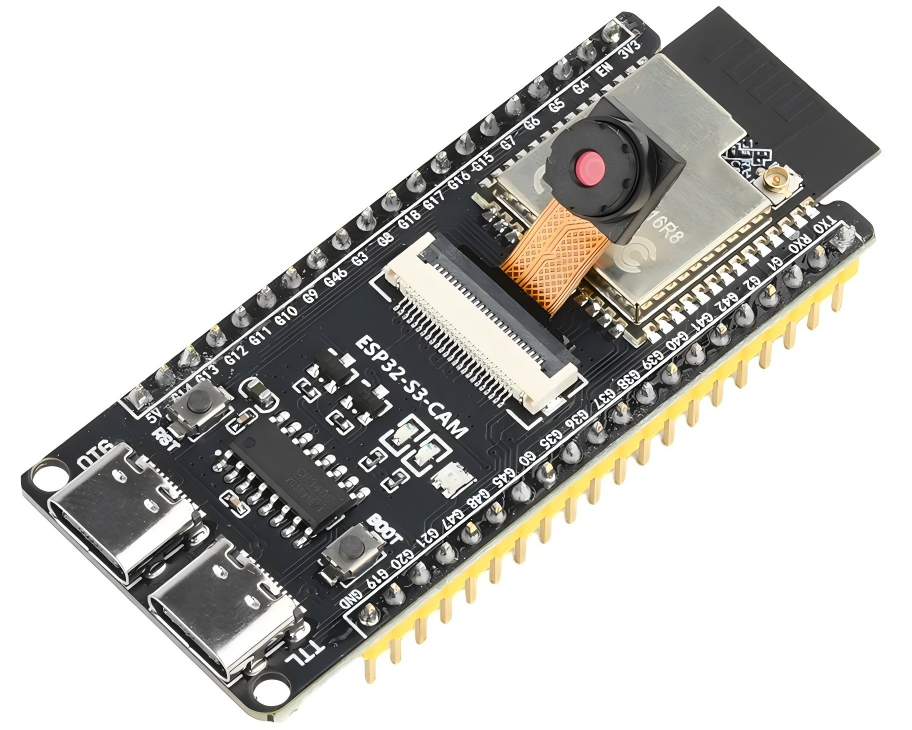
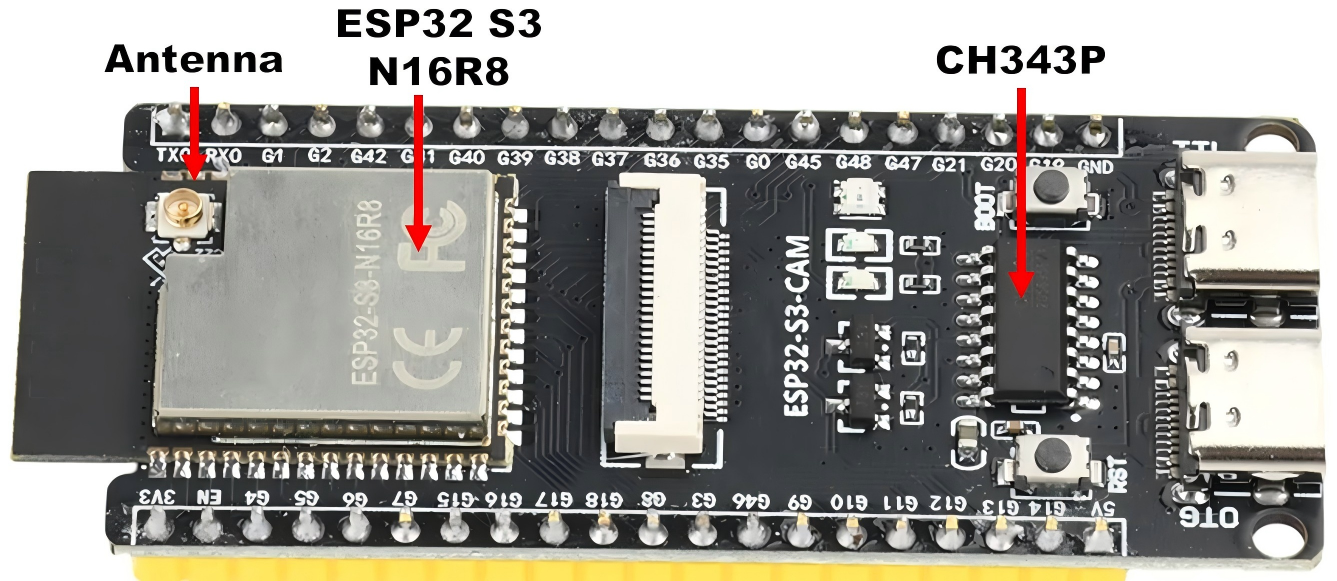
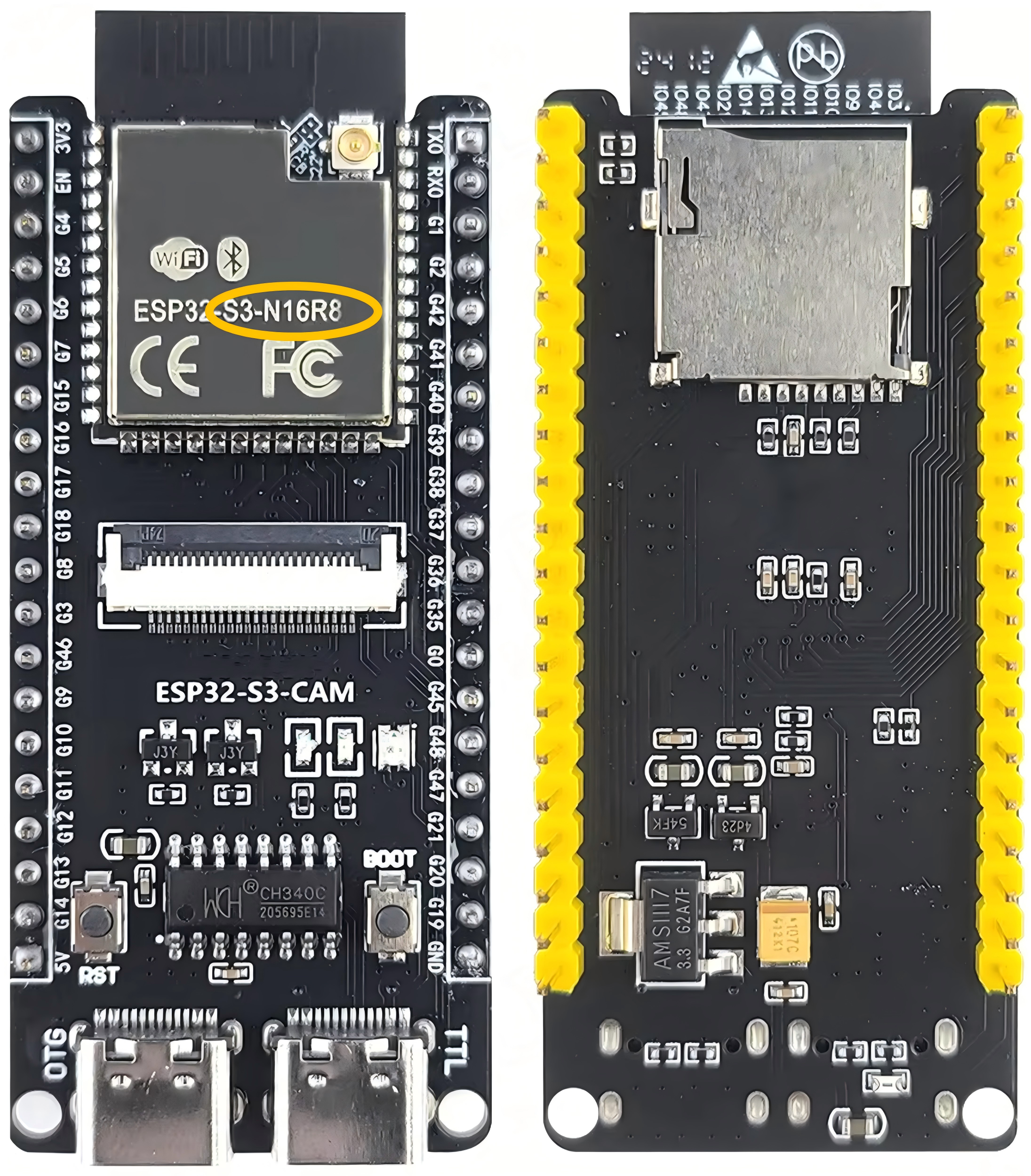
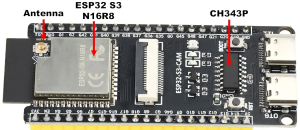
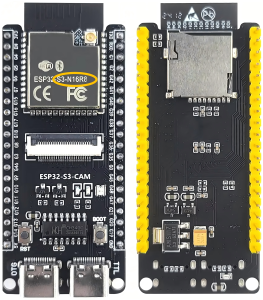
This high-performance ESP32-S3-CAM development board is a professional-grade AIoT (AI + IoT) platform. Specifically configured for 2025 standards, it features the ESP32-S3-WROOM-1 (N16R8) module, the widely compatible CH340 serial chip, and a pre-installed OV2640 camera. This version comes with pre-soldered headers, making it ready for immediate integration into projects or breadboards.
Product Description
The ESP32-S3-CAM N16R8 is engineered for advanced edge computing and vision tasks. Unlike standard ESP32 models, the S3 core includes specialized vector instructions that significantly accelerate AI workloads such as facial recognition, object detection, and voice processing.
Equipped with a massive 16MB Flash and 8MB Octal PSRAM, this board eliminates memory bottlenecks, allowing for high-resolution image buffering and complex firmware stacks. The CH340 USB-to-UART bridge provides cost-effective and reliable communication via the modern Type-C interface. For convenience, this board arrives with header pins pre-soldered, ensuring a stable connection and saving time for both hobbyists and rapid-prototyping business teams.
Key Features
- AI-Enhanced Processor: Dual-core Xtensa LX7 with AI acceleration instructions for faster machine learning inference.
- Maximum Memory Overhead: 16MB Flash and 8MB Octal PSRAM support high-definition video streaming and large AI models.
- Ready-to-Use: Pre-soldered headers allow for immediate “out-of-the-box” testing on breadboards or female-to-female jumper wires.
- Advanced Vision: Includes the OV2640 2MP camera module, supporting JPEG, RGB, and YUV formats.
- Universal Connectivity: Features the Type-C interface for modern cable compatibility and the CH340 driver for widespread OS support.
- High-Speed Wireless: Integrated Wi-Fi 4 and Bluetooth 5 (LE) for robust IoT mesh networking.