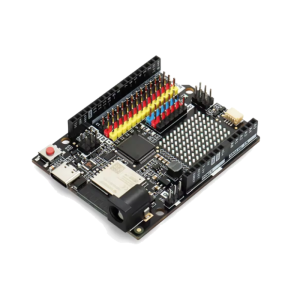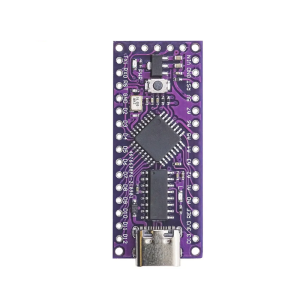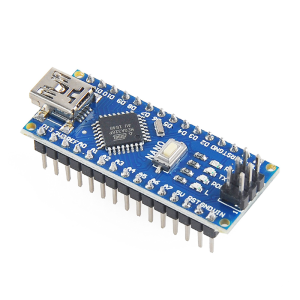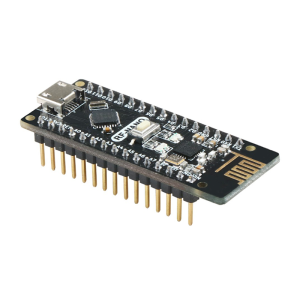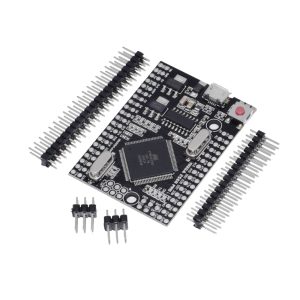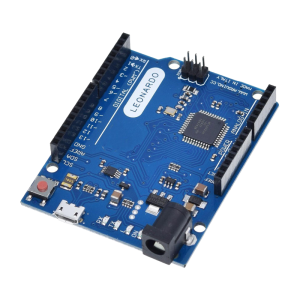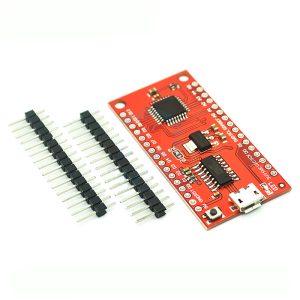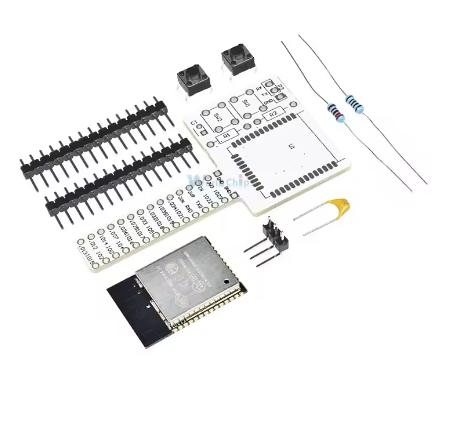
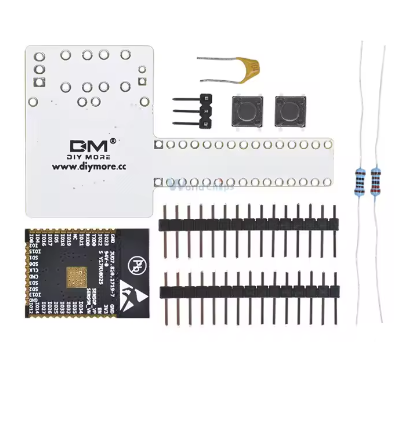
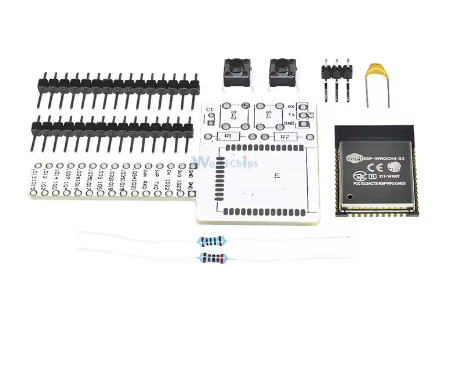
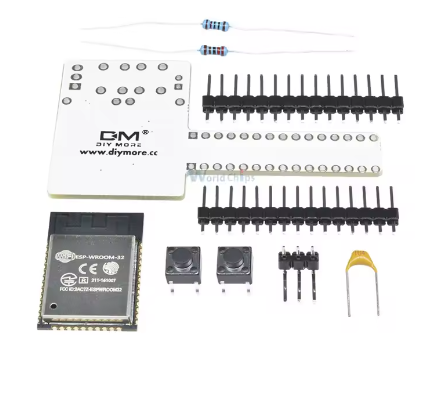
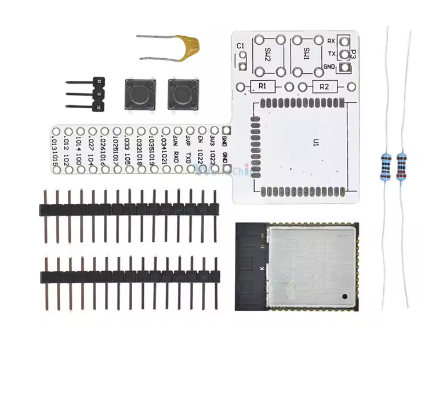
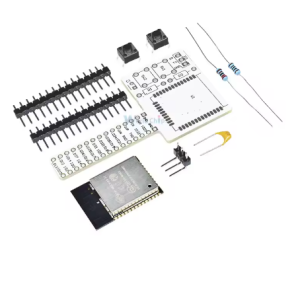
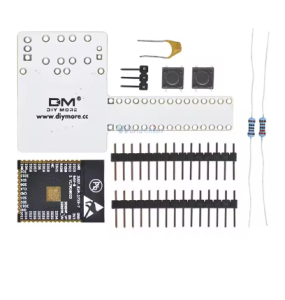
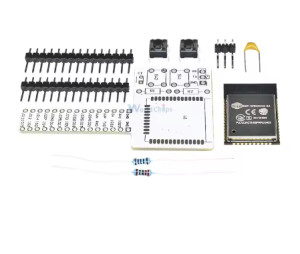
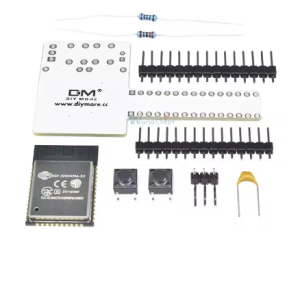
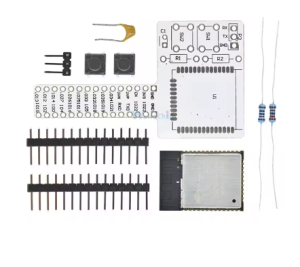
The ESP32 Wi-Fi + Bluetooth Breadboard Prototyping Kit is a comprehensive, all-in-one starter solution designed to take IoT concepts from the drawing board to functional reality. Built around the industry-standard ESP32-WROOM-32 module, this kit is specifically curated for the 2026 development environment, focusing on ease of use, stability, and rapid circuit iteration.
Long Description
The ESP32 Breadboard Kit is more than just a development board; it is a complete prototyping ecosystem. At its heart lies the powerful dual-core ESP32, capable of handling complex Wi-Fi and Bluetooth tasks simultaneously. The kit typically includes the microcontroller pre-mounted on a breadboard-compatible breakout, accompanied by a high-quality 830-point solderless breadboard, jumper wires, and essential power components.
For business purchasers, this kit is the ideal choice for rapid internal R&D and proof-of-concept (PoC) stages. It allows engineers to test sensor integration and cloud connectivity without the need for custom PCB fabrication. For individual makers and students, it provides a structured entry point into the world of professional IoT, eliminating the frustration of hunting for compatible individual components.
Key Features
- Plug-and-Play Prototyping: Includes a 38-pin or 30-pin ESP32 DevKit pre-seated or ready for a standard 830-point breadboard.
- Dual-Core Processing: Features the Xtensa® Dual-Core 32-bit LX6, running up to 240MHz for high-performance multitasking.
- Hybrid Connectivity: Integrated 2.4GHz Wi-Fi and Dual-mode Bluetooth (Classic + BLE) for universal device compatibility.
- Solderless Experimentation: The included breadboard allows for the quick addition of sensors, LEDs, and relays without permanent soldering.
- Rich Peripheral Set: Access to capacitive touch sensors, Hall sensors, SD card interface, Ethernet, high-speed SPI, UART, I2S, and I2C.