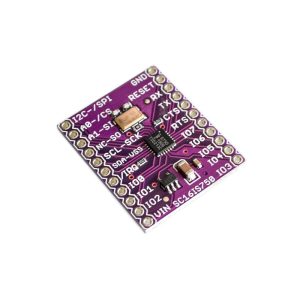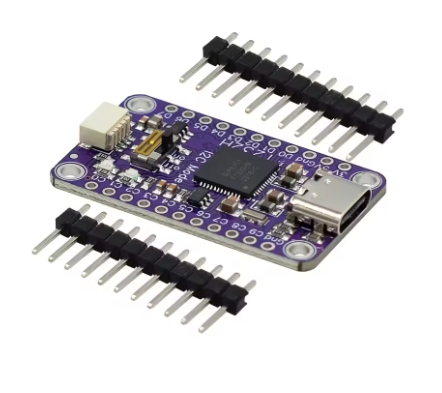
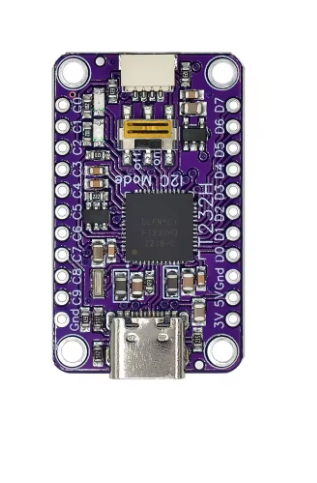
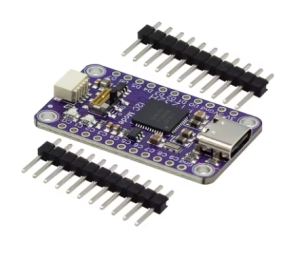
The FT232H High-Speed Multi-Interface USB Adapter is a versatile, high-performance USB-to-multi-protocol converter built around FTDI’s FT232H chip. It provides a single-chip solution for bridging USB to JTAG, UART, FIFO, SPI, and I²C interfaces, making it an essential tool for embedded development, FPGA/CPLD programming, sensor interfacing, and multi-protocol communication projects.
At the heart of the adapter is the FT232H, FTDI’s fourth-generation USB device. It is a USB 2.0 High Speed (480 Mbps) to UART/FIFO/MPSSE converter featuring a Multi-Protocol Synchronous Serial Engine (MPSSE) . The MPSSE allows the device to emulate JTAG, SPI, I²C, and bit-bang synchronous serial protocols, giving developers a single tool for multiple interface standards.
The FT232H is available in two package options: the LQFP-48 version and the QFN-48 version. It supports USB 2.0 High Speed (480 Mbps) and Full Speed (12 Mbps) operation, with UART transfer data rates up to 12 Mbaud and MPSSE data rates up to 30 Mbaud. The chip includes 1 KB Rx buffer and 1 KB Tx buffer for efficient data handling, plus 256 bytes of user EEPROM for storing configuration data.
The adapter supports a wide range of interface protocols through the MPSSE engine:
-
JTAG — For FPGA/CPLD programming and boundary scan testing
-
SPI — For sensor interfacing, memory access, and peripheral communication
-
I²C — For connecting to EEPROMs, sensors, and I²C peripherals
-
Bit-bang — For custom synchronous and asynchronous protocols
The FT232H also includes a UART interface with full hardware handshaking, modem interface signals, and auto-transmit enable control for RS485 applications. The UART supports 7/8-bit data, 1/2 stop bits, and Odd/Even/Mark/Space/No parity.
The adapter is USB bus-powered and includes an onboard EEPROM for storing USB descriptors, serial numbers, and configuration data. It is fully compatible with Windows, Linux, and macOS, with royalty-free VCP and D2XX drivers available from FTDI. The FT_PROG utility allows in-circuit programming of the EEPROM for custom configurations.
The external memory support feature allows the FT232H to interface with external I²C or SPI memory devices, enabling data logging and configuration storage without a separate microcontroller.
Typical applications include FPGA/CPLD programming, embedded system debugging, sensor interfacing, data logging, multi-protocol communication gateways, and custom USB device development. It is suitable for individual engineers, students, and businesses purchasing in bulk for product development or educational programs.
Important Note: The FT232H operates at 3.3V logic levels for the MPSSE and UART interfaces. When interfacing with 5V devices, use appropriate level shifting. The USB side is 5V tolerant.
Whether you are programming an FPGA, interfacing with I²C sensors, or building a multi-protocol communication tool, the FT232H High-Speed Multi-Interface USB Adapter provides a reliable, well-supported solution. It is suitable for individual makers, engineers, and businesses purchasing in bulk for product development or industrial applications.
Features
-
FT232H chip — FTDI’s fourth-generation USB device with MPSSE engine
-
USB 2.0 High Speed — 480 Mbps data transfer rate, backward compatible with Full Speed
-
Multi-protocol support — JTAG, UART, FIFO, SPI, I²C, and bit-bang modes
-
MPSSE engine — Emulates synchronous serial protocols with data rates up to 30 Mbaud
-
UART data rate — Up to 12 Mbaud with full hardware handshaking
-
External memory support — Interface with I²C or SPI memory devices
-
1 KB Rx/Tx buffers — Efficient data handling for high-throughput applications
-
256-byte user EEPROM — For storing configuration data
-
USB bus-powered — No external power supply required
-
Royalty-free drivers — VCP and D2XX drivers for Windows, Linux, and macOS
Technical Specifications
| # | Parameter | Specification |
|---|---|---|
| 1 | USB Interface Chip | FTDI FT232H |
| 2 | USB Standard | USB 2.0 High Speed (480 Mbps) / Full Speed (12 Mbps) |
| 3 | MPSSE Data Rate | Up to 30 Mbaud |
| 4 | UART Data Rate | Up to 12 Mbaud |
| 5 | Supported Protocols | JTAG, SPI, I²C, UART, FIFO, bit-bang |
| 6 | Buffers | 1 KB Rx + 1 KB Tx |
| 7 | EEPROM | 256 bytes user-configurable |
| 8 | Operating Voltage | 3.3V I/O (5V USB tolerant) |