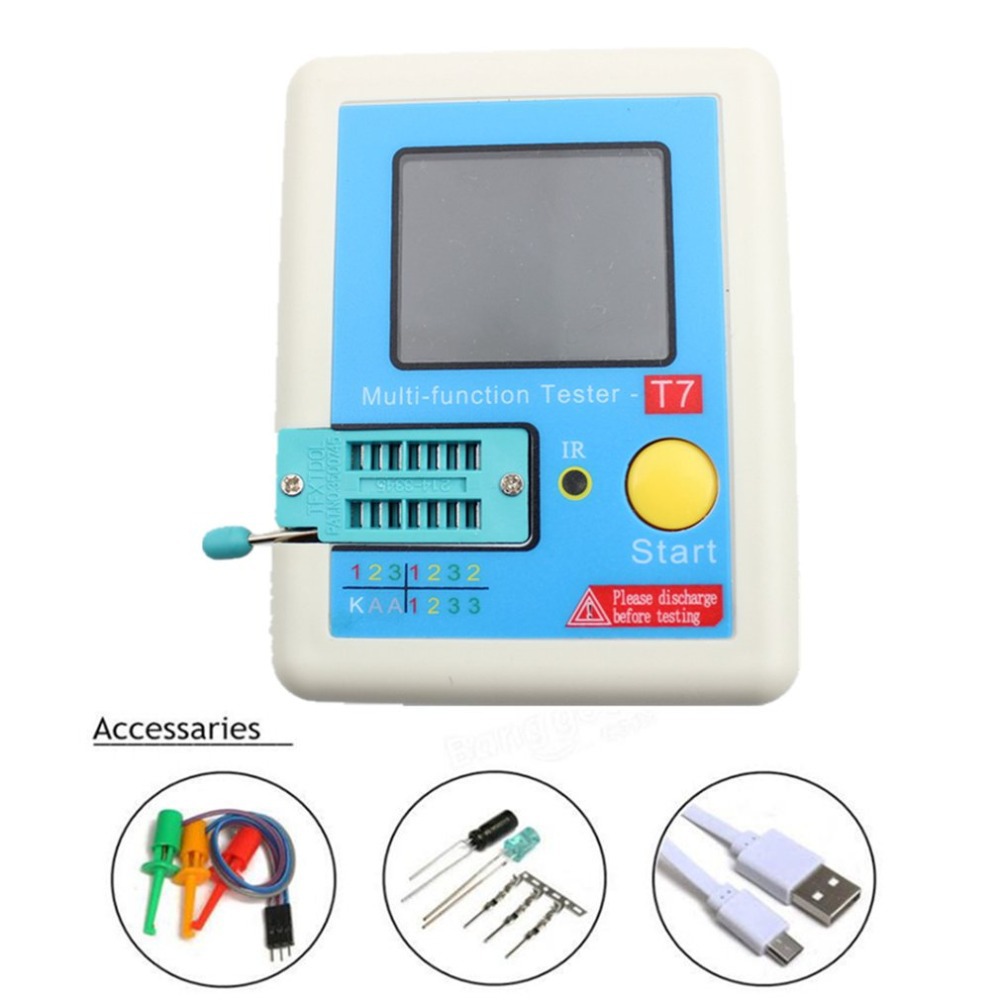
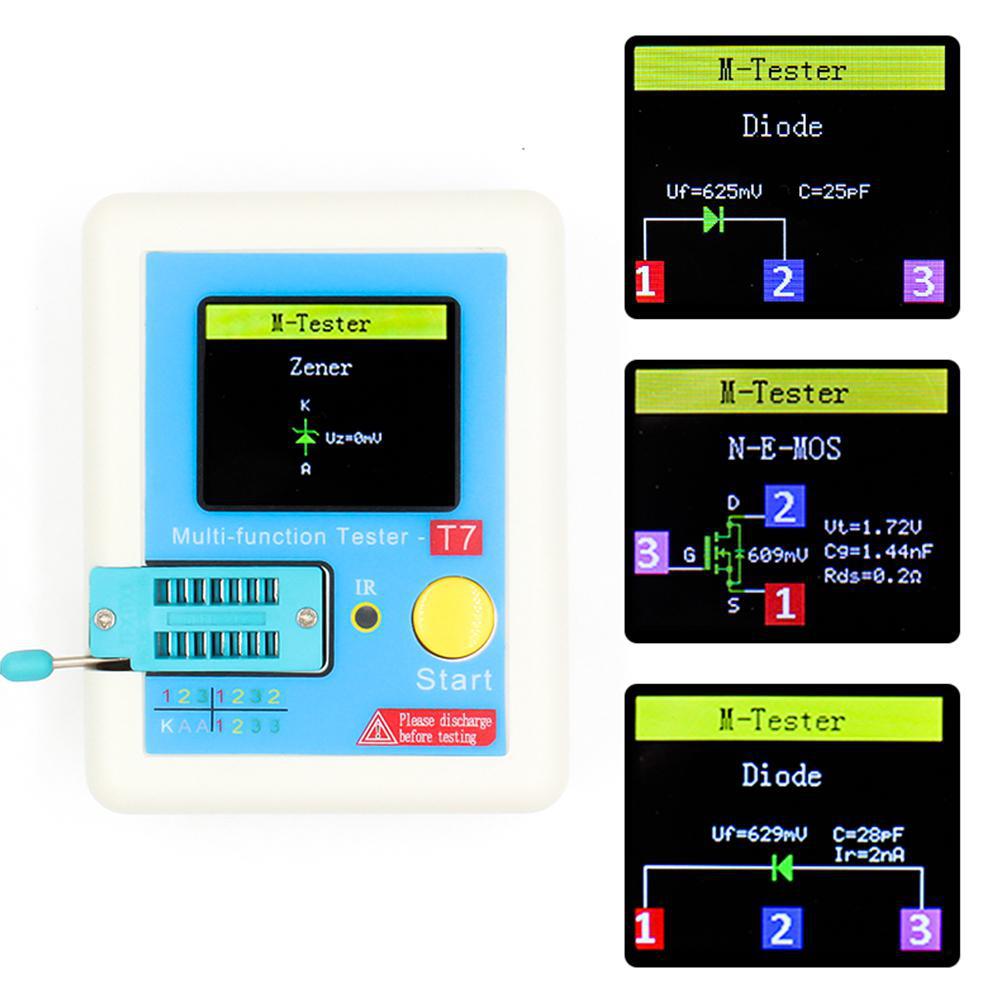
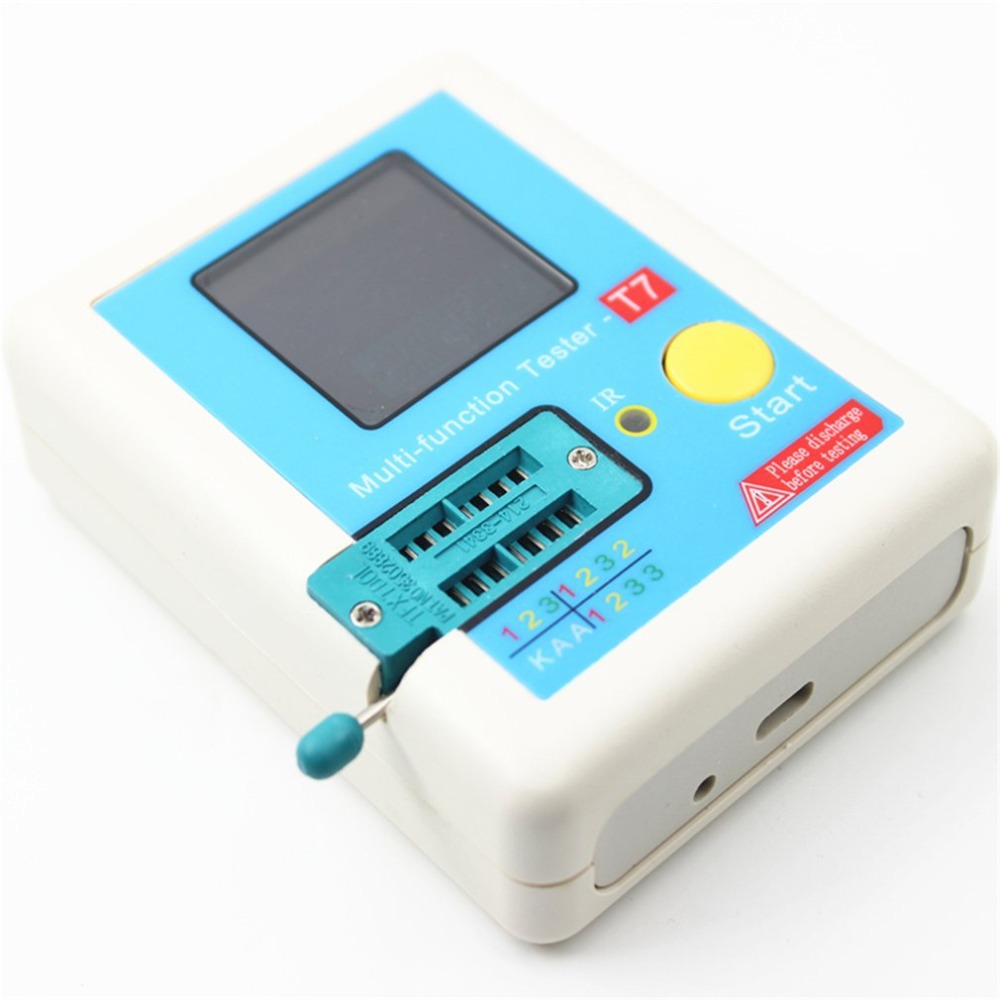
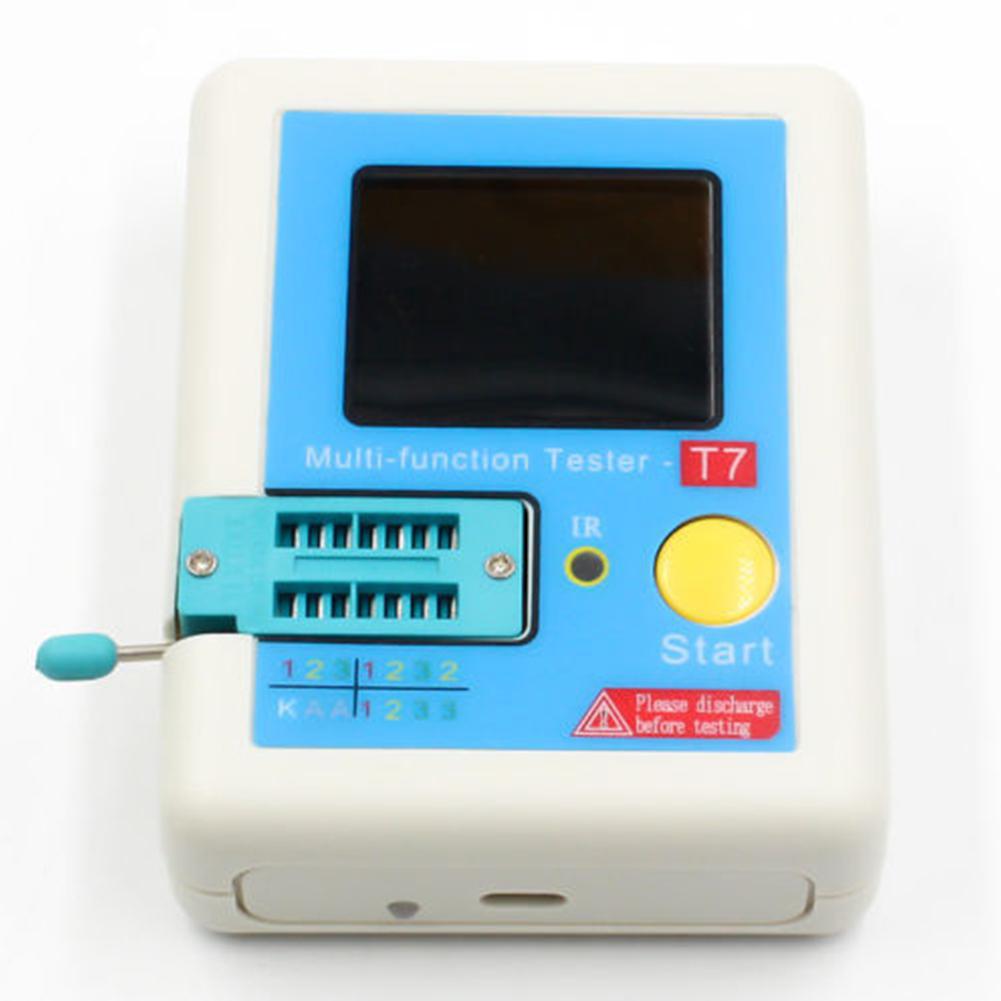
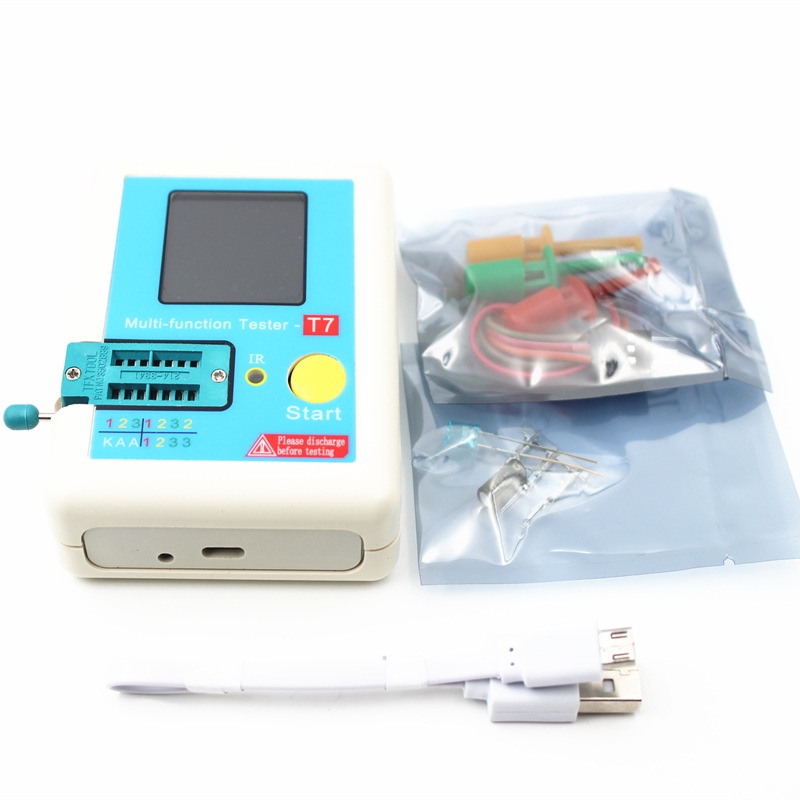
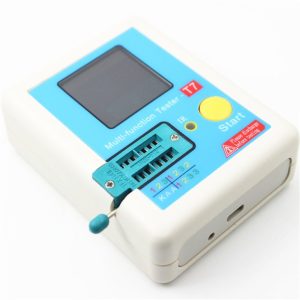
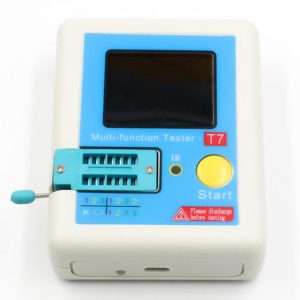
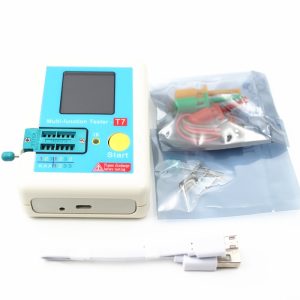
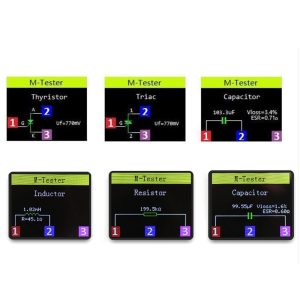
The LCR-T7 High-Speed Transistor Tester represents the premium tier of portable component analyzers. It significantly upgrades the classic LCR-T4 design by adding a vibrant full-color TFT display, an integrated rechargeable lithium-ion battery, and advanced infrared (IR) decoding capabilities.
Long Product Description
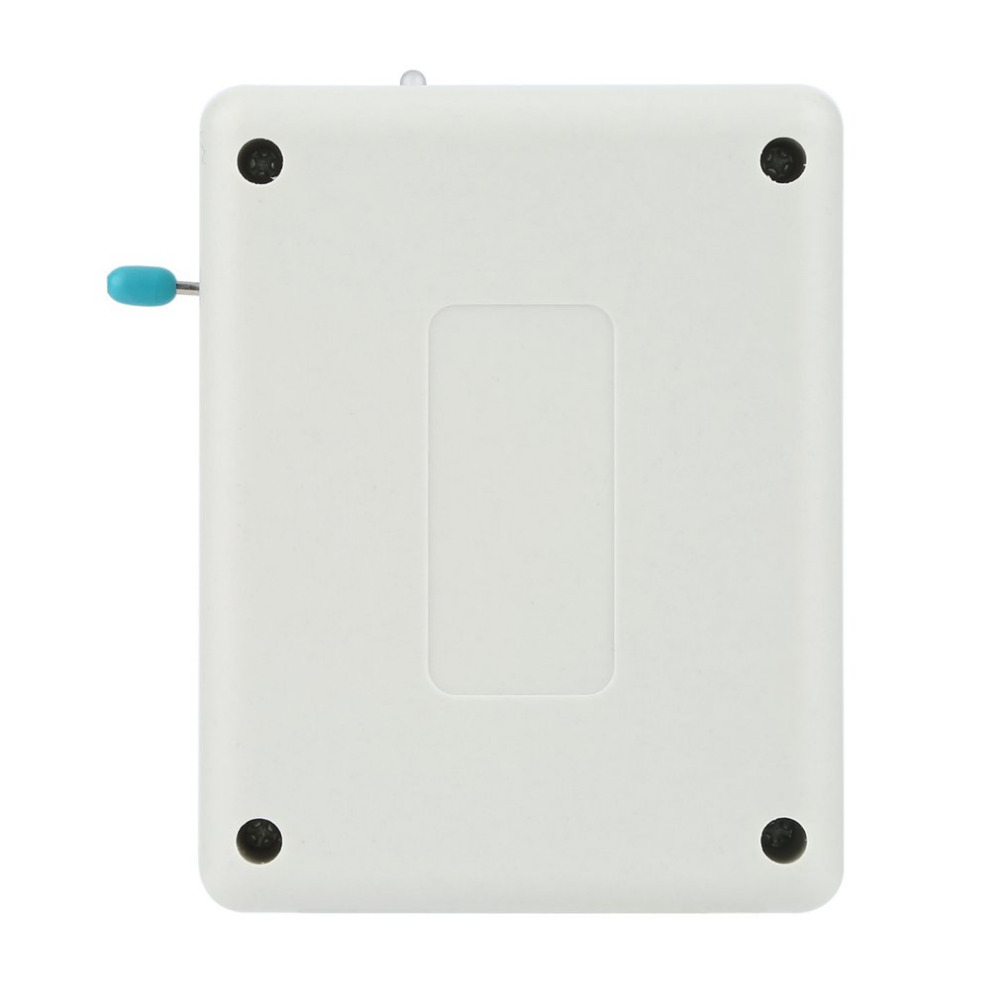
The LCR-T7 is a multi-function electronic diagnostic tool designed for high-speed identification and measurement of a vast array of semiconductors and passive components. Unlike standard monochrome testers, the LCR-T7 features a 1.8-inch full-color graphic display that provides crystal-clear pinout diagrams and data readouts. It is engineered with a built-in high-capacity rechargeable lithium-ion battery, eliminating the need for 9V replacements and making it more eco-friendly and cost-effective for high-volume business environments. Beyond standard LCR testing, it includes a dedicated infrared receiver window capable of decoding remote control waveforms (Hitachi coding), making it an essential tool for consumer electronics repair and development.
Key Features
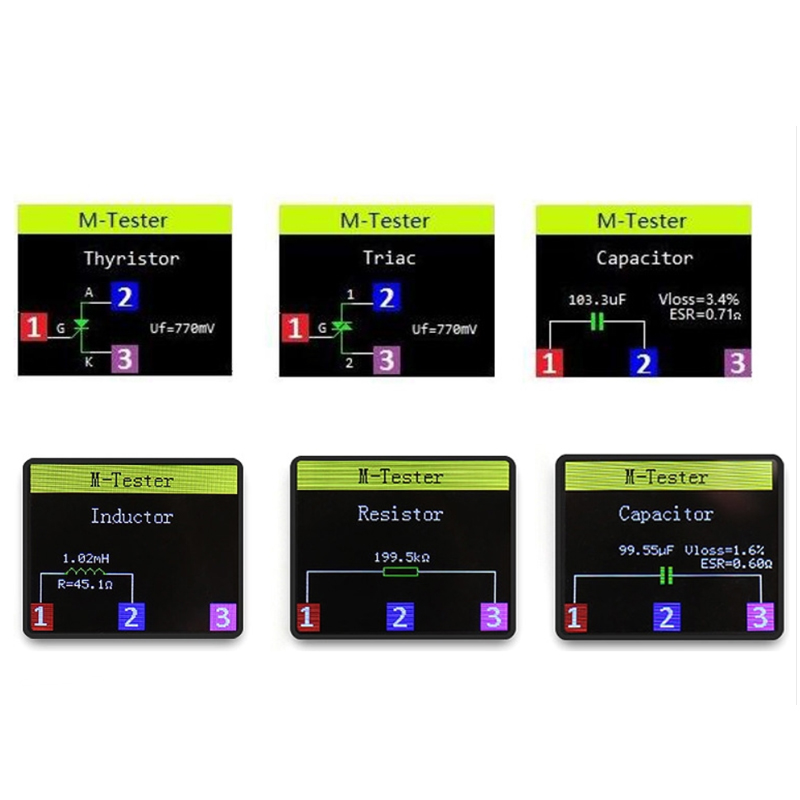
- Full-Color TFT Display: High-resolution screen provides color-coded results and graphical representations of component pinouts for instant identification.
- Automatic “One-Key” Operation: Simply insert the component and press start; the device automatically detects the part type, polarity, and key parameters.
- Rechargeable Li-ion Power: Integrated battery with micro-USB/USB-C charging (model dependent) for long-lasting field and laboratory use.
- Infrared Decoder: Detects and decodes infrared remote control signals, displaying the user code and data code on screen.
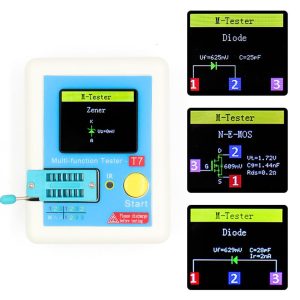
- Zener Diode Self-Test: Features a dedicated testing area for Zener diodes with a breakdown voltage range of 0.01V to 30V.
- Self-Calibration: Includes an automated self-test function to ensure measurement accuracy over time.