Product Overview
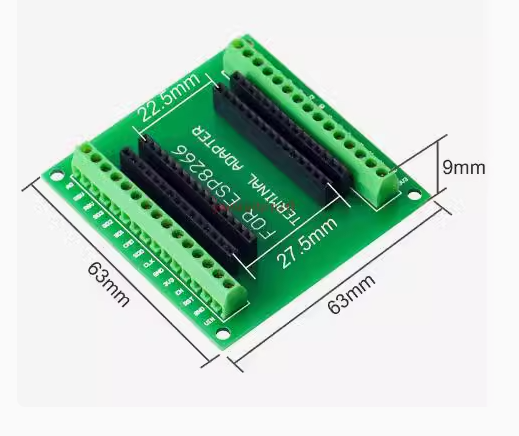
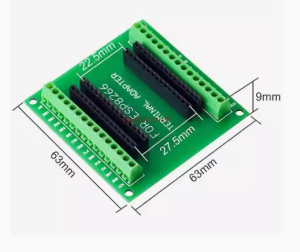
The NodeMCU ESP8266 30-Pin Compact Edition is a specialized, space-saving version of the popular Wi-Fi development board. With a refined 22.5mm width, this board is engineered specifically for developers who require a breadboard-friendly footprint without sacrificing the power of the ESP8266EX microcontroller.
Unlike wider “V3” versions that occupy almost an entire breadboard, this compact model leaves one row of tie-points open on either side, significantly simplifying the wiring of sensors and actuators. It serves as an industrial-grade bridge for IoT (Internet of Things) applications, providing robust Wi-Fi connectivity, integrated power management, and a high-speed USB-to-Serial interface in a sleek, professional form factor.
Key Features
- Breadboard Optimized: The ultra-slim 22.5mm width ensures it fits perfectly into standard breadboards while leaving external pins accessible.
- High-Performance Wireless: Powered by the ESP-12E/F module with an integrated PCB antenna, supporting 802.11 b/g/n Wi-Fi and WPA/WPA2 security.
- Seamless Programming: Features an onboard CP2102 or CH9102X USB-to-UART bridge (High-Stability variants) for reliable data transfer and automatic “Flash” mode.
- Versatile Power Management: Integrated 3.3V LDO regulator allows the board to be powered via the USB port or the VIN pin (up to 9V).
- Open-Source Flexibility: Fully compatible with Arduino IDE (C++), MicroPython, CircuitPython, and Lua, backed by a massive global developer community.
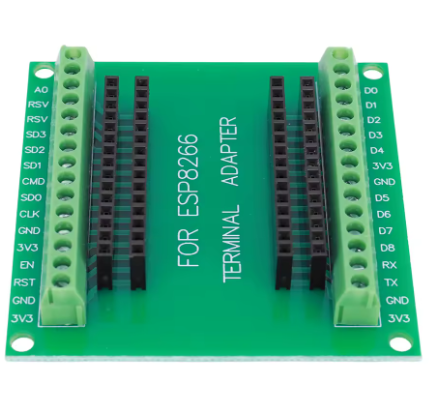
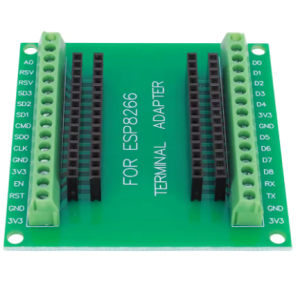
- Industrial-Ready Pins: Standard 0.1″ (2.54mm) pitch 30-pin layout provides access to PWM, I2C, SPI, UART, and 1-Wire interfaces.