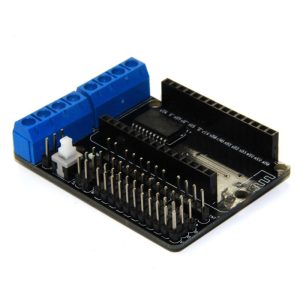
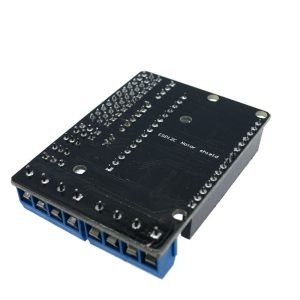
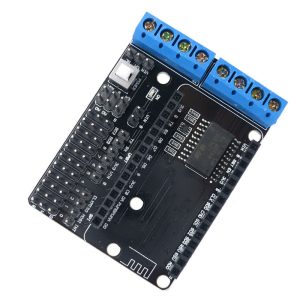
Product Overview
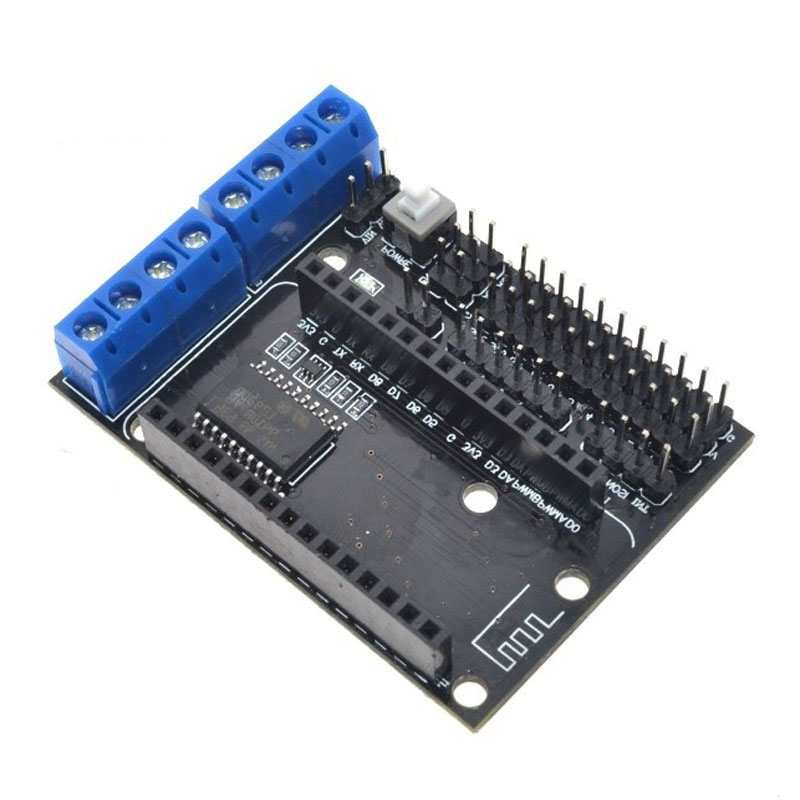
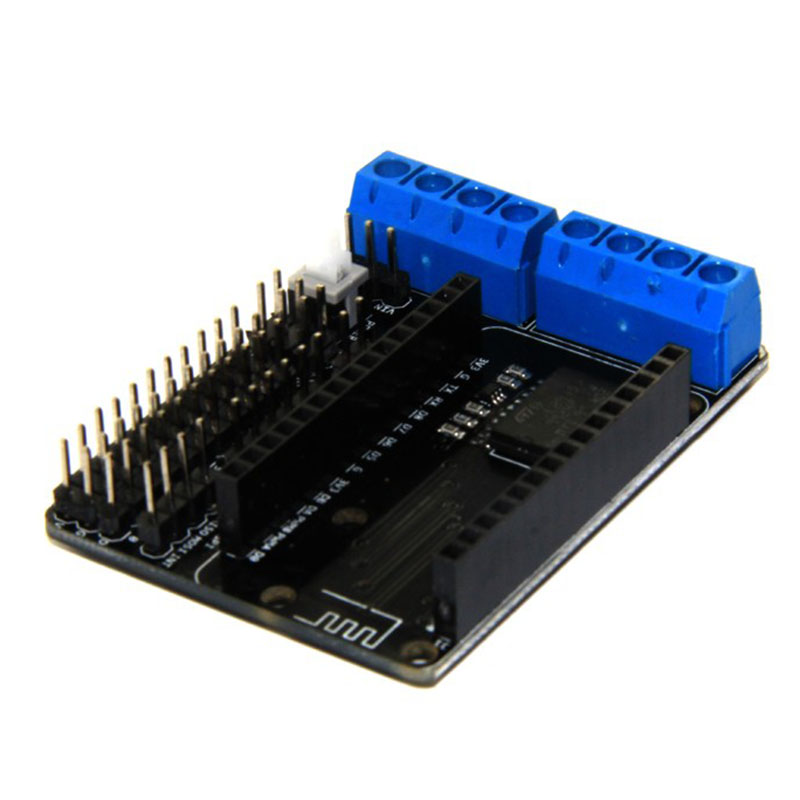
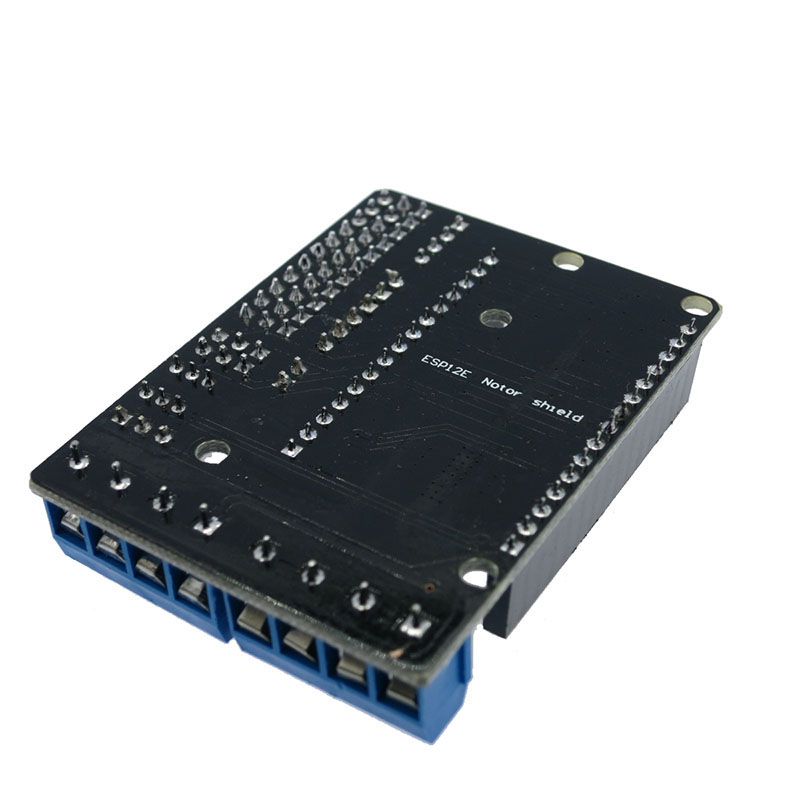
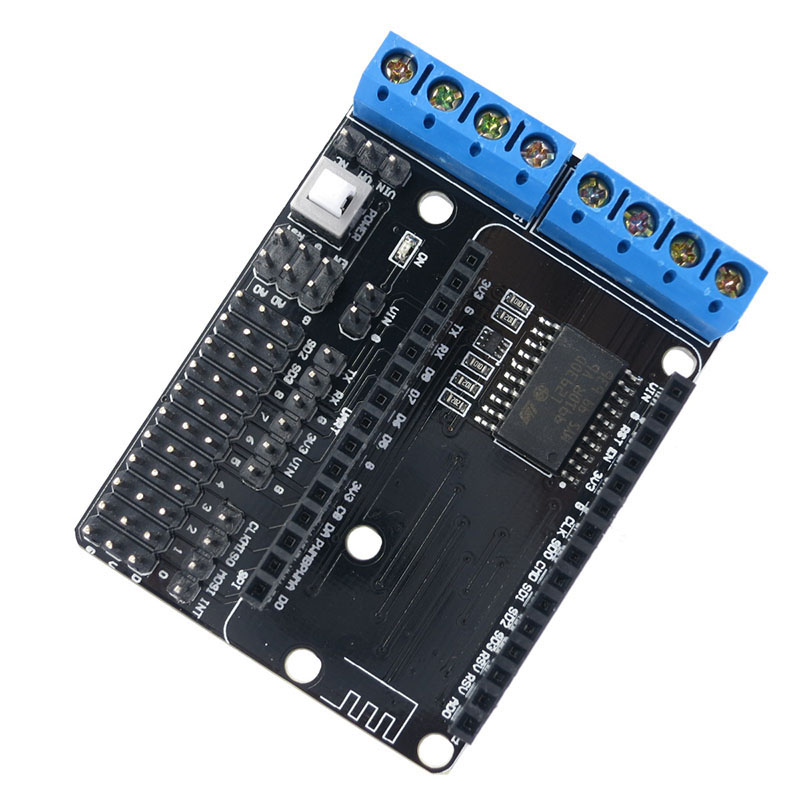
The NodeMCU L293D Motor Driver Shield is a high-performance expansion board specifically engineered for the NodeMCU ESP-12E (ESP8266) development module. It transforms your Wi-Fi board into a powerful robotics controller, allowing you to drive high-current loads that the ESP8266 cannot handle directly.
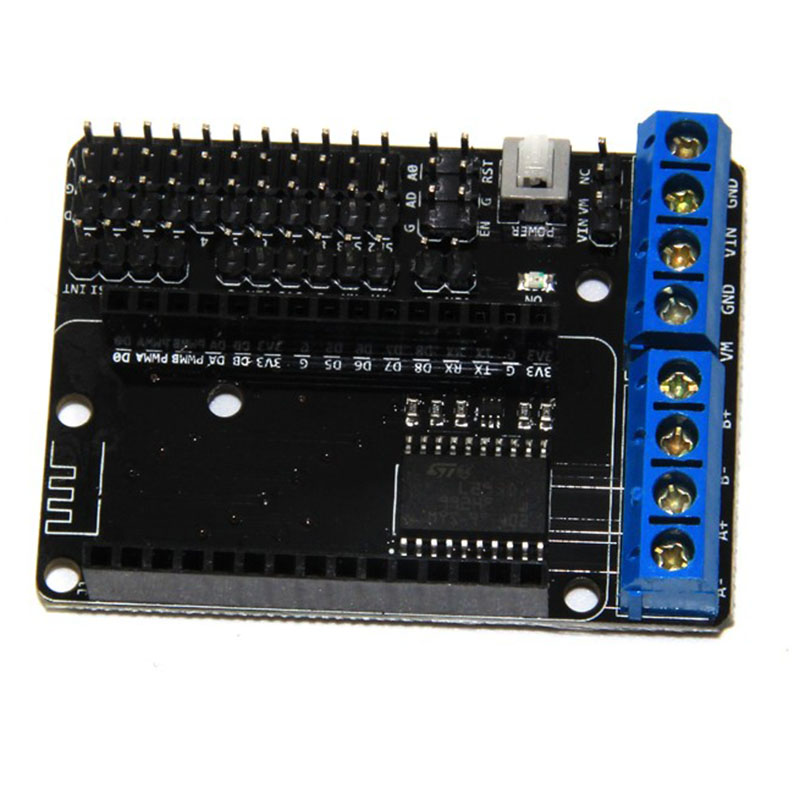
By integrating the industry-standard L293D Push-Pull Driver, this shield provides two independent channels to control either two DC motors or one 4-wire stepper motor. With its plug-and-play design, it eliminates messy wiring, making it the premier choice for building Wi-Fi-controlled RC cars, smart rovers, and automated IoT actuators.
Key Features
- Dual-Channel H-Bridge: Powered by the L293D chip, enabling bi-directional control (forward/reverse) and speed regulation via PWM.
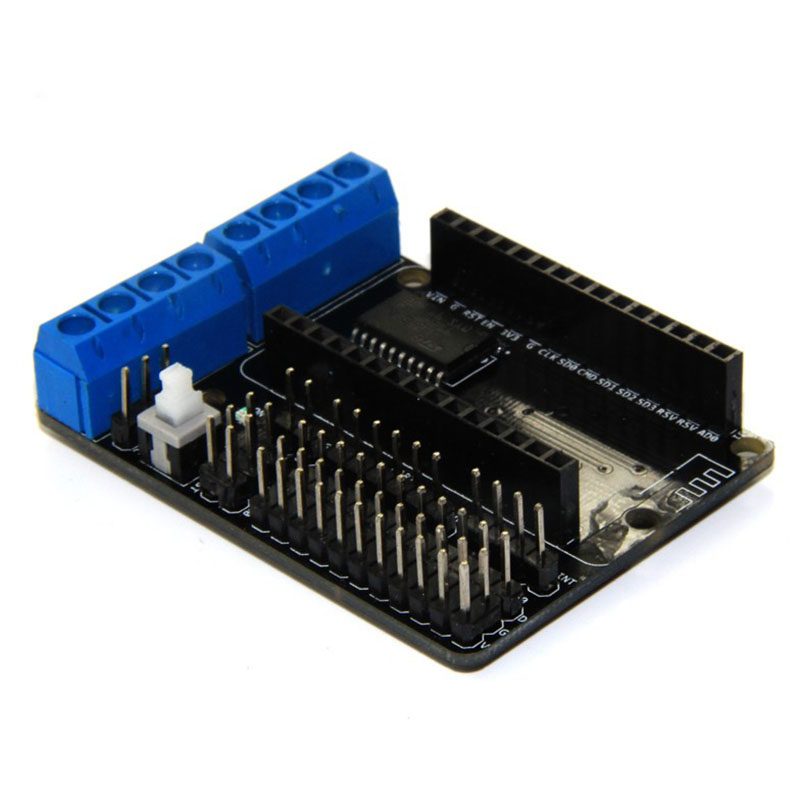
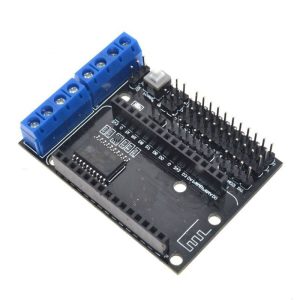
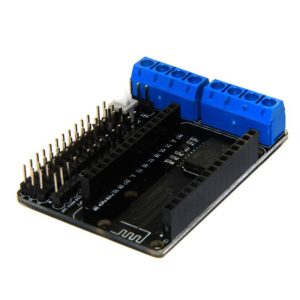
- Plug-and-Play Integration: Specifically spaced to allow the NodeMCU ESP-12E to slot directly into the header pins, creating a compact, vertical stack.
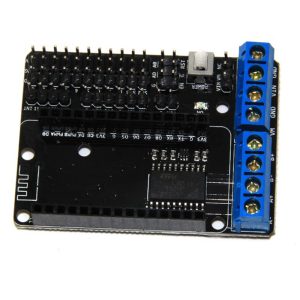
- Independent Power Rails: Features separate power inputs for the ESP8266 logic (Control Power) and the motors (Motor Power) to prevent electrical noise and brownouts.
- Onboard Power Switch: Includes a physical toggle switch to easily cut power to the entire system during maintenance or storage.
- GPIO Accessibility: Breaks out unused NodeMCU pins (SPI, UART, GPIO) to side headers, allowing you to connect additional sensors (ultrasonic, infrared) without interference.
- Short-Circuit Protection: Built-in ESD protection and thermal shutdown within the L293D IC for enhanced durability.