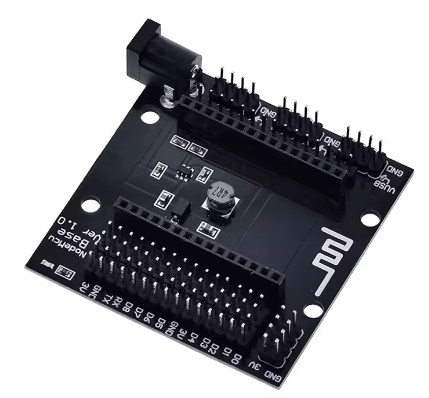
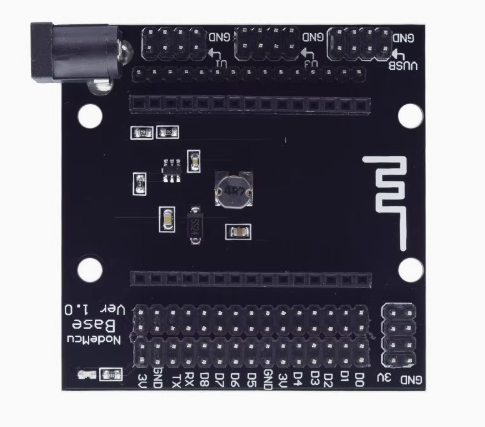
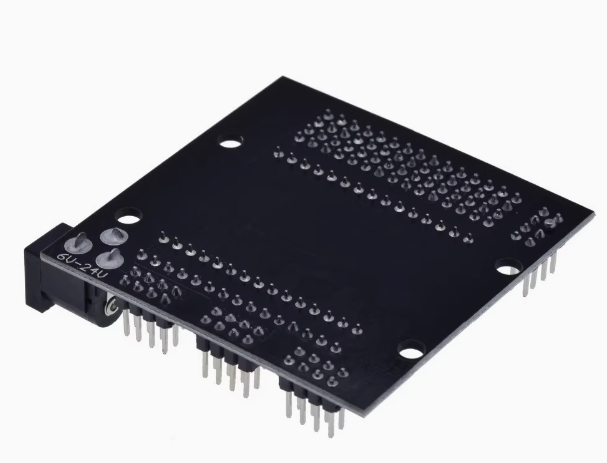
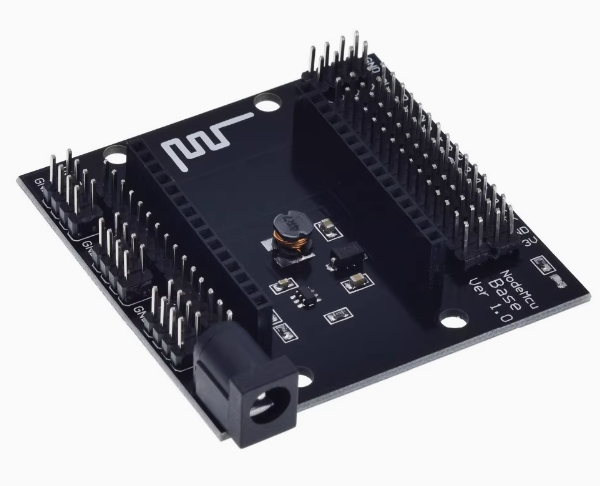
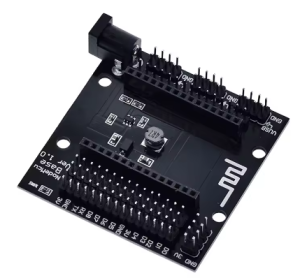
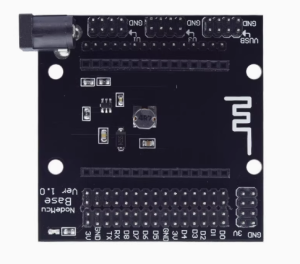
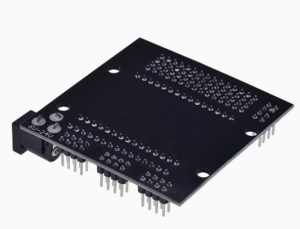
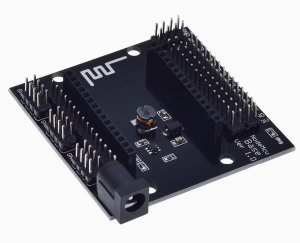
Product Overview
The NodeMCU Pro Serial Adapter is a dedicated UART expansion and programming interface designed specifically for the NodeMCU (ESP8266) ecosystem. This board acts as a high-stability bridge between your computer and the development board, providing a professional-grade alternative to standard built-in USB-to-Serial chips.
Engineered for reliability, it is the ideal solution for developers using “naked” ESP8266 modules or NodeMCU boards that require an external serial interface for flashing firmware or debugging. By separating the serial communication from the main MCU board, it reduces electrical noise, improves thermal management, and provides a more robust connection for industrial-scale IoT development and long-term testing.
Key Features
- Dedicated UART Bridge: Provides a high-speed, stable communication path for flashing NodeMCU, Lua, and MicroPython firmware.
- Plug-and-Play Expansion: Features standard header spacing designed to slot directly onto or alongside NodeMCU development boards.
- Automatic Bootloader Trigger: Integrated circuitry supports the “Auto-Reset” and “Auto-Flash” functions (DTR/RTS) used by the Arduino IDE and Esptool.py.
- Enhanced Power Delivery: Includes onboard voltage regulation to ensure the ESP8266 receives a clean 3.3V supply during power-intensive Wi-Fi transmission phases.
- Industrial-Grade Stability: Utilizes high-quality SMD components to prevent data corruption during high-baud-rate transfers (up to 921600 bps).
- Status Indicators: Onboard RX/TX LEDs provide immediate visual feedback of data transmission and power status.