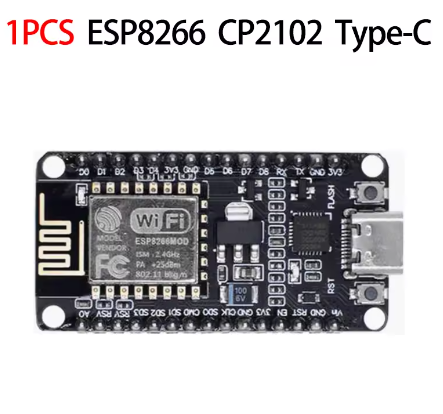
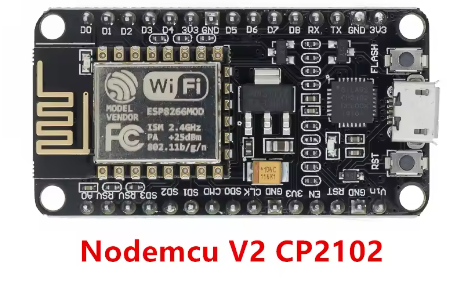
NodeMcu V2 Lua WIFI Internet development board based on ESP8266 CP2102 Type-C interface

SKU: FA2061-2
Microcontroller

ESP8266 (ESP-12E/F Module)

USB Interface

Silicon Labs CP2102

Connector Type

USB Type-C (Reversible)

Operating Voltage

3.3V (Onboard Regulator)

Input Voltage

5V (via Type-C) or 4V-9V (via Vin Pin)

Flash Memory

4 MB (32 Mbits)

Clock Speed

80MHz (Default) / 160MHz

Network Support

2.4GHz Wi-Fi (WPA/WPA2 Security)

I/O Logic Level

3.3V (Not 5V Tolerant)

Dimensions

~48mm x 25mm

Product Description
The NodeMCU V2 (Type-C Edition) is a premium, open-source IoT development platform powered by the high-performance ESP8266 Wi-Fi SoC. This upgraded version brings the NodeMCU architecture into the modern era by replacing legacy ports with a high-durability USB Type-C interface, ensuring compatibility with current cables and providing a more robust physical connection for frequent programming.
At its core, this board utilizes the industry-preferred Silicon Labs CP2102 USB-to-UART bridge. Known for its superior driver stability and high-speed data rates, the CP2102 ensures a seamless “plug-and-play” experience across Windows, macOS, and Linux. With a slim, breadboard-friendly footprint, 4MB of onboard Flash memory, and an integrated PCB antenna, the NodeMCU V2 is the definitive choice for developers and businesses building smart-home devices, industrial sensor nodes, and wireless gateways.
Key Features
  • Modern USB Type-C Interface: Reversible connector for easier plug-in and enhanced mechanical durability during long-term development.
  • Premium CP2102 Chipset: High-performance USB-to-Serial conversion with official, stable driver support natively integrated into most modern operating systems.
  • Integrated Wi-Fi Connectivity: Fully supports 802.11 b/g/n protocols with a complete TCP/IP stack for Station, SoftAP, or mixed-mode operation.
  • Breadboard Optimized: The slim “V2” (Amica-style) form factor fits perfectly on a standard breadboard, leaving the outer rows of pins accessible for wiring.
  • Multi-Platform Programming: Supports Lua scripting natively, but is fully compatible with the Arduino IDE, MicroPython, and ESP-IDF.
  • Robust I/O Interface: Features 10 GPIOs, PWM, I2C, SPI, and a 10-bit Analog-to-Digital Converter (ADC).
  • Low-Power Engineering: Designed for energy efficiency with built-in deep-sleep modes, perfect for battery-powered remote monitoring
Usage & Applications
  • Smart Home Automation: Building Wi-Fi-controlled switches, automated lighting systems, and smart thermostats.
  • Industrial IoT (IIoT): Deploying remote wireless sensor nodes for real-time machine monitoring and factory data acquisition.
  • Cloud Integration: Seamlessly uploading sensor data to platforms like AWS IoT, Azure, or Google Cloud.
  • Web Dashboards: Hosting localized web servers to control hardware directly from any smartphone or PC browser.
  • STEM Education: The primary hardware platform for university courses in wireless networking and embedded C++ programming.
Q: Do I need a special cable to program this board?

No. You can use any standard USB Type-C data cable (the same used for most modern smartphones) to connect the board to your computer for programming and power.

Q: Why choose the CP2102 version over the CH340 version?

The CP2102 is an industrial-grade chipset that offers higher stability and better driver compatibility, especially on macOS and newer Windows versions. It is highly recommended for professional development and business use.

Q: Can I use 5V sensors with the NodeMCU V2?

You can power the board with 5V, but the GPIO pins operate at 3.3V. If your sensor outputs a 5V signal, you must use a logic-level shifter or a voltage divider to avoid damaging the ESP8266 chip

Q: Does it support "Auto-Reset" during programming?

Yes. The onboard CP2102 circuitry automatically handles the “Flash Mode” transition when you upload code from the Arduino IDE, so you don’t need to press any physical buttons manually

Q: How many analog inputs are available?

The board features one analog input pin (A0). It accepts a maximum of 3.3V and converts it to a 10-bit digital value (0-1023).