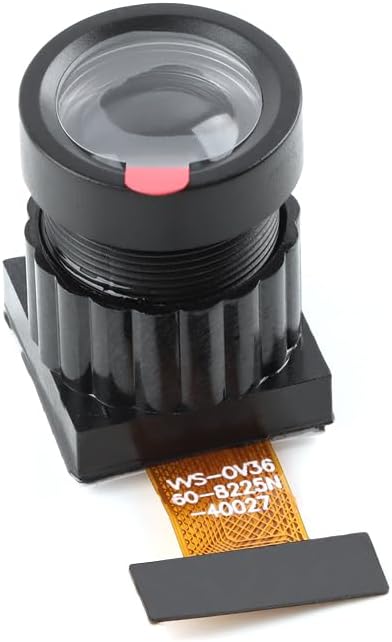
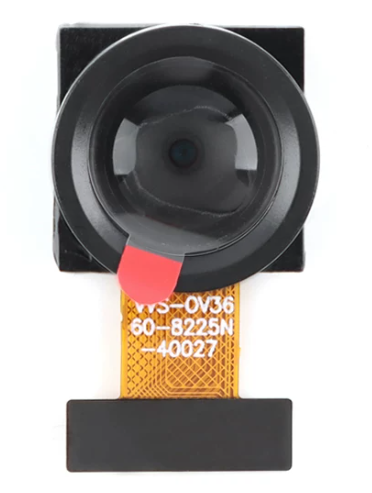
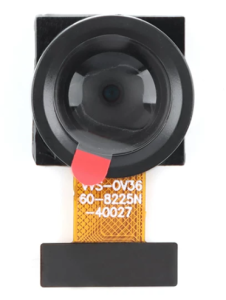
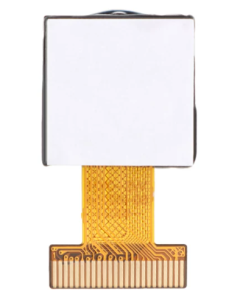
OV3660 Large Aperture Camera Module – 3MP High-Performance Sensor for STM32/ESP32

SKU: FA1045-0-3-0
Image Sensor

OV3660 (1/5-inch CMOS)

Maximum Resolution

3MP (2048 × 1536)

Maximum Frame Rate

60fps @ VGA; 45fps @ 720p; 15fps @ 2048×1536

Output Formats

JPEG, RAW RGB, RGB565/555/444, YCbCr422

Interface

DVP 8-bit parallel + SCCB control

Pixel Size

1.4µm × 1.4µm

Power Supply

Core: 1.5V (internal regulator); Analog: 2.6–3.0V; I/O: 1.8V/2.8V

Operating Temperature

-20°C to +70°C

The OV3660 Large Aperture Camera Module is a high-performance 3-megapixel imaging solution designed for embedded vision, IoT camera projects, and microcontroller-based applications. Built around OmniVision’s proven OV3660 CMOS sensor with OmniBSI backside illumination technology, this module delivers superior light sensitivity and image quality compared to standard front-side illuminated sensors .

The “Large Aperture” designation reflects the module’s optimized lens design, which captures more light per pixel than standard camera modules. This translates to brighter, cleaner images in low-light conditions—an essential advantage for indoor surveillance, nighttime monitoring, and any application where ambient lighting is less than ideal. The sensor’s 1.4µm × 1.4µm pixel size with OmniBSI technology provides high sensitivity, low crosstalk, and improved quantum efficiency .

At the heart of the module is the OV3660 sensor, capable of capturing still images at resolutions up to 2048 × 1536 pixels (3MP). The sensor supports multiple output formats including RAW RGB, RGB565/555/444, YCbCr422, and JPEG compression . On-sensor JPEG encoding significantly reduces bandwidth requirements, making it ideal for WiFi streaming and storage-constrained applications. The sensor also includes comprehensive automatic image control functions: automatic exposure control (AEC), automatic white balance (AWB), automatic flicker detection, and automatic black level calibration (ABLC) .

For system integration, the OV3660 interfaces through a DVP (Digital Video Port) 8-bit parallel interface and a standard SCCB control bus (similar to I2C). This makes it directly compatible with ESP32, ESP32-S3, and other microcontrollers that feature native camera peripherals . The module is widely used in ESP32-CAM projects, AI vision development boards, and IoT surveillance systems . With proper configuration, it can achieve frame rates up to 60fps at VGA, 45fps at 720p, and 15fps at full 2048×1536 resolution .

For STM32 users, the DVP interface can be connected to STM32 microcontrollers with DCMI (Digital Camera Interface) peripherals, such as the STM32F4 and STM32H7 series. For ESP32/ESP32-S3 users, the module is supported through the esp32-camera library in Arduino IDE and ESP-IDF, with PSRAM strongly recommended for higher resolutions .

Whether you are building a smart doorbell, a remote monitoring system, an AI vision prototype, or a DIY camera project, the OV3660 Large Aperture Camera Module offers a proven combination of resolution, low-light performance, and integration simplicity. It is suitable for individual makers, students, and businesses purchasing in bulk for product development or deployment.


Features

  • 3MP resolution (2048 × 1536) — High-detail image capture for surveillance, recognition, and documentation .

  • Large aperture lens design — Captures more light per pixel for superior low-light performance.

  • OmniBSI backside illumination — Improved sensitivity, low crosstalk, and low noise compared to standard sensors .

  • On-sensor JPEG compression — Reduces bandwidth and storage requirements for streaming and logging .

  • DVP 8-bit parallel interface — Direct compatibility with ESP32, ESP32-S3, and STM32 DCMI peripherals .

  • SCCB control interface — Standard I2C-like protocol for configuring exposure, white balance, and image parameters.

  • Automatic image control — AEC, AWB, flicker detection, and black level calibration built in .

  • Multiple output formats — RAW RGB, RGB565/555/444, YCbCr422, and JPEG .

  • Compact module design — Suitable for integration into enclosures and embedded systems.

  • Wide development support — Arduino IDE, ESP-IDF, and STM32CubeIDE compatible.


Technical Specifications 

# Parameter Specification
1 Image Sensor OV3660 (1/5-inch CMOS)
2 Maximum Resolution 3MP (2048 × 1536)
3 Maximum Frame Rate 60fps @ VGA; 45fps @ 720p; 15fps @ 2048×1536
4 Output Formats JPEG, RAW RGB, RGB565/555/444, YCbCr422
5 Interface DVP 8-bit parallel + SCCB control
6 Pixel Size 1.4µm × 1.4µm
7 Power Supply Core: 1.5V (internal regulator); Analog: 2.6–3.0V; I/O: 1.8V/2.8V
8 Operating Temperature -20°C to +70°C 

Usage

Getting Started with ESP32/ESP32-S3

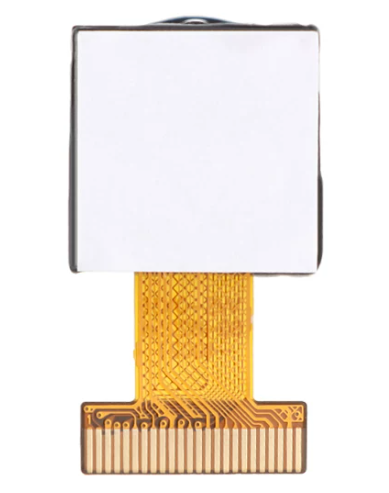
  1. Connect the module — Use the FPC cable to connect the module to your development board’s camera interface. Ensure the gold fingers are fully inserted and the connector is locked .

  2. Install the development environment — For Arduino IDE, install the ESP32 board package and the esp32-camera library. For ESP-IDF, add the esp32-camera component .

  3. Configure the camera model — In the CameraWebServer example, select the appropriate camera model. For OV3660, ensure the sensor is properly detected and initialized .

  4. Set resolution and format — Use PIXFORMAT_JPEG for streaming or PIXFORMAT_RGB565 for processing. Start with FRAMESIZE_QVGA for testing, then increase resolution as needed .

  5. Upload and test — Compile and upload the example sketch. Open the Serial Monitor to view the IP address, then access the camera stream through a web browser .

Getting Started with STM32

  1. Connect the DVP interface — Wire the module’s DVP pins (D0-D7, PCLK, VSYNC, HREF, XCLK) to your STM32’s DCMI peripheral. Connect the SCCB pins (SDA, SCL) to an I2C port for configuration.

  2. Configure DCMI and DMA — Set up the STM32 DCMI peripheral with appropriate DMA channels for continuous image capture.

  3. Initialize the sensor — Use the SCCB interface to write the OV3660 initialization register sequence. Datasheet-level configuration is required for STM32 integration.

Key Configuration Notes

  • PSRAM strongly recommended for ESP32 — For resolutions above VGA or high-quality JPEG, PSRAM is required to buffer frame data .

  • XCLK frequency — The OV3660 requires a stable master clock, typically 20MHz, for proper operation .

  • Power supply — The OV3660 draws approximately 98mA during active operation . Ensure your power supply can provide sufficient current.

  • OV3660-specific initialization — When using OV3660 with esp32-camera, the standard initialization may need adjustments: s->set_vflip(s, 1), s->set_brightness(s, 1), and s->set_saturation(s, -2) are commonly applied to correct orientation and color balance .

Typical Applications

  • IoT surveillance cameras — WiFi-enabled remote monitoring with JPEG streaming .

  • AI vision prototyping — Image capture for TensorFlow Lite, Edge Impulse, and OpenCV projects .

  • Smart doorbells and security systems — Motion detection and image capture with low-light capability.

  • STM32 embedded vision — DVP interface for STM32 DCMI-based image processing.

  • Computer vision education — Learning image processing and embedded vision with affordable hardware.

  • OEM product development — Compact module for integrating vision into commercial devices.

Notes for Business Buyers

  • Superior low-light performance — OmniBSI technology and large aperture design provide better native sensitivity, reducing the need for supplementary IR illumination .

  • ESP32 ecosystem compatibility — Native support through the esp32-camera library and ESP-IDF, reducing development time .

  • STM32 DCMI compatibility — DVP interface enables direct connection to STM32 microcontrollers with DCMI peripherals.

  • Suitable for bulk purchasing — Ideal for product development teams, IoT integrators, and educational institutions.

Q: What is the OV3660 Large Aperture Camera Module used for?

It is used for embedded imaging applications including IoT surveillance, AI vision prototyping, smart doorbells, time-lapse photography, and any project requiring image capture or video streaming with a microcontroller .

Q: What makes this module “large aperture”?

The large aperture lens design captures more light per pixel than standard camera modules, resulting in brighter, cleaner images in low-light conditions. This is particularly beneficial for indoor surveillance and nighttime monitoring.

Q: Is this module compatible with the ESP32-CAM?

Yes. It is commonly used as a replacement or upgrade for the OV2640 in ESP32-CAM projects. It shares the same DVP connector and SCCB control interface .

Q: What is the maximum resolution and frame rate?

The sensor supports up to 3MP (2048 × 1536) for still images. Frame rates vary by resolution: 60fps at VGA, 45fps at 720p, and 15fps at full 2048×1536 .

Q: Can I use this module with STM32 microcontrollers?

Yes. The DVP 8-bit parallel interface is compatible with STM32 microcontrollers that feature DCMI (Digital Camera Interface) peripherals, such as the STM32F4 and STM32H7 series. Datasheet-level configuration is required.

Q: What interface does the module use?

It uses a DVP (Digital Video Port) 8-bit parallel interface for image data and SCCB (Serial Camera Control Bus) for configuration and control .

Q: Is PSRAM required to use this module with ESP32?

PSRAM is strongly recommended for resolutions above VGA or for high-quality JPEG streaming. Without PSRAM, the frame size and quality may be limited by available internal RAM .

Q: How does the OV3660 compare to the OV2640?

The OV3660 offers higher resolution (3MP vs. 2MP), better low-light sensitivity due to OmniBSI technology, and on-sensor JPEG compression. It is a drop-in upgrade for OV2640 designs .

Q: What development environments are supported?

The module is supported by Arduino IDE (with the esp32-camera library), ESP-IDF, and STM32CubeIDE. It works with ESP32, ESP32-S3, STM32, and other microcontrollers featuring native DVP camera interfaces .

Q: Can I purchase in bulk for a product development project?

Yes. This camera module is suitable for both individual users and business purchasing, including product development, IoT integration, and volume production.