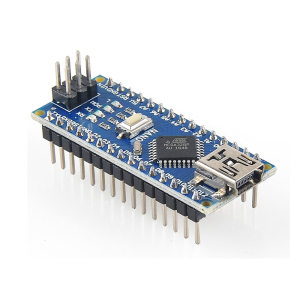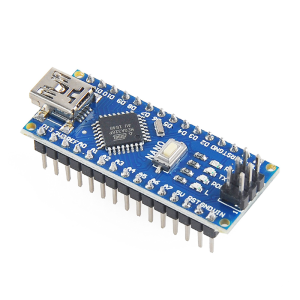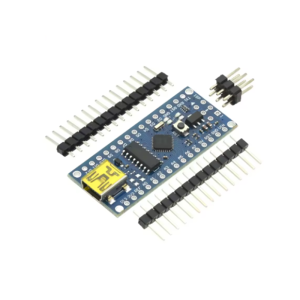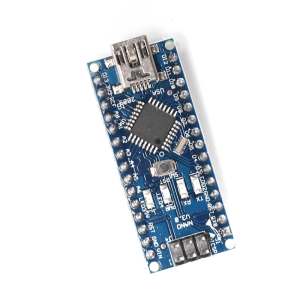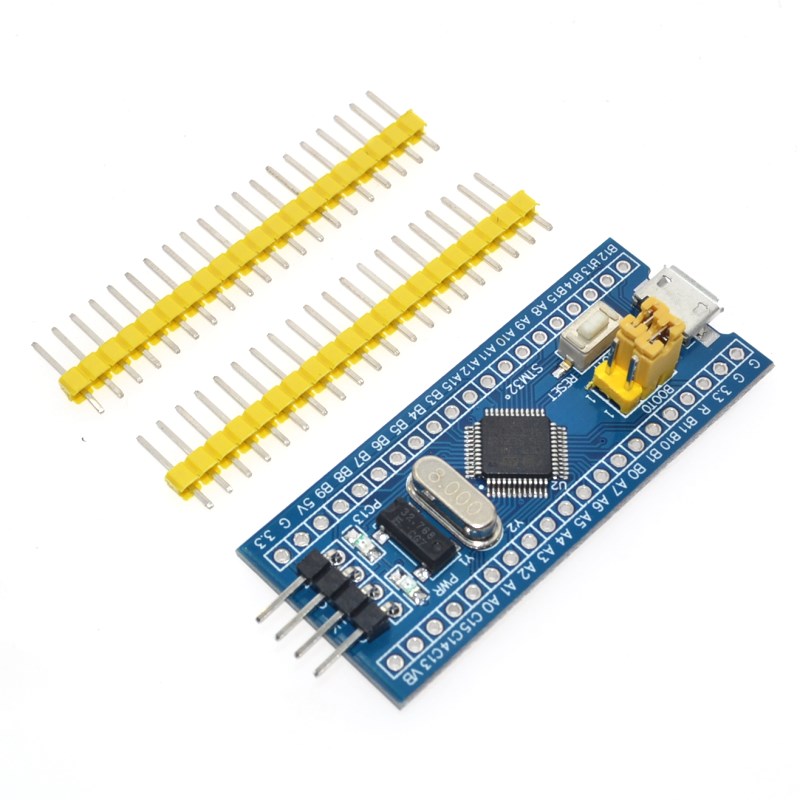
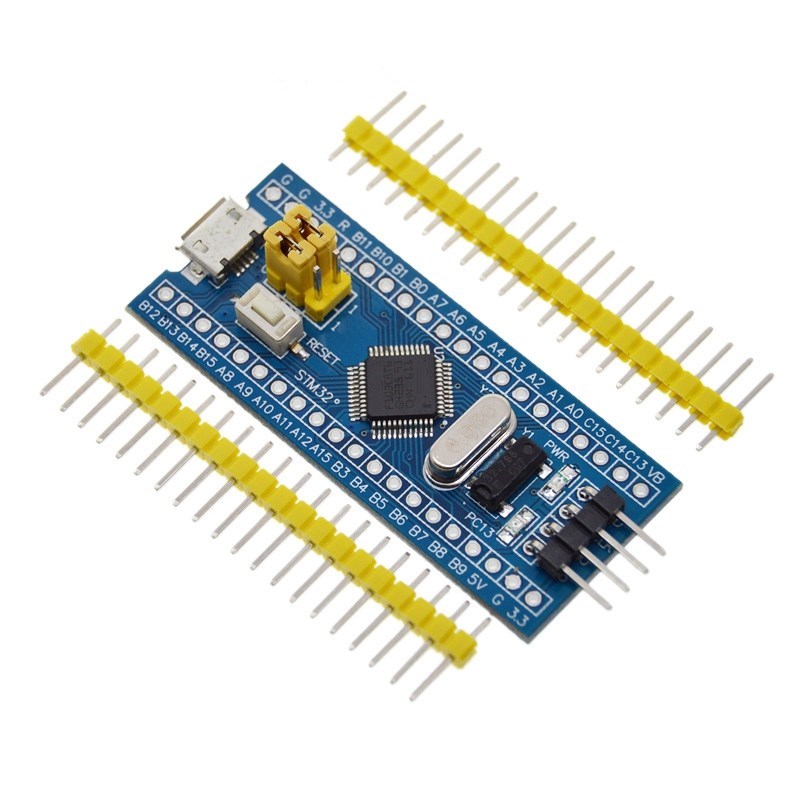
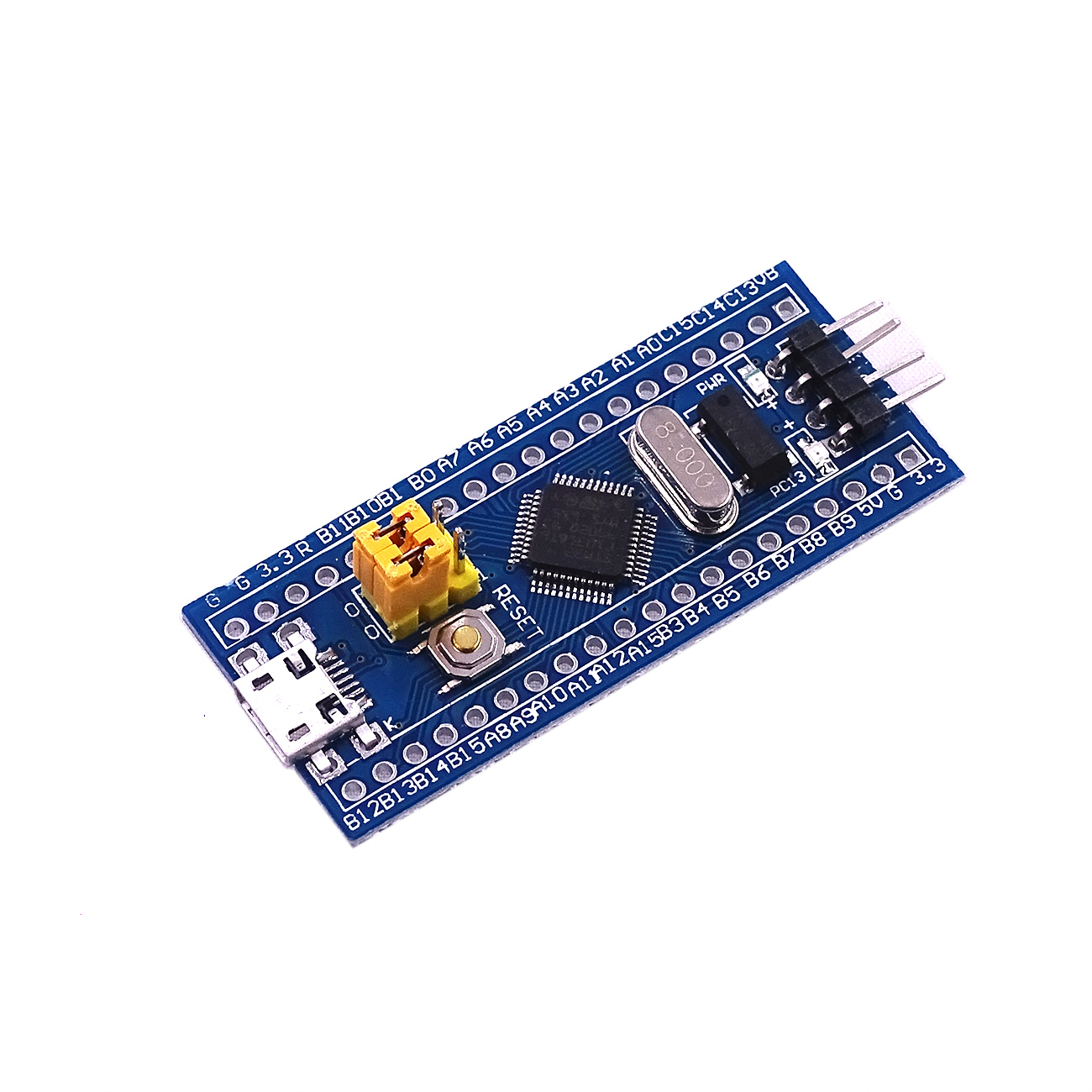
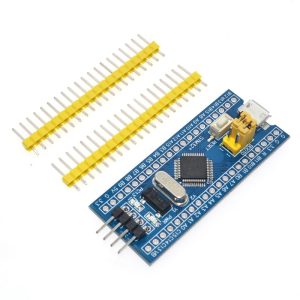
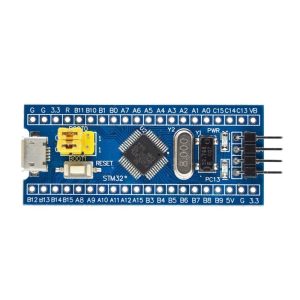
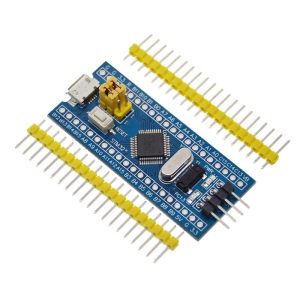
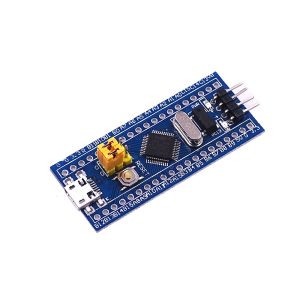
The STM32F103C8T6 MCU Minimum System Board is a compact, proven development platform built around STMicroelectronics’ STM32F103C8T6 microcontroller. Often referred to as the “Blue Pill” in the maker community, this board has become one of the most widely used entry points into the STM32 ecosystem due to its low cost, rich peripherals, and extensive community support.
This version uses the imported ST chip, ensuring genuine STMicroelectronics quality, reliable performance, and full compatibility with official documentation and toolchains. It is designed for developers, students, and engineers who want a capable 32-bit ARM platform in a small, breadboard-friendly form factor.
At its heart is an ARM Cortex-M3 32-bit RISC core running at up to 72 MHz, delivering approximately 1.25 DMIPS/MHz of processing power. The chip integrates 64 KB of Flash memory and 20 KB of SRAM, providing sufficient space for control logic, communication stacks, and moderate data processing tasks. A 2×12-bit ADC with up to 10 channels handles analog sensor inputs, while USART, SPI, I2C, and CAN interfaces provide connectivity to a wide range of peripherals and modules.
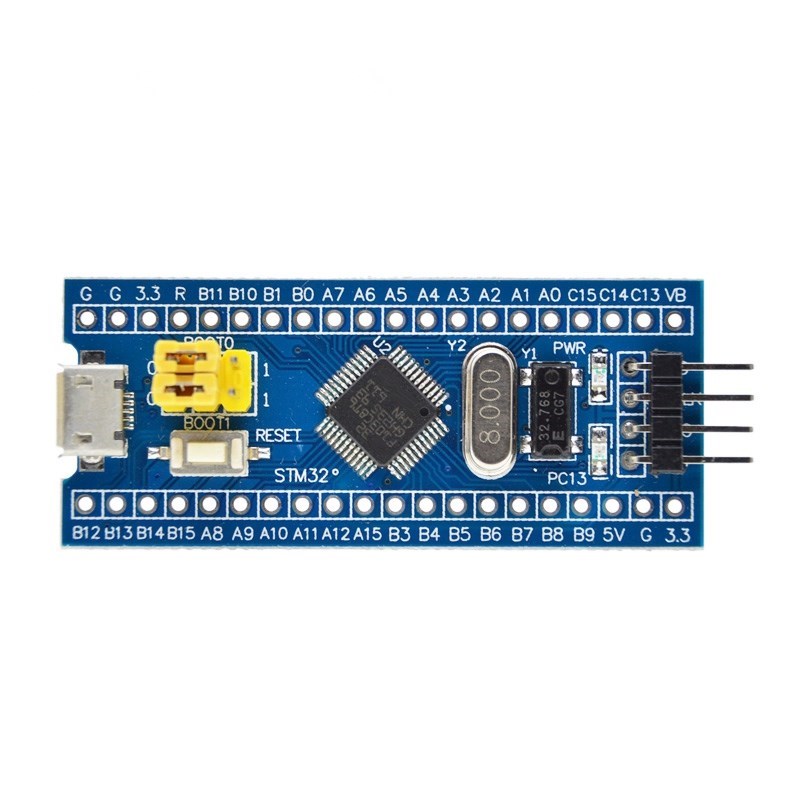
The board follows a minimum system design, exposing all available GPIO pins on standard 0.1-inch headers on both sides. This makes it ideal for breadboard prototyping and easy integration into custom setups. Two onboard jumpers allow you to select the boot mode (BOOT0 and BOOT1), and a micro USB port provides both power and programming via the built-in USB bootloader. A reset button and power LED complete the essential controls.
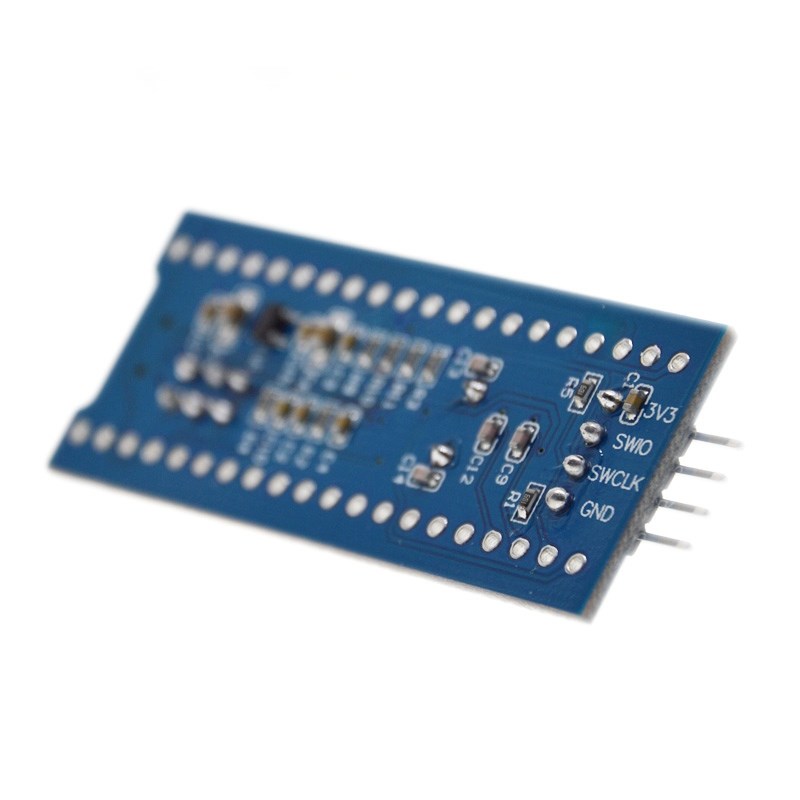
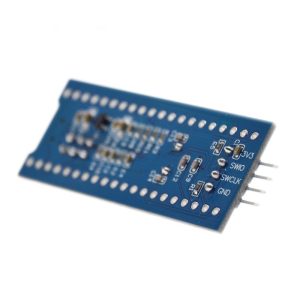
The STM32F103C8T6 is supported by STM32CubeIDE, ST’s free integrated development environment, as well as Keil MDK and IAR toolchains. The board can be programmed via SWD (Serial Wire Debug) using an external ST-Link programmer, or through the USB DFU bootloader without additional hardware. For developers familiar with Arduino, community-maintained cores allow the board to be programmed through the Arduino IDE as well.
Whether you are learning ARM embedded development, building a motor control system, creating a data logger, or prototyping a connected device, the STM32F103C8T6 Minimum System Board offers a reliable, affordable foundation. It is suitable for individual makers, students, and businesses purchasing in bulk for education, research, or product development.
Features
-
ARM Cortex-M3 @ 72 MHz — Proven 32-bit processing performance for a wide range of embedded applications.
-
64 KB Flash / 20 KB SRAM — Sufficient memory for control logic and communication stacks.
-
Import ST chip — Genuine STMicroelectronics quality and full toolchain compatibility.
-
Full pin breakout — All GPIOs exposed on standard 0.1″ headers for breadboard and custom integration.
-
Multiple communication interfaces — USART, SPI, I2C, and CAN for connecting peripherals and modules.
-
2×12-bit ADC (10 channels) — For analog sensor reading and signal measurement.
-
Micro USB port — Provides power and supports USB DFU bootloader programming.
-
SWD debug interface — Standard programming and debugging via external ST-Link programmer.
-
Boot mode jumpers — Configurable BOOT0 and BOOT1 for flexible boot options.
-
Compact breadboard-friendly form factor — 53mm × 22mm, ideal for prototyping.
Technical Specifications
| # | Parameter | Specification |
|---|---|---|
| 1 | Microcontroller | STM32F103C8T6 (ARM Cortex-M3) |
| 2 | Maximum Clock Speed | 72 MHz |
| 3 | Flash Memory | 64 KB |
| 4 | SRAM | 20 KB |
| 5 | GPIO Count | 37 pins |
| 6 | Operating Voltage | 2.0V – 3.6V |
| 7 | ADC | 2×12-bit, up to 10 channels |
| 8 | Package / Debug | LQFP-48 / SWD, USB DFU |