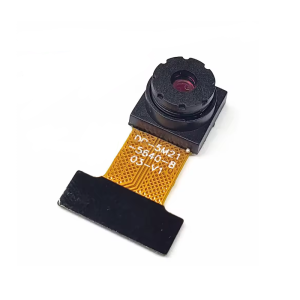
OV5640 Camera Module – 1/4″ 5MP CMOS 21mm-69° Sensor for Surveillance & Monitoring

SKU: FA1045-0-4
Image Sensor

OV5640 (1/4″ CMOS, OmniBSI)

Maximum Resolution

5MP (2592 × 1944)

Frame Rates

15fps @ QSXGA; 30fps @ 1080p; 60fps @ 720p; 90fps @ VGA

Field of View

69° diagonal

Output Formats

JPEG, YUV422/420, RGB565/555/444, RAW RGB

Interface

DVP 8/10-bit parallel + SCCB/I2C

Pixel Size

1.4µm × 1.4µm

Power Supply

Core 1.5V; Analog 2.6–3.0V; I/O 1.8V/2.8V

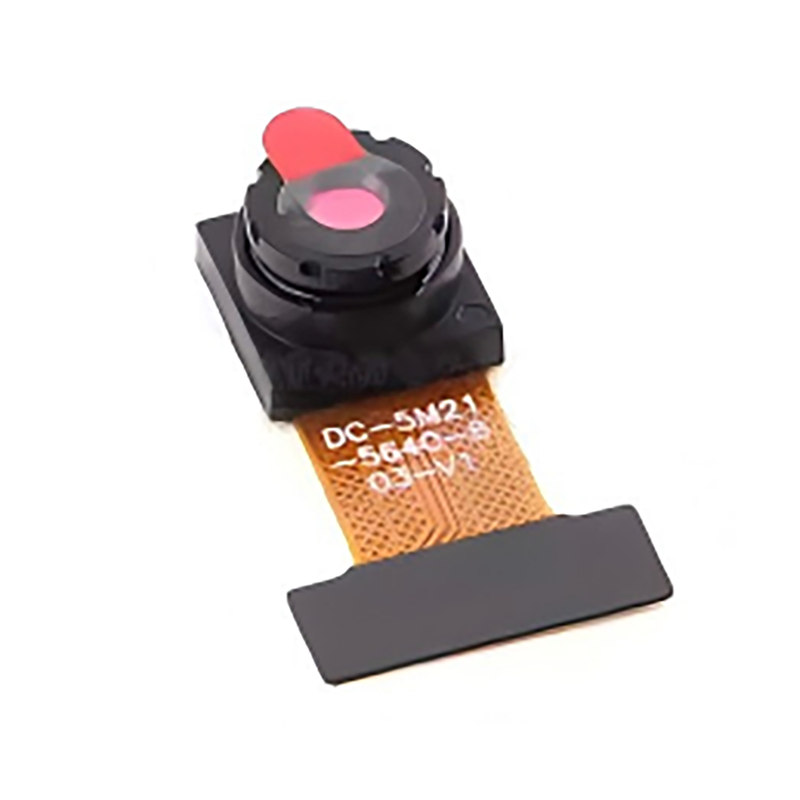
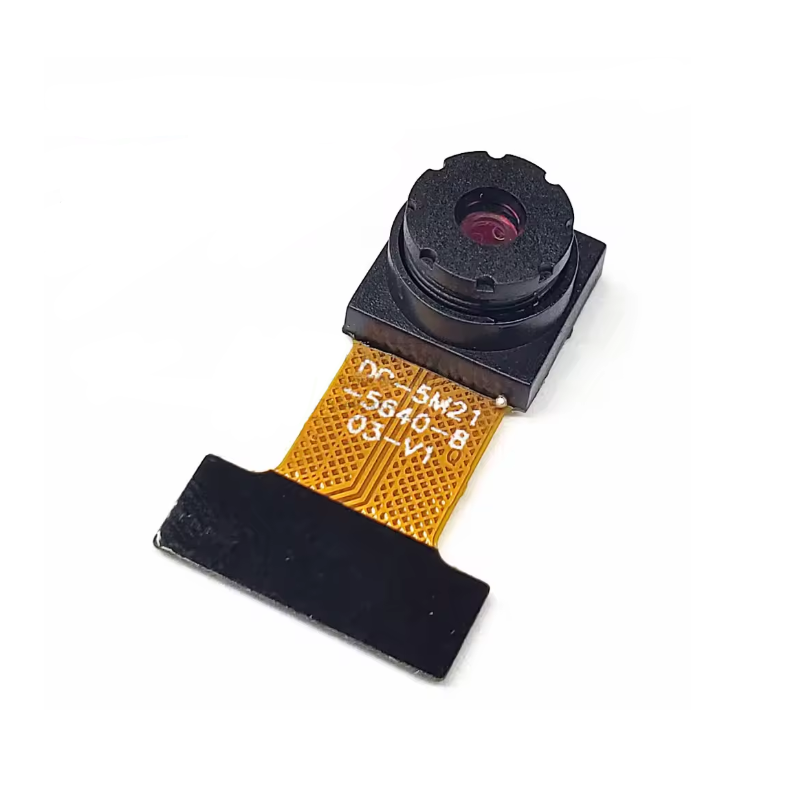
The OV5640 Camera Module is a high-resolution 5-megapixel imaging solution designed for embedded vision, surveillance, and monitoring applications. Built around OmniVision’s proven OV5640 CMOS sensor with OmniBSI backside illumination technology, this module delivers clear still images and smooth video in a compact, integration-friendly form factor.

At the heart of the module is the OV5640 sensor, a 1/4-inch CMOS image sensor featuring a 2592 × 1944 active array (5MP QSXGA) and 1.4µm × 1.4µm pixel size. The OmniBSI architecture provides high sensitivity, low crosstalk, and improved quantum efficiency, making it well suited for low-light surveillance and monitoring environments. The sensor supports frame rates up to 15fps at full resolution, 30fps at 1080p, 60fps at 720p, and 90fps at VGA, offering flexibility across different use cases.

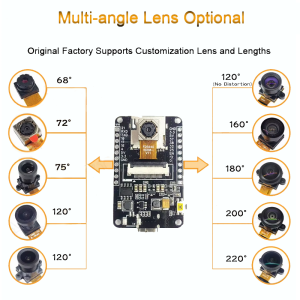
The module’s lens provides a 69° diagonal field of view with an effective focal length of approximately 3.0mm, offering a balanced perspective suitable for general-purpose surveillance and monitoring without extreme wide-angle distortion. The compact lens design (M5.5×0.25 mount) allows for tight integration into space-constrained enclosures.

Output flexibility is a key strength of the OV5640. The sensor supports JPEG compression, YUV422/420, RGB565/555/444, and RAW RGB formats, with on-chip JPEG encoding reducing bandwidth requirements for streaming and storage. Comprehensive automatic image control functions are built in, including automatic exposure control (AEC), automatic white balance (AWB), automatic black level calibration (ABLC), and 50/60Hz flicker detection.

For system integration, the module interfaces through a DVP (Digital Video Port) 8-bit/10-bit parallel interface and a standard SCCB/I2C control bus. This makes it directly compatible with microcontrollers featuring parallel camera peripherals, including STM32 F4/F7/H7/L4R series (via DCMI), ESP32-S2/S3, NXP i.MX RT, Kendryte K210/K230, and GD32F4x0.

Whether you are building an IoT surveillance camera, a smart access control system, a robotics vision platform, or an embedded monitoring device, the OV5640 Camera Module offers a proven combination of resolution, output flexibility, and ecosystem compatibility. It is suitable for individual developers, students, and businesses purchasing in bulk for product development or deployment.

Features

  • 5MP resolution (2592 × 1944) — High-detail image capture for surveillance, recognition, and monitoring.

  • OmniBSI backside illumination — Superior low-light sensitivity, low crosstalk, and low noise.

  • On-sensor JPEG compression — Reduces bandwidth and storage requirements for streaming.

  • Flexible output formats — JPEG, YUV422/420, RGB565/555/444, RAW RGB.

  • DVP 8-bit/10-bit parallel interface — Direct compatibility with STM32, ESP32-S3, and other MCU camera peripherals.

  • Comprehensive image control — AEC, AWB, ABLC, and flicker detection built in.

  • Compact M5.5 lens mount — 3.0mm effective focal length with 69° diagonal FOV.

  • Wide ecosystem support — Works with Arduino IDE, ESP-IDF, STM32CubeIDE, and Linux V4L2.

Technical Specifications 

# Parameter Specification
1 Image Sensor OV5640 (1/4″ CMOS, OmniBSI)
2 Maximum Resolution 5MP (2592 × 1944)
3 Frame Rates 15fps @ QSXGA; 30fps @ 1080p; 60fps @ 720p; 90fps @ VGA
4 Field of View 69° diagonal
5 Output Formats JPEG, YUV422/420, RGB565/555/444, RAW RGB
6 Interface DVP 8/10-bit parallel + SCCB/I2C
7 Pixel Size 1.4µm × 1.4µm
8 Power Supply Core 1.5V; Analog 2.6–3.0V; I/O 1.8V/2.8V

Usage

Getting Started

  1. Connect the module — Align the DVP connector with your development board’s camera interface. Ensure the gold fingers are fully inserted and the connector is locked.

  2. Install the development environment — For ESP32/ESP32-S3, install the esp32-camera library. For STM32, configure the DCMI peripheral and I2C for SCCB control.

  3. Configure the sensor — The OV5640 requires initialization via SCCB register writes. Use the manufacturer’s recommended register sequence for your target resolution and output format.

  4. Set output format — Use PIXFORMAT_JPEG for streaming or PIXFORMAT_RGB565 for processing. Adjust resolution and frame rate based on your application.

  5. Upload and test — Compile and upload your sketch or firmware. Verify image output through the Serial Monitor or preview interface.

Key Configuration Notes

  • Master clock required — The OV5640 requires a stable XCLK input, typically 24MHz, for proper operation. Some modules accept 6–27MHz.

  • Power supply — The sensor draws approximately 140mA during active operation. Ensure your power supply can provide sufficient current.

  • PSRAM recommended for ESP32 — For resolutions above VGA or high-quality JPEG, PSRAM is strongly recommended to buffer frame data.

  • I2C address — The OV5640 supports I2C addresses 0x3C (default) and 0x21.

Typical Applications

  • IoT surveillance cameras — WiFi-enabled remote monitoring with JPEG streaming.

  • Smart access control — Face detection and image capture for security systems.

  • Robotics vision — Object recognition, navigation, and machine vision on mobile platforms.

  • Industrial monitoring — Equipment inspection and process monitoring in manufacturing.

  • Embedded vision education — Learning image processing and computer vision with affordable hardware.

  • OEM product development — Compact module for integrating vision into commercial devices.

Notes for Business Buyers

  • Proven ecosystem — The OV5640 is widely adopted in embedded systems, with extensive documentation and community support.

  • STM32 DCMI compatibility — Direct connection to STM32 microcontrollers with DCMI peripherals, reducing development time.

  • Output flexibility — Multiple formats and resolutions support diverse application requirements from low-bandwidth streaming to high-fidelity capture.

  • Suitable for bulk purchasing — Ideal for product development teams, IoT integrators, and educational institutions.

Q: What is the OV5640 Camera Module used for?

It is used for embedded imaging applications including IoT surveillance, smart access control, robotics vision, industrial monitoring, and any project requiring high-resolution image capture or video streaming with a microcontroller.

Q: What is the maximum resolution and frame rate?

The sensor supports up to 5MP (2592 × 1944) for still images. Frame rates vary by resolution: 15fps at full resolution, 30fps at 1080p, 60fps at 720p, and 90fps at VGA.

Q: What field of view does the module have?

The module provides a 69° diagonal field of view, offering a balanced perspective suitable for most general-purpose surveillance and monitoring applications.

Q: Does the OV5640 support JPEG compression?

Yes. JPEG compression is handled on-sensor, reducing data bandwidth for streaming and making it ideal for WiFi-based camera projects and storage-constrained applications.

Q: What interface does the module use?

It uses a DVP (Digital Video Port) 8-bit/10-bit parallel interface for image data and SCCB (similar to I2C) for configuration and control.

Q: Is PSRAM required to use this module with ESP32?

PSRAM is strongly recommended for resolutions above VGA or for high-quality JPEG streaming. Without PSRAM, frame size and quality may be limited by available internal RAM.

Q: What is the difference between DVP and MIPI versions of the OV5640?

The OV5640 sensor supports both interfaces, but the module is hardwired during manufacturing to operate in only one mode. Most commercially available 24-pin OV5640 modules are DVP-only. MIPI variants typically use a different connector.

Q: Can I use this module with STM32 microcontrollers?

Yes. The DVP interface is compatible with STM32 microcontrollers featuring DCMI (Digital Camera Interface) peripherals, such as the STM32F4, F7, H7, and L4R/S series.

Q: What development environments are supported?

The module is supported by Arduino IDE (with esp32-camera library), ESP-IDF, STM32CubeIDE, and Linux V4L2 for SoC platforms.

Q: Can I purchase in bulk for a product development project?

Yes. This camera module is suitable for both individual users and business purchasing, including product development, IoT integration, and volume production.