OV7670 Camera Module: Entry-Level 640×480 VGA Sensor for Microcontrollers
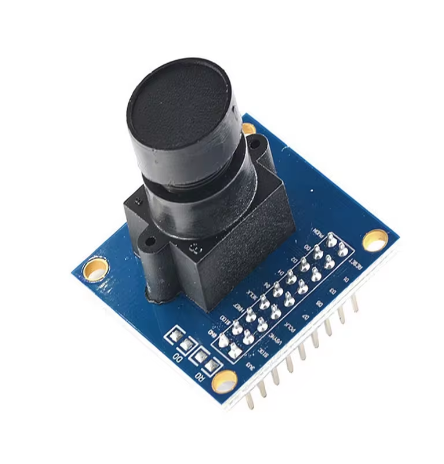
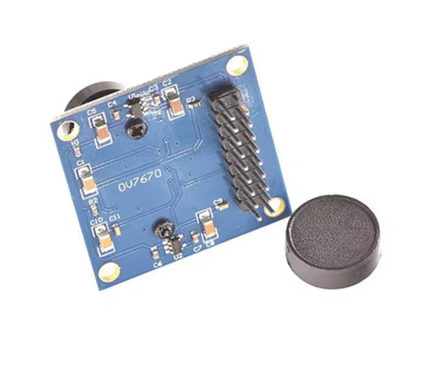
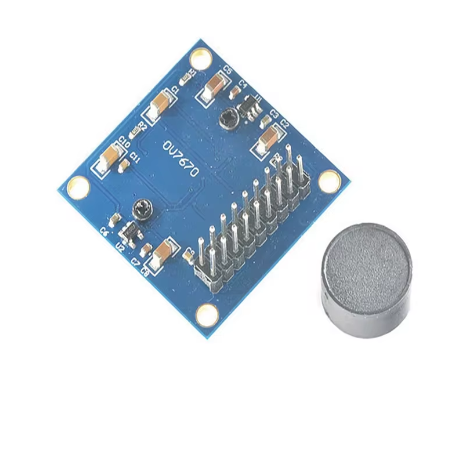
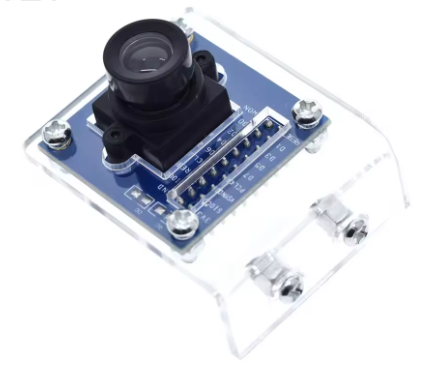
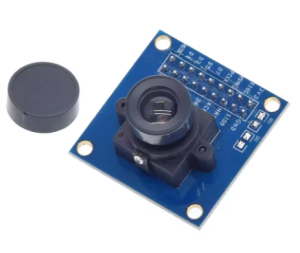
The OV7670 Camera Module is an economical, low-power image sensor designed for integration into resource-constrained embedded systems and microcontroller development boards, such as STM32, Arduino (Mega only, due to pin requirements), 8051, and FPGA platforms.
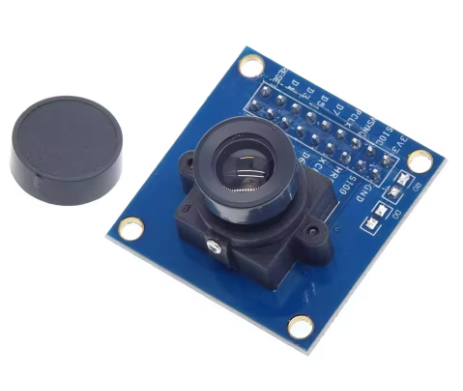
This compact module features the OmniVision OV7670 chip, delivering full VGA resolution (640×480 pixels) at up to 30 frames per second (FPS). It includes essential on-chip functions like Auto Exposure Control (AEC), Auto Gain Control (AGC), and Auto White Balance (AWB) to produce usable color images or video streams under various lighting conditions.
It is an ideal entry-level component for electronics learners, hobbyists building simple vision systems, or businesses prototyping low-resolution imaging applications where cost efficiency is paramount.
Key Features
VGA Resolution Output: Captures images at 640×480 resolution with up to 300K pixels.
High Frame Rate: Capable of delivering up to 30 frames per second at VGA resolution, or up to 60 FPS at lower resolutions (QVGA, QQVGA).
Integrated Image Processing: Built-in features manage exposure, gain, white balance, and gamma correction directly on the chip, reducing the processing load on the host microcontroller.
SCCB Interface: Configurable via the standard 2-wire Serial Camera Control Bus (SCCB) interface, which is compatible with I2C protocol.
Versatile Output Formats: Supports various output formats including YUV/YCbCr 4:2:2, RGB565, and RGB555 for compatibility with different display requirements.
RAW RGB Capture: Capable of outputting raw Bayer pattern data for custom host-side processing.
Low Power Consumption: Operates efficiently, suitable for battery-powered or portable imaging projects.
Technical Parameters (Specifications)
Parameter
Value/Description
Image Sensor
OmniVision OV7670 CMOS Sensor
Effective Pixels
640 x 480 (VGA, 300K Pixels)
Operating Voltage
2.5V to 3.3V DC (I/O voltage is typically 3.3V)
Power Consumption
~60mA active
Output Formats
YUV/YCbCr 4:2:2, RGB565/555, Grayscale, RAW
Interface Type
SCCB (I2C compatible for configuration), Parallel Data Interface (8-bit)
Max Frame Rate
30 FPS (VGA), 60 FPS (QVGA)
Lens Focal Length
Varies by lens attached (standard M12 mount)
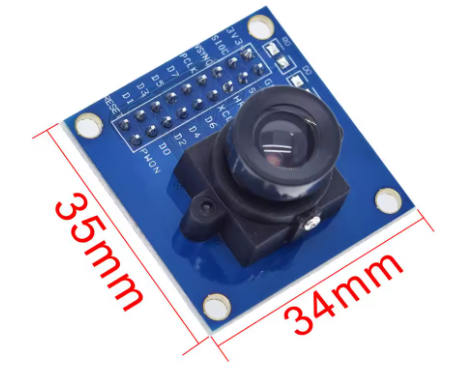
Dimensions
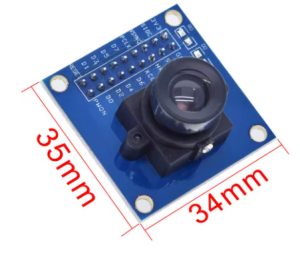
Compact module size (e.g., ~35mm x 35mm)
Usage Instructions
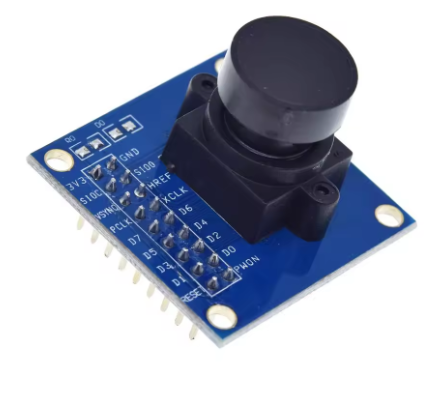
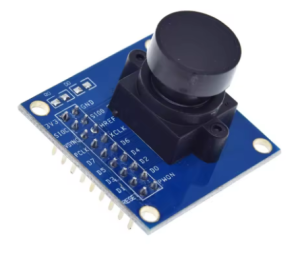
The OV7670 uses a parallel 8-bit data bus and several control signals (VSYNC, HREF, PCLK, XCLK, etc.), requiring a microcontroller with sufficient available GPIO pins and memory (RAM) to buffer image data.
Hardware Connection Notes:
Logic Levels: The OV7670 operates at 3.3V logic. If interfacing with a 5V MCU (like an Arduino Uno), you MUST use a logic level converter on all data and control lines to prevent damage. STM32 MCUs are typically 3.3V compatible.
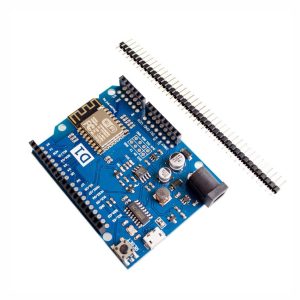
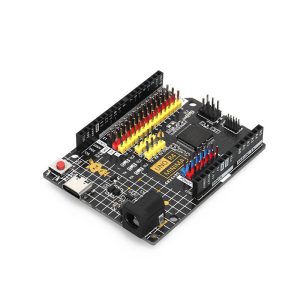
Pin Requirements: Due to the 8 data pins and numerous control pins, this module requires many I/O ports. It is generally not compatible with the standard Arduino Uno/Nano due to limited pins and RAM, but works well with the Arduino Mega 2560 or STM32 boards.
Software & Programming:
Libraries: Libraries such as the OV7670 library are available for Arduino Mega, though performance varies. For STM32 and FPGAs, direct register configuration is common.
Configuration: You must initialize the camera by sending specific register configurations via the SCCB/I2C interface to set the resolution, color format, frame rate, and other imaging parameters.
Data Capture: The MCU reads the image data via the 8-bit parallel interface, typically triggered by VSYNC (frame sync) and HREF (line sync) signals, and stores it in memory before processing or sending it to a display.
Q: Can I use this camera module with an Arduino Uno/Nano?
It is generally not recommended or feasible. The Uno/Nano has too few I/O pins and insufficient RAM (only 2KB) to store even a small fraction of a VGA image frame (640×480 pixels requires over 300KB of data). The Arduino Mega or STM32 development boards are required.
Q: Does this module take photos automatically?
No, the module is a sensor only. A connected microcontroller must read the data stream, process it, and store it to memory (like an SD card or external flash), as there is no onboard processor or storage.
Q: What is the maximum distance the camera can be from the microcontroller?
The parallel data interface is sensitive to timing and interference. The included pin headers should connect directly to a breadboard or PCB; extending the distance with long wires can cause data corruption.
Q: I am a business buyer. Is this module suitable for a commercial product?
The OV7670 is a very low-cost solution best suited for learning and basic prototyping. For robust commercial products requiring certification and reliable high-quality imaging, newer, more integrated sensor modules (like those with onboard JPEG compression) are typically recommended.