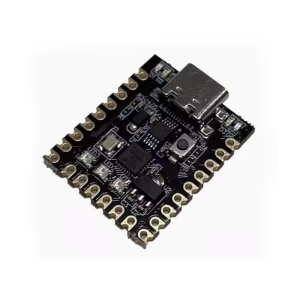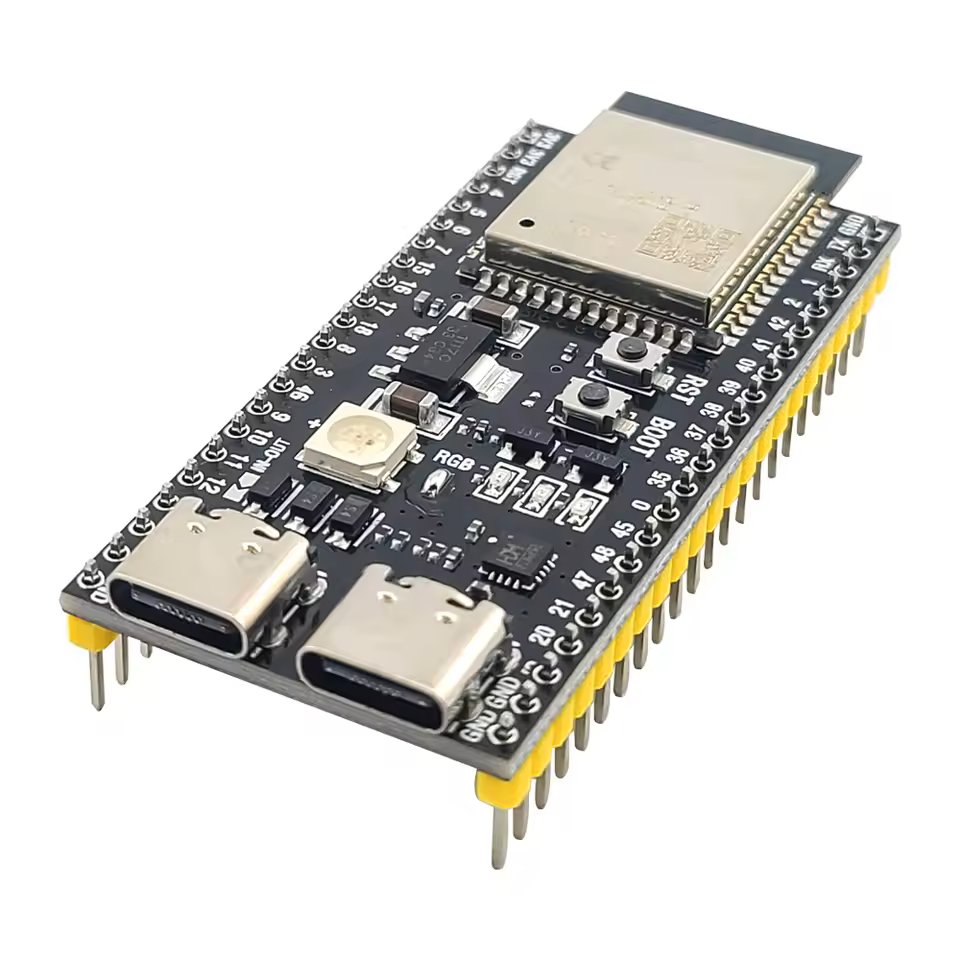
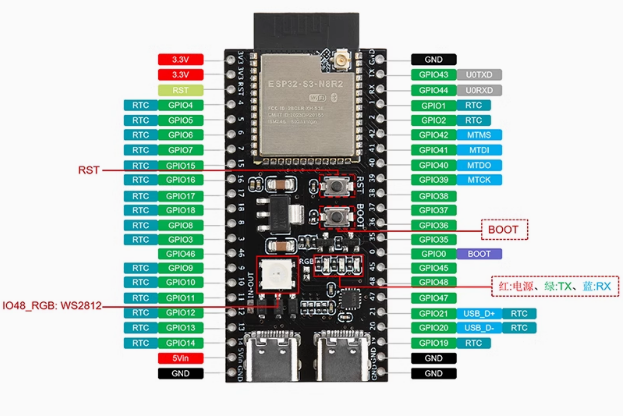
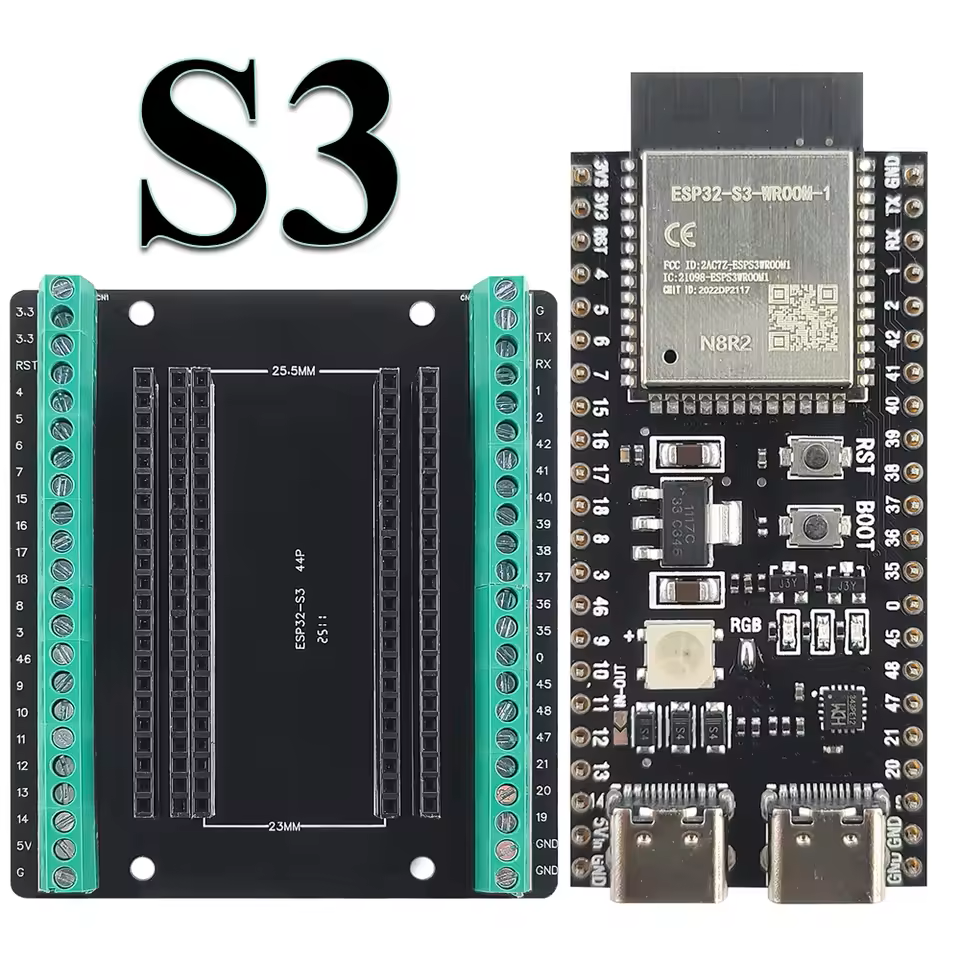
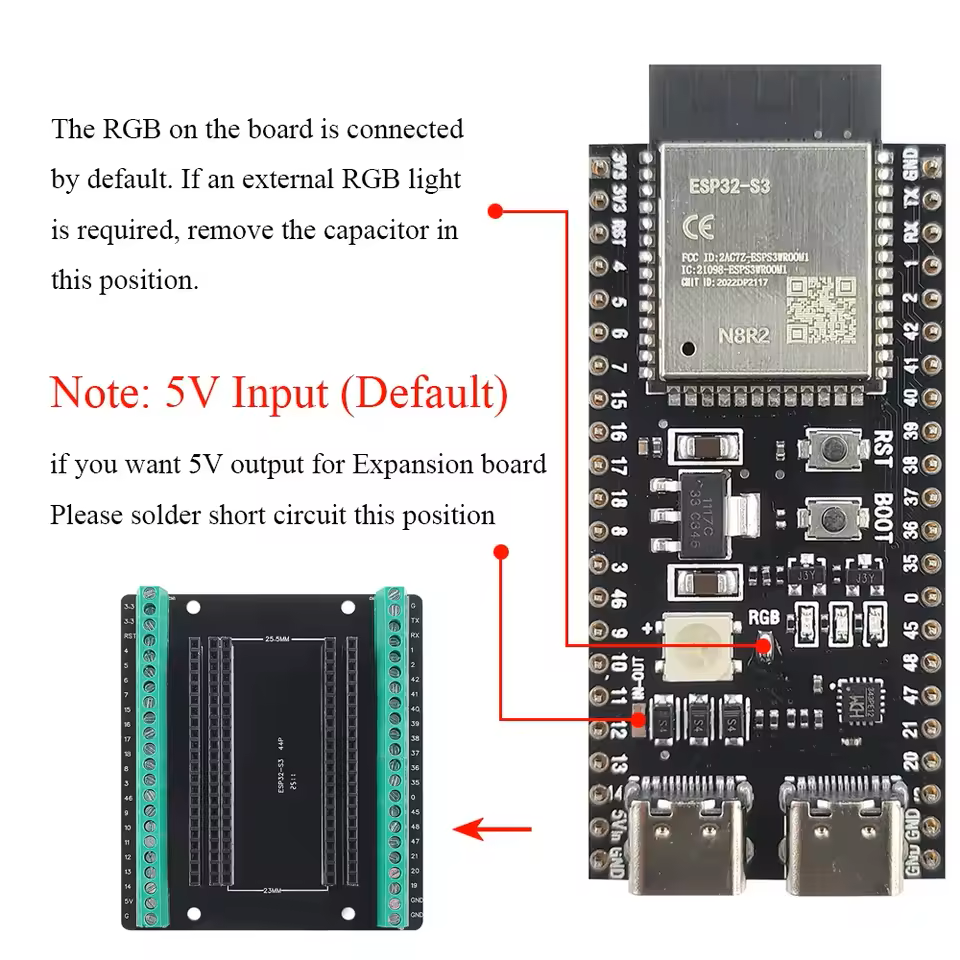
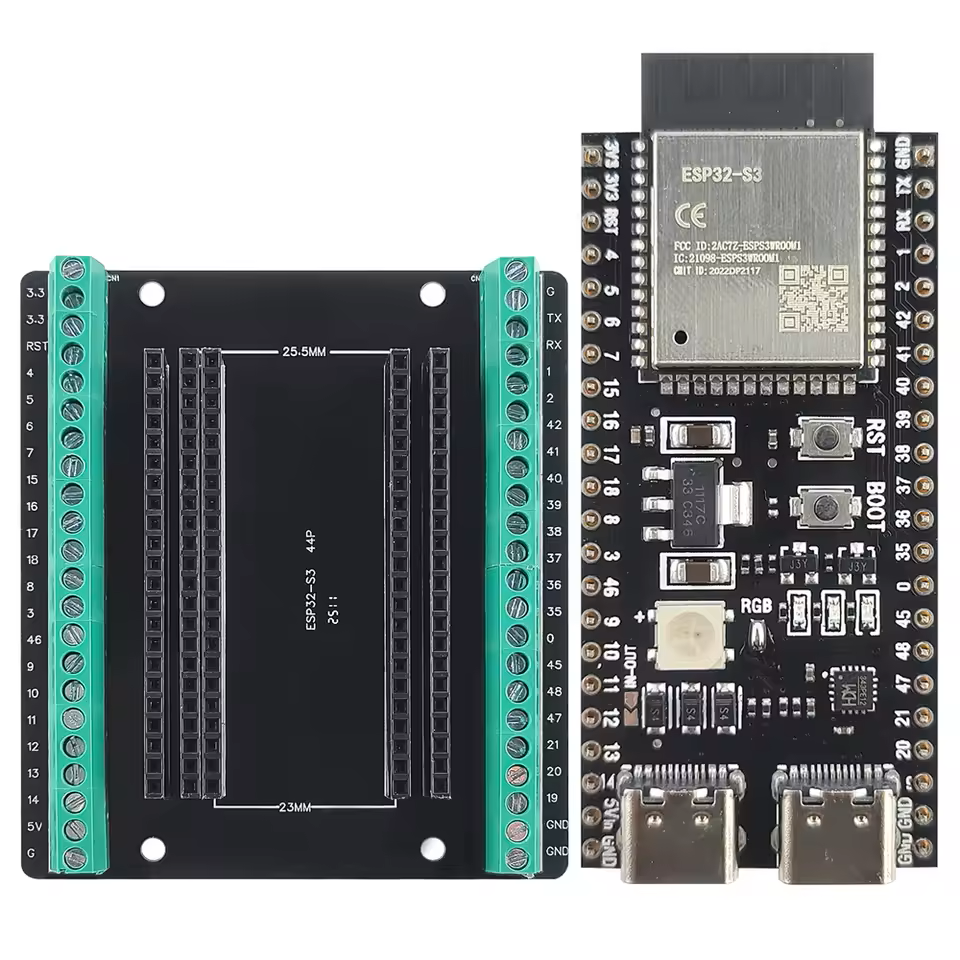
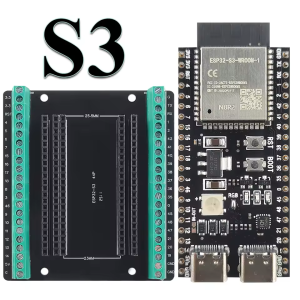
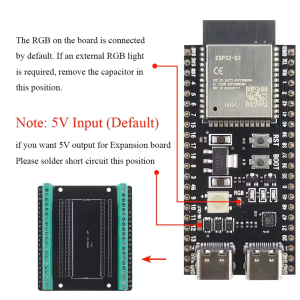
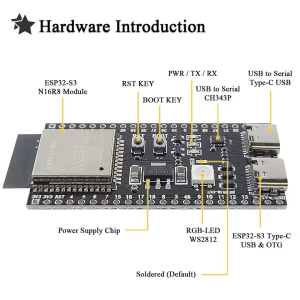
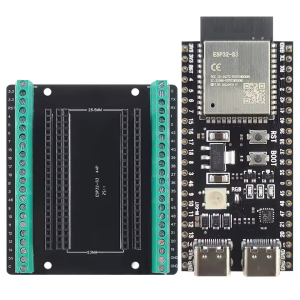
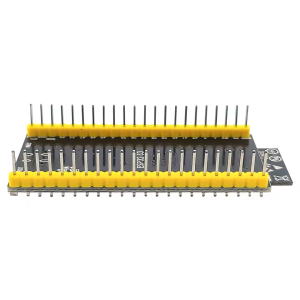
ESP32-S3-N8R2 development board 42pins with 2×Type-C interface (Welded)

SKU: FA1053-0-1-21
Module

ESP32-S3-WROOM-1 (N8R2)

Processor

Dual-core 32-bit Xtensa® LX7 (Up to 240 MHz)

Flash / PSRAM

8MB Flash / 2MB Quad PSRAM

USB Interface

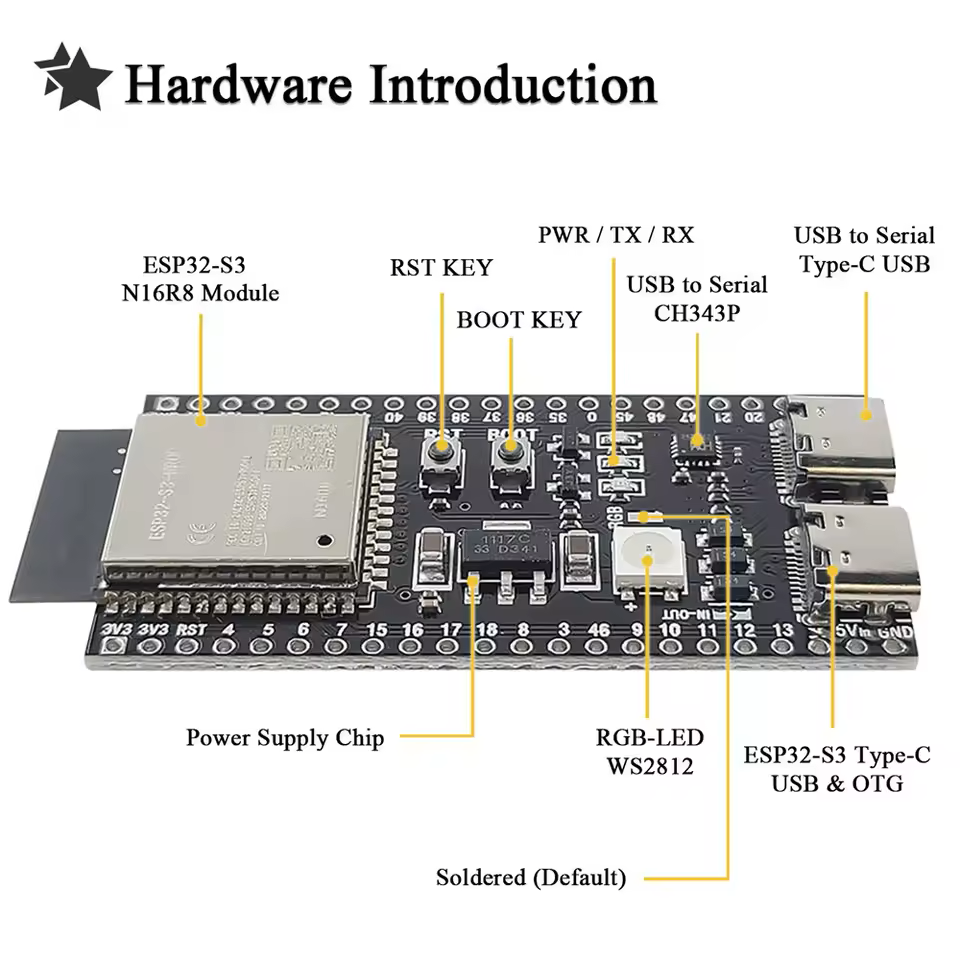
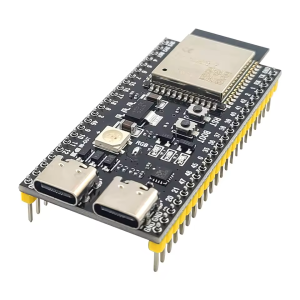
2× Type-C (UART + Native USB OTG)

Physical Status

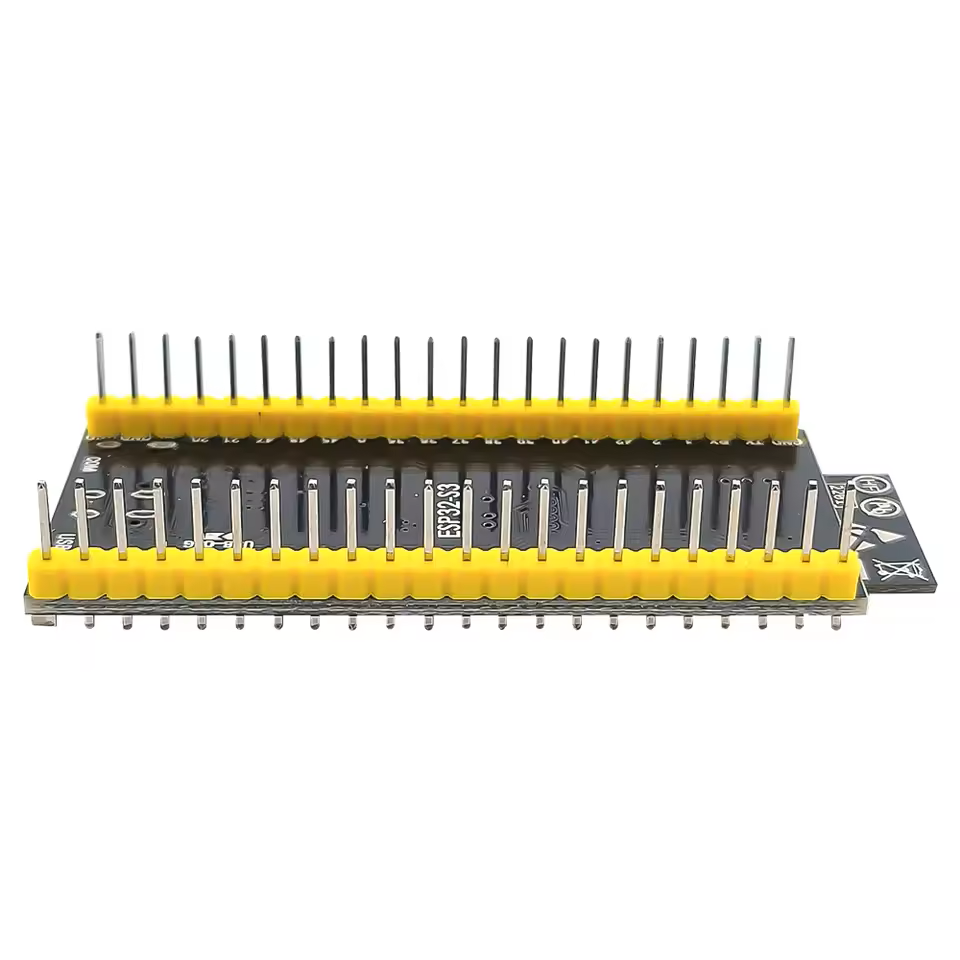
Pre-Welded / Soldered Headers

Pin Configuration

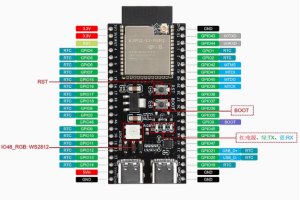
42-Pin Expanded Layout

Wireless

2.4GHz Wi-Fi (802.11 b/g/n) + Bluetooth 5.0 (LE/Mesh)

Hardware Accel

AES, SHA, RSA, ECC, RNG, Neural Network

Logic Voltage

3.3V

This high-performance ESP32-S3-N8R2 (Welded Version) is a professional-grade development board featuring the ESP32-S3-WROOM-1 module. In 2025, this configuration is a preferred choice for developers who need the balanced power of 8MB Flash and 2MB PSRAM in a ready-to-use, pre-soldered format. Featuring an expanded 42-pin layout and dual Type-C interfaces, it is built for the next generation of AIoT applications. 

Product Description
The ESP32-S3-N8R2 is a powerhouse optimized for Edge AI and high-speed wireless communication. At its core is the Xtensa® LX7 dual-core processor, which includes specialized vector instructions to accelerate neural network computing and signal processing. 
This “N8R2” variant provides a generous 8MB of SPI Flash and 2MB of Quad PSRAM, offering a middle-ground memory configuration that is more powerful than standard modules while remaining cost-effective for mass-deployment prototypes. The board features an expanded 42-pin layout for maximum GPIO accessibility and dual Type-C ports: one for high-stability UART debugging and another for native USB OTG functionality. This version is pre-welded (soldered), ensuring a secure connection for immediate use in professional environments. 
Key Features
  • Ready-to-Deploy (Welded): Headers are pre-soldered using precision industrial techniques, saving assembly time and ensuring maximum electrical conductivity for B2B testing.
  • AI Acceleration: The S3 architecture includes hardware-level support for AI instructions, making facial recognition and voice processing significantly faster.
  • Dual Type-C Design:
    • Port 1 (UART): Dedicated to firmware flashing and serial monitoring via a stable bridge chip.
    • Port 2 (Native USB): Connects directly to the S3 core for high-speed USB OTG, HID (Keyboard/Mouse), or MIDI emulation.
  • Balanced Memory (N8R2): 8MB Flash and 2MB PSRAM provide the necessary overhead for MicroPython, CircuitPython, and complex IoT data buffering.
  • Expanded 42-Pin Header: Provides additional GPIOs compared to standard 38-pin boards, allowing for more simultaneous sensor and display connections. 
Usage Scenarios
  • Business / B2B: Perfect for rapid prototyping of smart appliances, industrial sensor nodes, and secure IoT gateways where 2MB of PSRAM is sufficient for data overhead.
  • Advanced Makers: Ideal for CircuitPython projects, custom USB controllers, and lightweight AI voice assistants.
  • Education: A robust, “plug-and-play” tool for teaching advanced embedded systems and wireless networking without the need for soldering. 
Q: What is the benefit of the "N8R2" configuration over "N16R8"?

The N8R2 (8MB Flash/2MB PSRAM) is more cost-effective for projects that don’t require massive AI models or high-resolution video buffering, while still providing the 2MB of PSRAM needed to run MicroPython smoothly. 

Q: How do I enable the 2MB PSRAM in my development environment?

In the Arduino IDE, select “ESP32S3 Dev Module” and set “PSRAM” to “QSPI PSRAM”. For ESP-IDF, enable “Support for external, SPI-connected RAM” in the configuration menu.

Q: Why does the board have 42 pins instead of 38?

The 42-pin layout breaks out extra internal signals of the S3 chip, such as additional power grounds and GPIOs, providing more flexibility for complex hardware designs and debugging.

Q: Can I use both Type-C ports simultaneously?

Yes. You can power the board and view serial logs via the UART port while using the Native USB port to act as a USB peripheral (like a game controller) on another device. 

Q: Is this board 5V tolerant?

No. While it is powered by 5V, the GPIO pins operate at 3.3V. Connecting 5V sensors directly to the 42-pin header will cause permanent damage to the module. 

Q: Are the headers already soldered?
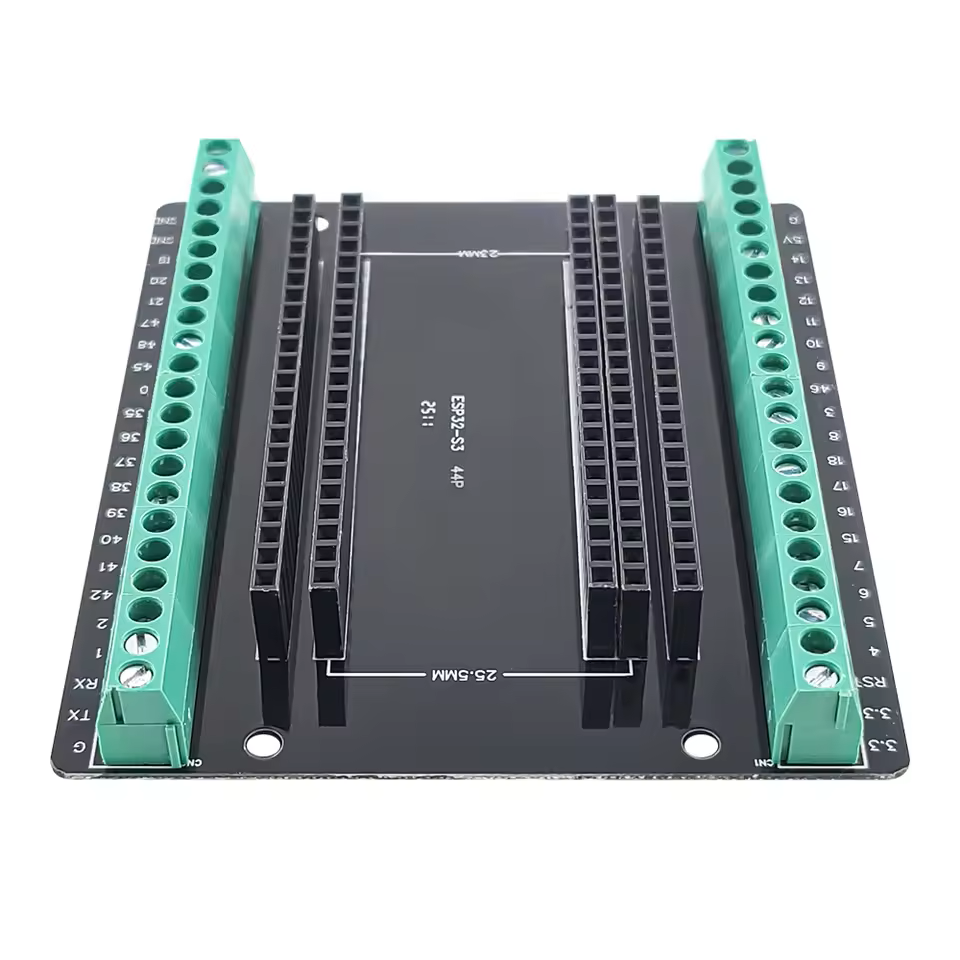
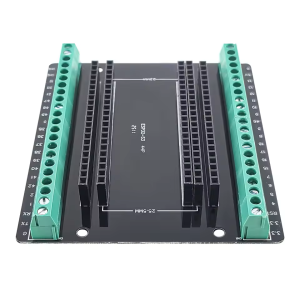
Yes, this is the Welded Version. It is ready to be plugged into a breadboard or expansion shield immediately.