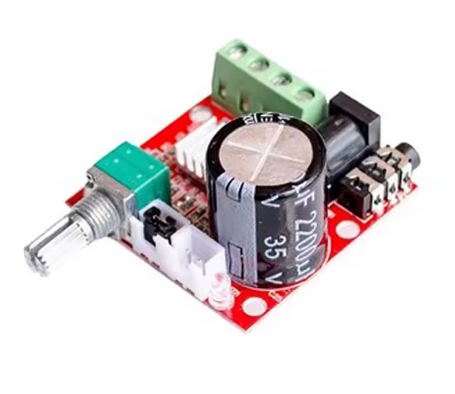
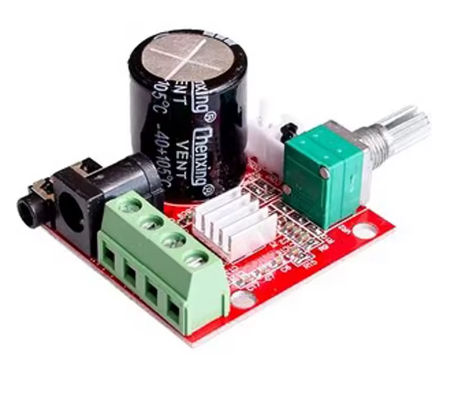
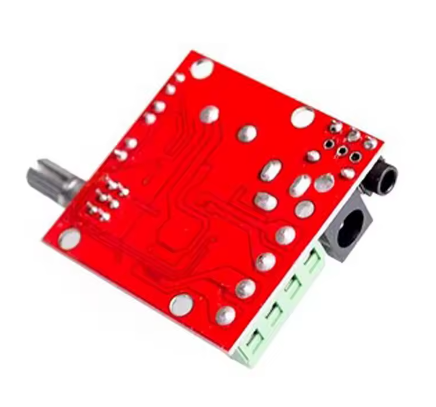
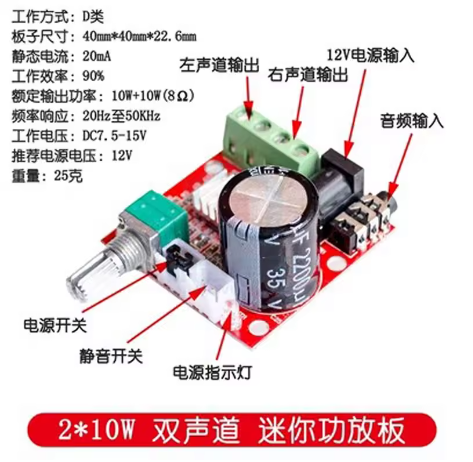
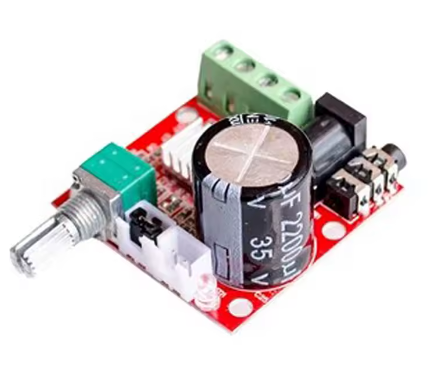
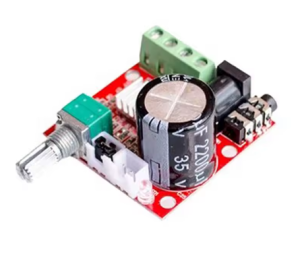
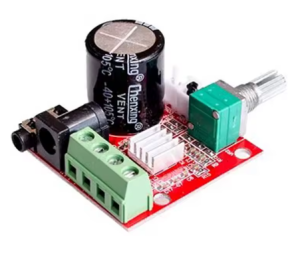
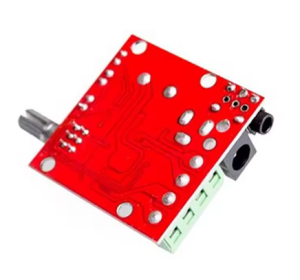
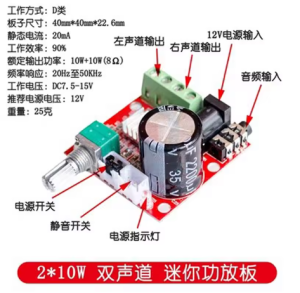
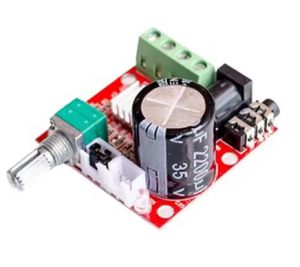
The PAM8610 10W Class D Stereo Amplifier Board is a compact, high-efficiency digital audio power module that offers excellent sound quality with minimal heat generation, serving as a modern, efficient alternative to older Class AB modules like the TDA2030 in low-power applications.
Description
The PAM8610 10W Dual Channel Stereo Amplifier Board provides a high-efficiency solution for powering passive speakers in various DIY audio projects. Utilizing the advanced PAM8610 digital amplifier chip, this module operates as a Class D amplifier, achieving efficiencies often exceeding 90%. This high efficiency translates into lower power consumption and significantly less heat generation compared to traditional Class AB amplifiers (like the TDA2030), making it ideal for compact installations or battery-powered portable projects.
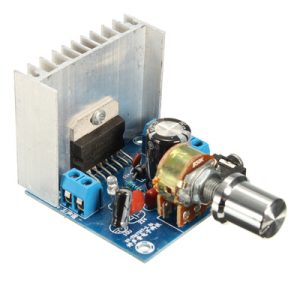
The board delivers a robust 10 watts per channel into an 8-ohm speaker load with a 12V DC input, or up to 15W into a 4-ohm load (check specific product variant specifications for exact wattage). The wide operating voltage range of 7V to 15V makes it highly versatile. It features an integrated volume control potentiometer for easy adjustment and built-in reverse polarity protection to prevent damage from incorrect power connections.
Designed with simplicity in mind, the module offers straightforward screw-terminal connections for power, speakers, and a 3-pin input header for an audio source (Left, Right, Ground). Its miniature size makes it perfect for retrofitting existing bookshelf speakers, car audio systems, or building custom desktop audio setups while maintaining high-fidelity sound.
Features
- High-Efficiency Class D: Utilizes Class D technology for high power efficiency (>90%), reducing heat and power consumption.
- Powerful Output: Delivers up to 10W per channel (8Ω load) for clear stereo sound.
- Wide Voltage Operation: Operates on a flexible DC input range of 7V to 15V (12V recommended).
- Integrated Volume Control: Onboard potentiometer allows for easy adjustment of the output volume.
- Reverse Polarity Protection: Built-in protection circuit helps prevent damage if the power supply is connected incorrectly.
- High Fidelity Audio: Features a high signal-to-noise ratio and low total harmonic distortion for clear sound reproduction.
- Compact Design: Miniature size makes it easy to integrate into tight spaces and existing speaker enclosures.