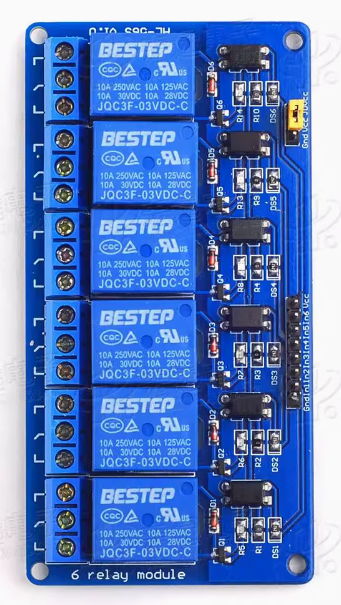
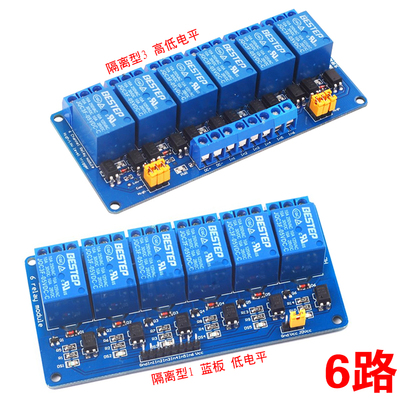
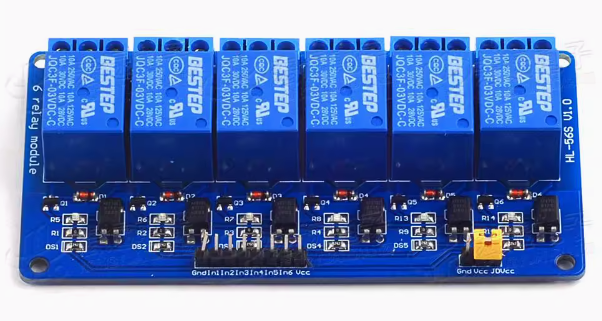
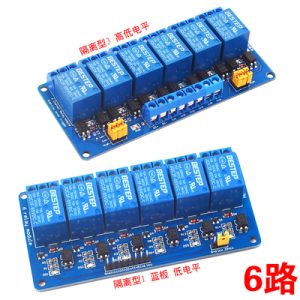
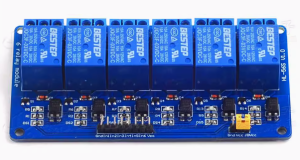
6 Channel Relay Module without light coupling 5V/12V/24V

SKU: FA2084-3
Number of Channels

6

Control Voltage

5V DC / 12V DC / 24V DC (Select by specific model ordered)

Relay Contact Rating

10A @ 250VAC / 10A @ 30VDC

Trigger Logic

Active-LOW (Signal pin LOW to activate relay) – Confirm specific model

Relay Type

Electromechanical, Non-Latching

Contact Configuration

SPDT (COM, NO, NC) per channel

Coil Power Consumption

~70-80mA per activated relay

Dimensions

Approx. 135mm x 85mm x 20mm (L x W x H)

Product Description

The 6-Channel Relay Module (Non-Optocoupler) is a high-density, cost-effective switching solution designed for projects requiring control of multiple independent circuits. Engineered for simplicity and reliability, this module provides direct control over six high-power AC or DC loads using a single, versatile low-voltage DC input. It features a universal design compatible with 5V, 12V, or 24V DC control systems, making it an indispensable tool for complex automation, extensive home control systems, and multi-device industrial applications.
Without optical isolation, this module employs a direct-drive design that ensures fast response times and robust performance in environments where a single, clean power source is used for both the control logic and the relay coils. Each channel is equipped with a durable electromechanical relay capable of handling substantial currents, backed by screw terminals for secure load connections. Its six-channel configuration maximizes control capability in a compact footprint, ideal for centralized control panels, multi-zone systems, and projects where managing numerous devices from a single microcontroller or PLC is essential.

Key Features

  • High-Density 6-Channel Design:​ Control up to six completely independent electrical circuits simultaneously from a single compact module, perfect for complex automation.
  • Wide Voltage Compatibility:​ Universally supports 5V, 12V, and 24V DC control voltages (specific model dependent), offering seamless integration with a vast range of microcontrollers and industrial controllers.
  • Direct Non-Optocoupler Drive:​ Simplifies circuitry for faster response and reliable operation in systems with a common, well-regulated power supply, reducing component count and cost.
  • High-Current Relay Contacts:​ Each channel features robust electromechanical relays with SPDT contacts, capable of switching both AC and DC loads up to 10A.
  • Compact & Efficient Layout:​ Intelligent PCB design packs six relays into a minimal space, saving valuable real estate in control cabinets and project enclosures.
  • Secure Screw Terminal Connections:​ All input and output connections use high-quality screw terminals, ensuring reliable, vibration-resistant wiring for both signal and load sides.
  • Dual-Pole Switching Capability:​ SPDT (Single Pole Double Throw) relays provide both Normally Open (NO) and Normally Closed (NC) contacts for flexible circuit design.
  • Standard Control Interface:​ Features straightforward signal input pins compatible with common development boards like Arduino, Raspberry Pi (with level shifter), and PLC digital outputs.

Main Parameters

  • Number of Channels:​ 6
  • Control Voltage:​ 5V DC / 12V DC / 24V DC (Select by specific model ordered)
  • Relay Contact Rating:​ 10A @ 250VAC / 10A @ 30VDC
  • Trigger Logic:​ Active-LOW (Signal pin LOW to activate relay) – Confirm specific model
  • Relay Type:​ Electromechanical, Non-Latching
  • Contact Configuration:​ SPDT (COM, NO, NC) per channel
  • Coil Power Consumption:​ ~70-80mA per activated relay
  • Dimensions:​ Approx. 135mm x 85mm x 20mm (L x W x H)

Typical Applications / Usage

  1. Multi-Zone Home Automation:​ Control lighting, fans, or appliances in six different rooms or zones from a central smart home hub or microcontroller.
  2. Industrial Sequential Control:​ Manage multiple steps in a process, such as controlling different motors, solenoids, or indicator lights in an automated machine or conveyor system.
  3. Aquarium or Vivarium Control:​ Automate various equipment like lights, pumps, heaters, and CO2 solenoids on separate schedules for a complete habitat management system.
  4. Theatrical or Display Lighting:​ Create dynamic lighting scenes by switching multiple banks of AC or DC lighting fixtures.
  5. Prototyping Complex Systems:​ An essential tool for engineers and students developing prototypes that require control of multiple actuators, sensors, or indicators.
  6. Energy Management Panels:​ Switch multiple backup circuits, generators, or solar system components in energy control setups.
Connection Guide:
  • Power Selection & Connection:​ Ensure you have the correct module for your system’s voltage (5V, 12V, or 24V). Connect the corresponding DC power supply to the module’s VCC​ and GND​ terminals. The supply must deliver enough current for all relays that may be on simultaneously (~500mA for all six).
  • Control Signal Wiring:​ Connect the signal pins (IN1​ through IN6) to the digital output pins of your controller. Typically, applying a LOW signal (0V) to a pin activates its corresponding relay, while a HIGH signal deactivates it.
  • Load Wiring:​ For each channel, connect your load’s power source (AC Mains or DC) to the Common (COM) terminal. Connect the device to be controlled to either the Normally Open (NO) terminal (to turn ON when relay activates) or the Normally Closed (NC) terminal. Critical: Always disconnect all power before wiring. Exercise extreme caution when connecting mains AC voltage.
Q: What does "Non-Optocoupler" or "without light coupling" mean for this module?

It means there is no optical isolator between your microcontroller’s control pins and the relay coils. The control circuit shares a common ground with the relay driver circuit. This design is simpler and cost-effective but requires that your entire system (controller and relay module) uses the same, clean power supply to avoid ground loop issues or noise interference.

Q: I need to control a 3.3V device like an ESP32. Which model should I choose?

For a 3.3V microcontroller, the 5V control voltage model​ is typically the best choice. You can power the module with 5V, and the 3.3V digital HIGH signal from the ESP32 is usually sufficient to be recognized as a HIGH (deactivate) state when the module uses Active-LOW logic. Always test compatibility in your specific setup.

Q: Can I mix different load types (AC and DC) on the same module?

Yes.​ Each relay’s contacts are rated for both AC (250VAC/10A) and DC (30VDC/10A) loads. You can have some channels switching AC lamps and others switching DC motors simultaneously, as long as you stay within the individual channel’s current and voltage ratings.

Q: Why does the module have six channels, and do they work independently?

The six-channel design is for controlling multiple devices or circuits from one central point. Yes, all six channels operate completely independently. You can control each one with a separate signal from your microcontroller, turning them on/off in any combination.

Q: How much power does the module itself need?

The main power draw is for the relay coils. Each coil requires approximately 70-80mA when activated. Therefore, if all six relays are ON at the same time, the module will draw about 420-480mA​ from your DC power supply (5V, 12V, or 24V, depending on your model). Ensure your power supply can provide this current plus overhead for your controller.

Q: Is a heatsink required for this relay module?

Generally, no. The heat generated is primarily from the relay coils and is typically dissipated adequately. However, if you are switching high currents (close to 10A) continuously on multiple channels in a high ambient temperature environment, ensuring good ventilation around the module is advisable.

Q: The relays make a clicking sound. Is this faulty?

No, this is completely normal.​ This module uses electromechanical relays, which contain a physical metal armature that moves to make or break the electrical connection, producing an audible click. This confirms the relay is switching.

Q: Is this module suitable for business and OEM integration?

Yes.​ Its multi-channel design, robust relay ratings, and industrial screw terminals make it highly suitable for integration into commercial products, kiosks, industrial control panels, and custom automation solutions. We support business clients with volume pricing, custom branding options, and technical specifications for integration. Please contact our sales team for OEM inquiries.