Description
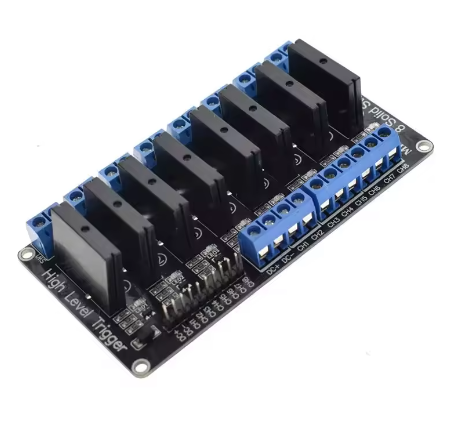
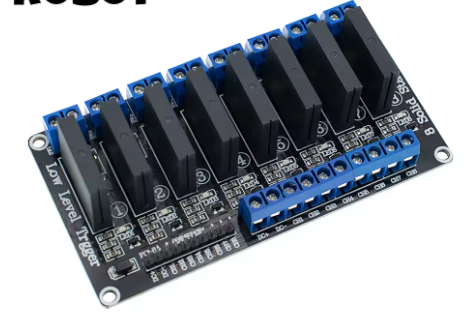
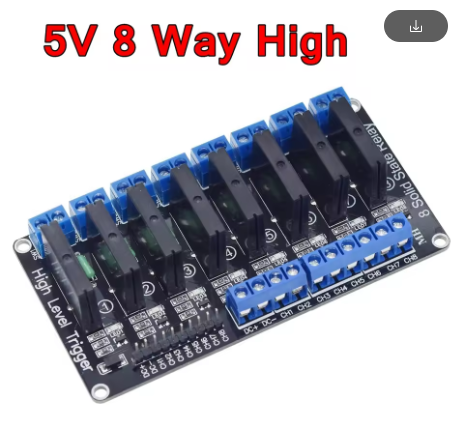
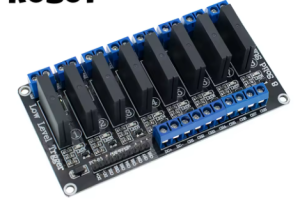
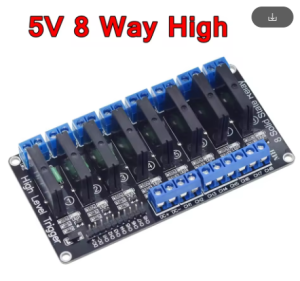
The 8-Channel Solid State Relay (SSR) Module is a high-performance, silent, and wear-free alternative to traditional mechanical relay boards. Designed to control AC loads (such as lighting, heaters, pumps, and industrial equipment) using a low-voltage DC signal, this module offers exceptionally long service life and fast switching speeds without any moving parts.
Available in 5V, 12V, or 24V DC control voltage versions, this SSR module supports both high-level and low-level trigger modes, making it compatible with virtually any microcontroller (Arduino, ESP32, STM32, Raspberry Pi, PLC, etc.) or even manual switches. Each channel features a built-in indicator LED and is optically isolated for safe separation between the control side and the high-voltage AC side.
This module is ideal for applications requiring frequent switching, silent operation, vibration resistance, and high reliability — including industrial automation, smart home systems, HVAC control, greenhouse management, and commercial lighting control.
Features
-
Zero moving parts — silent and wear-free operation
-
Optical isolation between control and load sides
-
Selectable high-level or low-level trigger (jumper or solder pad)
-
Compatible with 5V, 12V, or 24V DC control signals (depending on version)
-
Zero-crossing switching reduces electrical noise
-
LED indicators per channel for trigger status
-
High switching speed (milliseconds response)
-
Suitable for resistive and moderate inductive AC loads
Technical Parameters (8 items)
Usage Guide
1. Selecting Trigger Mode
Most versions include a jumper or DIP switch per channel to select:
Set the mode before connecting to your controller.
2. Wiring Example (Arduino – High-Level Trigger)
3. AC Load Connection
Each channel has two screw terminals:
Connect the AC neutral line directly to the load’s neutral terminal.
AC Live ──→ SSR IN ──→ SSR OUT ──→ Load ──→ AC Neutral (direct)
⚠️ Always disconnect AC power before wiring.
4. Sample Arduino Code (High-Level Trigger, 5V version)
int relayPins[8] = {2,3,4,5,6,7,8,9};
void setup() {
for (int i = 0; i < 8; i++) {
pinMode(relayPins[i], OUTPUT);
digitalWrite(relayPins[i], LOW);
}
}
void loop() {
digitalWrite(relayPins[0], HIGH);
delay(1000);
digitalWrite(relayPins[0], LOW);
delay(1000);
}
5. Important Notes
-
SSR modules have a small leakage current (≈1–5mA) even when OFF — not recommended for very sensitive loads like LED bulbs that may glow faintly.
-
For inductive AC loads (fans, motors, pumps), ensure the SSR rating is derated (use ≤1A for motors).
-
Always mount the module in a ventilated enclosure — SSRs generate heat under load.
Q: What is the advantage of an SSR over a mechanical relay?
SSRs are completely silent, have no moving parts to wear out, switch much faster (milliseconds vs tens of milliseconds), and are immune to vibration. They also include built-in optical isolation and zero-crossing switching for cleaner operation.
Q: Which control voltage version should I choose?
-
5V version – Directly compatible with Arduino, ESP32, Raspberry Pi (with level shifter if 3.3V), and most 5V logic.
-
12V version – Common in PLCs, industrial controllers, and automotive applications.
-
24V version – Standard for industrial automation and building management systems.
Choose the version that matches your existing control system voltage.
Q: Can I use this with a 3.3V microcontroller (ESP32, Raspberry Pi Pico)?
Yes, but only if you select Low-Level Trigger mode. Set the trigger jumper to “Low” and pull the control pin LOW to turn the relay ON. For 5V versions, a 3.3V HIGH signal may not be recognized reliably in High-Level mode.
Q: Why does my AC LED lamp glow faintly even when the SSR is OFF?
SSRs have a small leakage current (typically 1–5mA) due to internal snubber circuits. This can cause very sensitive LEDs to glow dimly. To fix this, connect a 10–100kΩ resistor in parallel with the load, or use a mechanical relay for ultra-sensitive loads.
Q: Can I control DC loads with this SSR module?
No. This specific module is designed for AC loads only. Using it for DC may cause the SSR to fail to turn off. If you need DC load control, please see our DC-to-DC SSR modules.
Q: What is the lifespan of this SSR module?
SSRs typically last >100 million switching cycles (compared to 100,000–1,000,000 cycles for mechanical relays). This makes them ideal for frequent on/off applications like temperature control or flashing signs.
Q: Is this module suitable for business or industrial use?
Absolutely. This module is widely used in:
-
Industrial temperature controllers (ovens, kilns, extruders)
-
Automated lighting systems (stadiums, warehouses)
-
HVAC valve and damper control
-
Commercial kitchen equipment
-
Plastic molding machinery
For heavy inductive loads (large motors, transformers), we recommend adding external snubber protection or upgrading to a higher-current SSR.
Q: Do I need a heatsink for this module?
For loads below 1A per channel and intermittent operation, no heatsink is required. For continuous operation at 2A per channel or multiple channels active simultaneously, active cooling (a fan) or an aluminum heatsink plate is strongly recommended.
Q: Can I mix high-level and low-level triggers on different channels?
Most versions use a single global trigger mode jumper. If you need per-channel trigger mode selection, please contact us for custom configuration.
Q: What happens if I apply the wrong control voltage (e.g., 24V to a 5V version)?
The control side will be permanently damaged. Always match the control voltage to the module version you purchased.