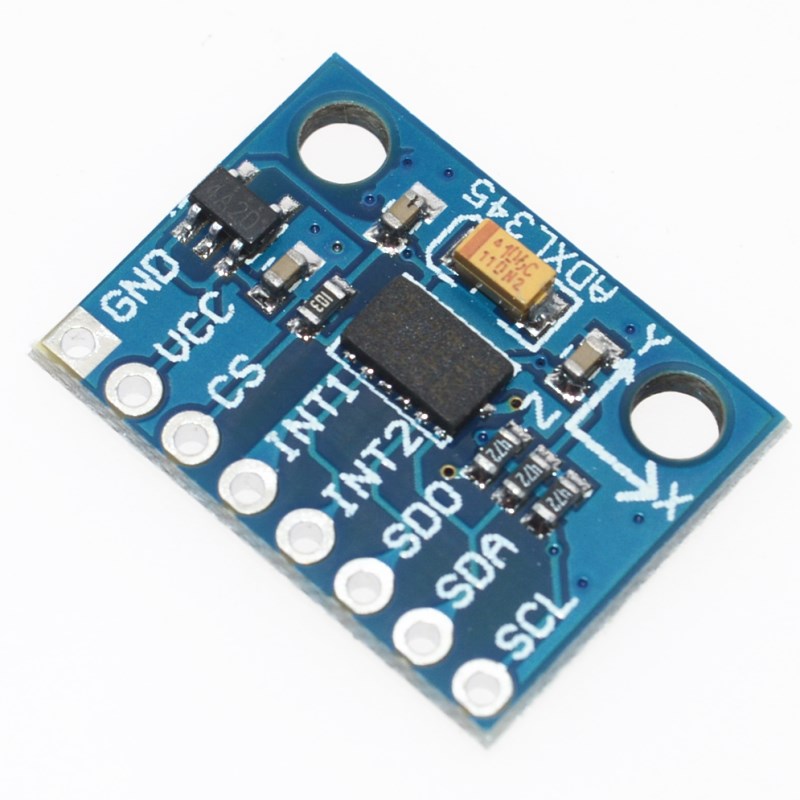
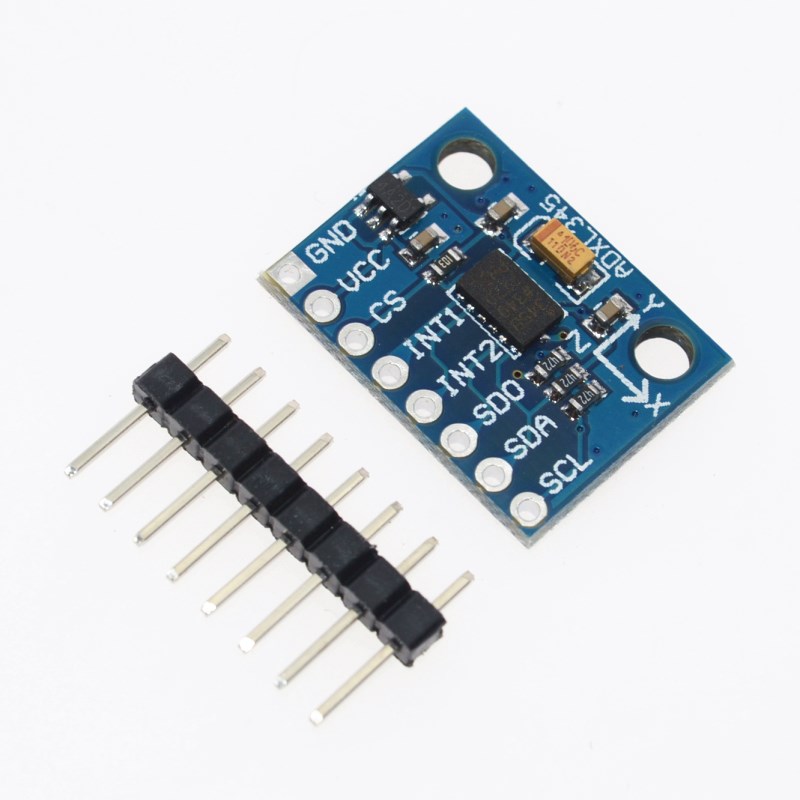
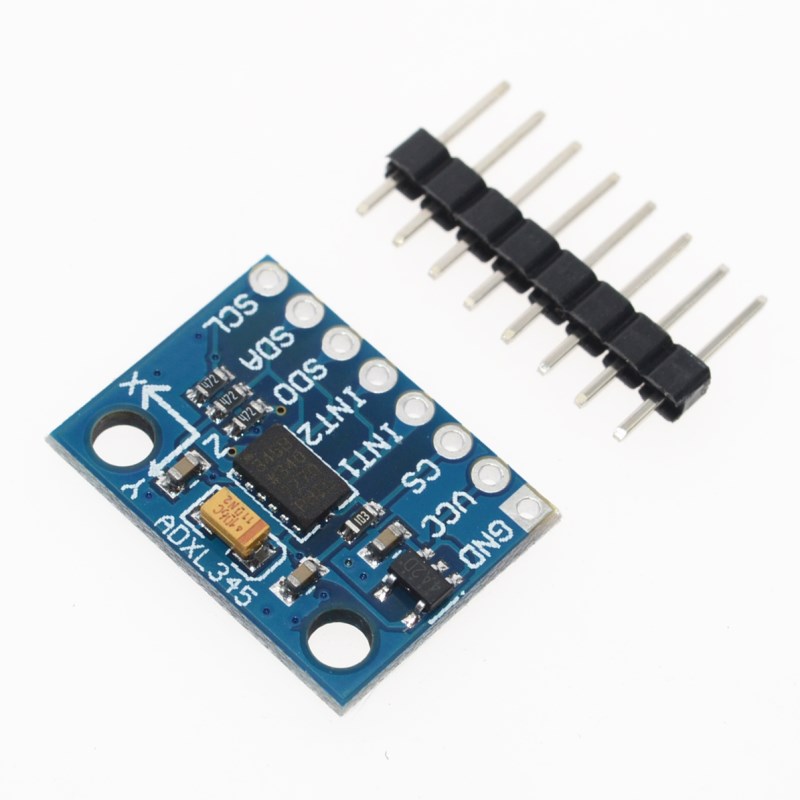
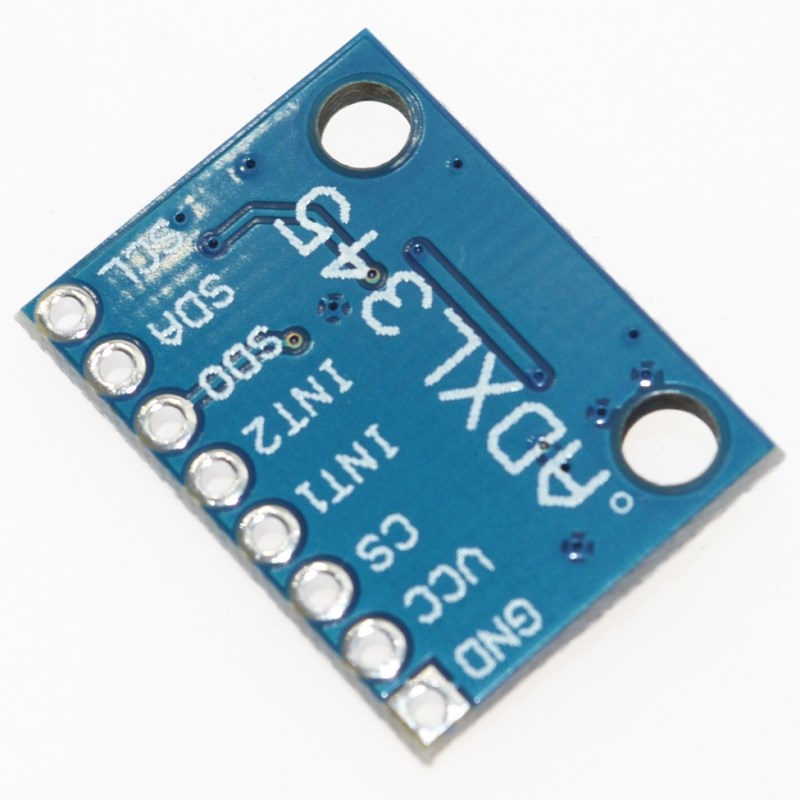
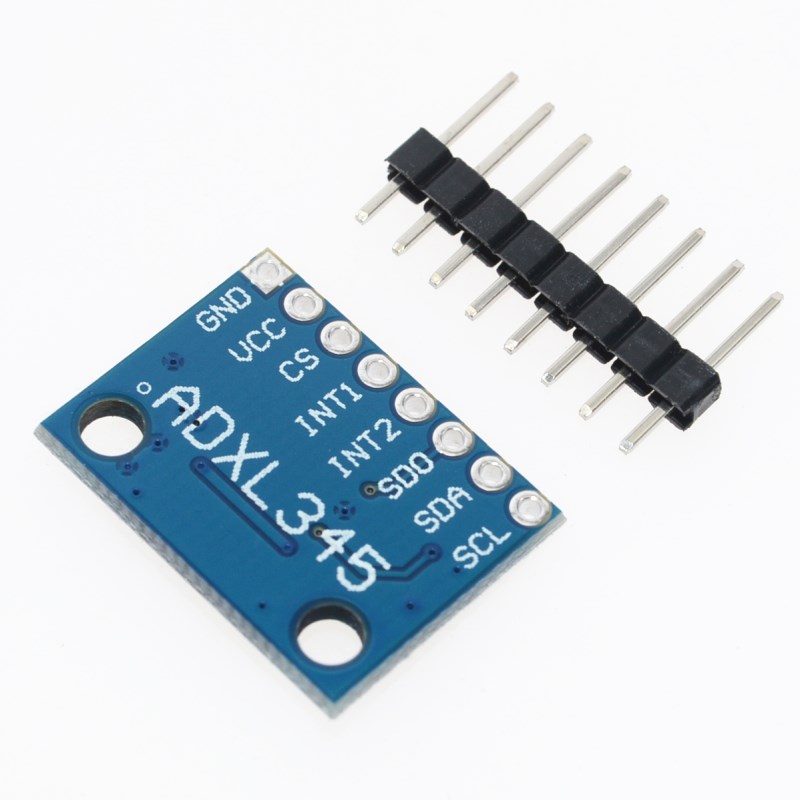
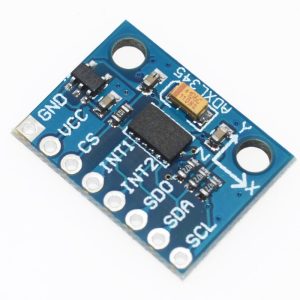
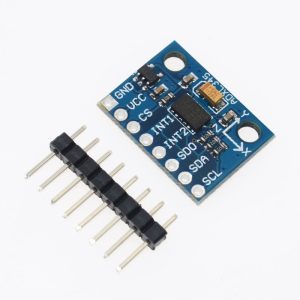
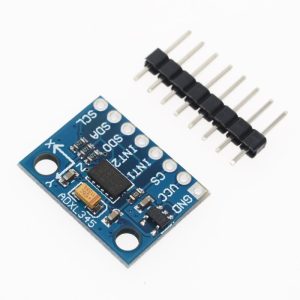
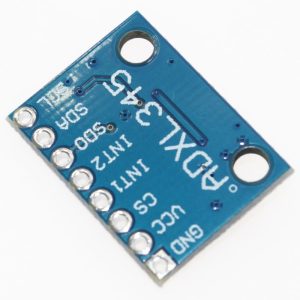
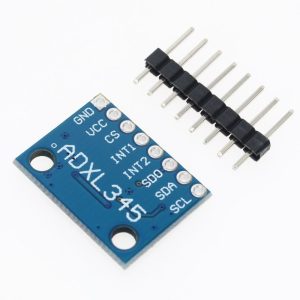
GY-291 ADXL345 Digital 3-Axis Accelerometer Module with Pin Header (Tilt/Gravity Sensor – New Loose Chips)

SKU: FA2169
Operating Voltage

3.3V – 5V DC

Interface

I²C (up to 400kHz) / SPI (up to 10MHz)

Acceleration Ranges

±2g, ±4g, ±8g, ±16g (selectable)

Resolution

13-bit (at ±16g) / 10-bit (at ±2g)

Sensitivity

3.9 mg/LSB (at ±16g) to 256 mg/LSB (at ±2g)

Current Consumption

40 µA (active), 0.1 µA (standby)

Operating Temperature

-40°C to +85°C

Dimensions (Module)

21mm × 15mm × 4mm (with headers)

Description

The GY-291 ADXL345 is a high-precision, low-power, 3-axis accelerometer module capable of measuring acceleration with a selectable range of up to ±16g. Built around Analog Devices’ renowned ADXL345 IC, this module is designed for tilt sensing, motion detection, gravity measurement, and vibration analysis in both consumer and industrial applications.

Unlike many basic accelerometers, the ADXL345 features 13-bit resolution at ±16g, allowing it to detect inclination changes as small as 0.25°. The module supports both I²C and SPI digital interfaces, making it compatible with a wide range of microcontrollers including Arduino, STM32, ESP32, Raspberry Pi, and other 3.3V or 5V logic systems (with onboard voltage regulation).

This version comes with pre-soldered pin headers for easy breadboard or PCB mounting. The “New Loose Chips” designation ensures you receive fresh stock with genuine ADXL345 ICs, not reclaimed or counterfeit components. Whether you are designing a motion-controlled robot, a vehicle data logger, a wearable device, or an industrial tilt sensor, the GY-291 delivers reliable, noise-resistant measurements in a compact form factor.


Key Features

  • Genuine ADXL345 IC – High accuracy and long-term stability, not cloned or refurbished.

  • Selectable Measurement Ranges – ±2g, ±4g, ±8g, or ±16g via software command.

  • High Resolution – 13-bit resolution at ±16g (up to 10-bit at lower ranges).

  • Dual Digital Interfaces – Supports I²C (up to 400 kHz) and SPI (up to 10 MHz).

  • Low Power Consumption – 40 μA in measurement mode, 0.1 μA in standby.

  • Onboard Voltage Regulation – Accepts 3.3V to 5V DC input; logic level shifting included.

  • Built-in Motion Sensing Features – Tap/double-tap detection, free-fall sensing, activity/inactivity monitoring.

  • Compact & Pre-assembled – Comes with soldered 2.54mm pitch pin headers, ready to use.


Technical Specifications 

Parameter Value
Operating Voltage 3.3V – 5V DC
Interface I²C (up to 400kHz) / SPI (up to 10MHz)
Acceleration Ranges ±2g, ±4g, ±8g, ±16g (selectable)
Resolution 13-bit (at ±16g) / 10-bit (at ±2g)
Sensitivity 3.9 mg/LSB (at ±16g) to 256 mg/LSB (at ±2g)
Current Consumption 40 µA (active), 0.1 µA (standby)
Operating Temperature -40°C to +85°C
Dimensions (Module) 21mm × 15mm × 4mm (with headers)

Typical Usage

  • Tilt & Inclination Sensing – Solar panel tracking, robotic arm positioning, vehicle leveling.

  • Motion Detection – Intrusion alarms, vibration monitors, impact recorders.

  • Wearable Electronics – Step counting (pedometer), gesture recognition, fall detection.

  • IoT Sensors – Remote equipment monitoring, smart agriculture tilt sensors.

  • Data Logging – Record acceleration during vehicle or aircraft movement.

  • Game Controllers & HMI – Motion-based user input devices.

  • Industrial Predictive Maintenance – Detect abnormal machine vibration.

Q: Does this module work with Arduino Uno?

Yes. Connect VCC to 5V, GND to GND, SDA to A4 (or dedicated SDA), and SCL to A5 (or dedicated SCL). Use the standard ADXL345 Arduino library.

Q: Can I use this module with a 3.3V logic system like ESP32 or Raspberry Pi?

Absolutely. The module accepts 3.3V–5V power and includes level shifting, making it safe for 3.3V logic I/O.

Q: What is the difference between GY-291 and older GY-291 versions?

The GY-291 designation typically includes the ADXL345 chip with improved PCB layout and better decoupling capacitors for reduced noise. This version uses new, loose (unreeled) genuine chips, not bulk recycled parts.

Q: How do I switch between I²C and SPI modes?

By default, the module is in I²C mode. To enable SPI, leave the SDO/ALT ADDRESS pin unconnected and use CS as chip select. Refer to the ADXL345 datasheet for SPI wiring.

Q: Can I measure static gravity (tilt) and dynamic acceleration at the same time?

Yes. The ADXL345 outputs total acceleration (gravity + motion). Filtering techniques in software can separate tilt (low frequency) from vibration/motion (high frequency).

Q: Does it support tap/double-tap detection?

Yes. The chip has built-in tap detection registers. You can configure thresholds, timing, and which axes to monitor — ideal for wake-on-tap functions.

Q: What is the maximum update rate?

The ADXL345 can output data up to 3200 Hz (3.2 kHz) in low-noise mode, or up to 1600 Hz in normal mode.

Q: Is calibration required for tilt measurement?

For basic tilt (±1–2° accuracy), no calibration is needed. For higher precision (≤0.5°), a simple offset and sensitivity calibration using a level surface is recommended.

Q: Can this module be used outdoors or in harsh environments?

The bare PCB is not waterproof, but the IC itself is rated from -40°C to +85°C. For outdoor use, protect the module inside an IP-rated enclosure.

Q: Do you provide a datasheet or example code?

The ADXL345 datasheet from Analog Devices is freely available online. Example code for Arduino, MicroPython, and Raspberry Pi is available in standard repositories (e.g., Adafruit ADXL345 library). We do not include a paper datasheet.