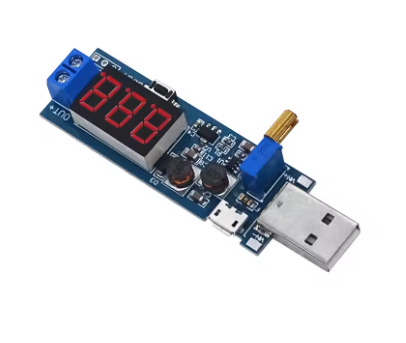
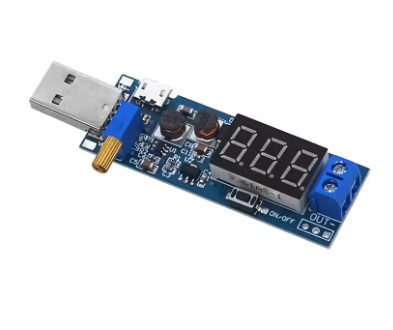
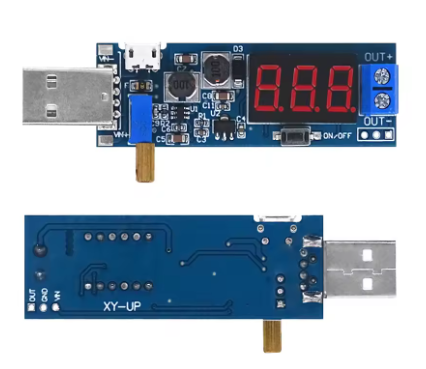
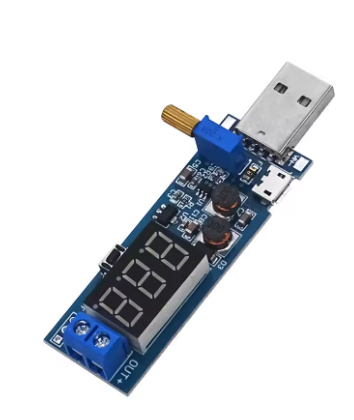
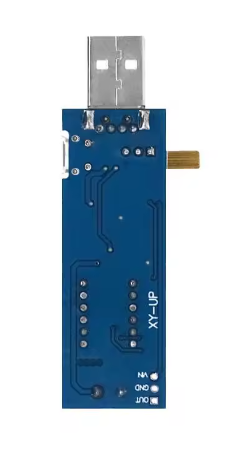
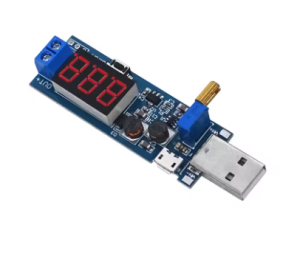
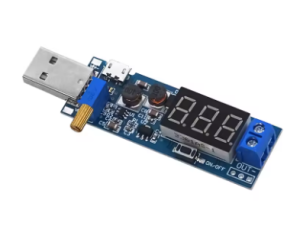
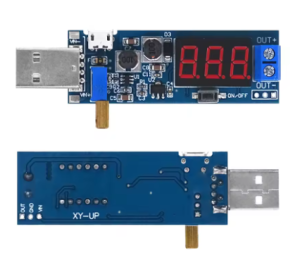
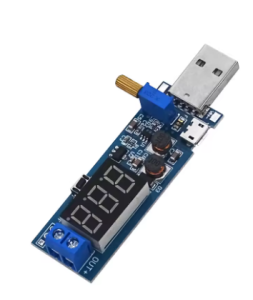
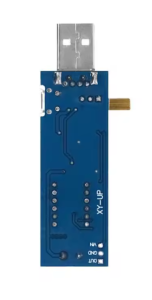
Adjustable DC-DC USB Boost Converter Module – Step-Up 5V to 3.3V/9V/12V/24V Voltage Regulator for DIY Electronics & Desktop Power Supply

SKU: FA2102-4
Input Voltage

5V DC (via USB) or 2V – 24V (via solder pads)

Output Voltage Range

Adjustable 3V – 28V (set via potentiometer)

Maximum Output Current

2A (peak) / 1A (recommended continuous)

Conversion Efficiency

Up to 93-97%

Switching Frequency

1.2 MHz

Output Ripple

< 50mV (typical)

Operating Temperature

-40°C to +85°C

Module Dimensions

30 × 17 × 14 mm (approx.)

Weight

~7g

Description

The Adjustable DC-DC USB Boost Converter Module is a compact and highly efficient power solution designed to elevate standard 5V USB voltage to higher, adjustable output levels. Whether you need to power a 12V LED strip from a power bank, run a 9V pedal from a USB port, or create a variable desktop power supply, this tiny module delivers reliable performance in a convenient USB stick form factor.

At the heart of this module is the MT3608 chip – a constant frequency, current mode step-up converter that operates at a high 1.2MHz switching frequency . This advanced design integrates an 80mΩ power MOSFET and supports up to 2A output current, making it ideal for small to medium power applications .

How It Works: As a dedicated “Boost” converter, this module only steps voltage up. It takes a standard 5V USB input and efficiently increases it to a higher, adjustable output voltage ranging from approximately 6V up to 28V . The onboard multi-turn potentiometer allows you to dial in common voltages such as 9V, 12V, 15V, 18V, or 24V with a simple screwdriver turn .

Key Design Benefits:

  • Plug-and-Play Convenience: Built-in Micro USB or USB Type-C input port allows direct connection to any USB charger, power bank, or computer port

  • High Efficiency: Up to 93-97% conversion efficiency minimizes power loss and heat generation

  • Compact Form Factor: Small enough to fit inside most project enclosures or plug directly into a USB port

  • Adjustable Output: Multi-turn potentiometer allows precise voltage setting from ~5V to 28V

Important Operating Note: This is a step-up (boost) converter only. The output voltage must be set higher than the input voltage (typically at least 2V higher). It cannot step down voltage – for example, you cannot use it to convert 12V to 5V .

Whether you are a hobbyist powering portable electronics, an IoT developer needing a 12V rail from a USB power bank, or a professional creating a custom bench power supply, this USB boost converter module provides a simple, reliable, and low-cost solution for all your voltage boosting needs.

Key Features

  • 5V USB Input – Built-in USB connector (Micro USB or Type-C) allows direct connection to any USB charger, power bank, or computer port

  • Adjustable Output Voltage – Output can be set from approximately 5V up to 28V via onboard multi-turn potentiometer (common settings: 9V, 12V, 15V, 18V, 24V)

  • 2A Maximum Output Current – Supports up to 2A peak output current (1A recommended for continuous use)

  • High Conversion Efficiency – Up to 93-97% efficiency minimizes power loss and heat generation

  • 1.2MHz Switching Frequency – High-frequency operation allows for small components and low output ripple

  • Wide Compatibility – Powers 3.3V, 5V, 9V, 12V, 15V, 18V, and 24V devices from a single 5V USB source

  • Integrated Power MOSFET – Built-in 80mΩ, 4A switch handles high current efficiently

  • Small Form Factor – Compact dimensions (approx. 30-36mm × 17mm) ideal for portable projects

  • Built-in Protection – Features over-current limiting and thermal overload protection

  • LED Indicator – Power indicator LED shows when module is active

Technical Parameters

Parameter Value
Input Voltage 5V DC (via USB) or 2V – 24V (via solder pads)
Output Voltage Range Adjustable 3V – 28V (set via potentiometer)
Maximum Output Current 2A (peak) / 1A (recommended continuous)
Conversion Efficiency Up to 93-97%
Switching Frequency 1.2 MHz
Output Ripple < 50mV (typical)
Operating Temperature -40°C to +85°C
Module Dimensions 30 × 17 × 14 mm (approx.)
Weight ~7g

Usage Guide

How It Works

The MT3608 boost converter works by rapidly switching current through an inductor to build a magnetic field, then releasing that stored energy at a higher voltage. The output voltage is regulated by adjusting the duty cycle based on feedback from a resistor divider network, controlled by the onboard potentiometer .

Input Connection Options

The module offers two convenient ways to provide input power:

Connection Method Description
Micro USB / USB Type-C Port Plug directly into any standard USB charger, power bank, or computer USB port
VIN+ / VIN- Solder Pads Solder wires directly for custom input sources (2V-24V DC)

Wiring Instructions

Method 1 – Using USB Input (Recommended):

  1. Plug the module’s USB connector into a standard 5V USB source (phone charger, power bank, computer)

  2. The power indicator LED will illuminate

  3. Connect your load to the output pads (OUT+ and OUT-)

Method 2 – Using Solder Pad Input:

  1. Solder wires to VIN+ and VIN- pads

  2. Connect VIN+ to the positive terminal of your DC power source (2V-24V)

  3. Connect VIN- to the negative terminal (ground)

  4. Connect your load to OUT+ and OUT- pads

Adjusting the Output Voltage

⚠️ CRITICAL: The “Endless Turn” Issue

This is the most important point for new users. The module uses a multi-turn potentiometer (25-30 full rotations from end to end) . Many modules ship with the potentiometer at its maximum resistance position.

If you turn the screw and see no voltage change, you need to turn it counter-clockwise for 10-20 full rotations before the voltage begins to increase .

Proper Adjustment Procedure:

  1. Power the module using a 5V USB source

  2. Connect a digital multimeter to the output pads (OUT+ and OUT-)

  3. Use a small screwdriver to turn the blue potentiometer:

    • Turn clockwise to INCREASE output voltage

    • Turn counter-clockwise to DECREASE output voltage

  4. Monitor the multimeter while adjusting

  5. Adjust before connecting load – It is recommended to set output voltage with no load connected

Manufacturer Recommended Startup Procedure:

“Before power on it, please rotate the potentiometer with 15 laps in a clockwise direction”

Typical Voltage Settings by Application:

Desired Output Use Case Notes
3.3V Low-voltage microcontrollers Requires input > output? Note: This is a boost converter
5V USB device power Pass-through (minimal boost)
9V Guitar pedals, some sensors Common for audio equipment
12V LED strips, fans, relays Most popular setting for DIY projects
15V Some LCD displays Intermediate voltage
18V Power tools, some electronics Higher voltage applications
24V Industrial sensors, LED arrays Maximum practical output

Important: The output voltage must be at least 2V higher than the input voltage for proper regulation . With 5V USB input, the minimum practical output is approximately 7V-8V. If you need 3.3V or 5V output from a 5V input, this is not the correct module (you would need a buck converter or direct connection).

Current Limitations and Thermal Management

While the MT3608 chip is rated for 2A peak, practical limitations apply:

Condition Recommended Max Current
Continuous operation (no heatsink) 1A
Peak (short duration) 2A
At higher output voltages (>12V) Reduce current proportionally

Power Calculation Examples (1A recommended limit):

Output Voltage Max Power (1A) Common Application
9V 9W Guitar pedals
12V 12W LED strips (approx. 1m)
24V 24W Industrial sensors

Important Current Relationship: As a boost converter, input current is higher than output current. For 12V @ 1A output from 5V input, the USB source must supply approximately 2.4A-2.6A. Ensure your USB power source can deliver sufficient current.

Heat Management Tips:

  • For loads approaching 1A continuous, ensure good airflow around the module

  • The module may become warm during operation – this is normal

  • If too hot to touch, reduce the load or add a small heatsink

Important Operating Restrictions

Voltage Limitation (Critical):
This is a step-up (boost) converter only. The output voltage must be higher than the input voltage . It cannot step down voltage. If you need to convert 12V to 5V, you need a buck converter, not this module.

Minimum Input Voltage:
The module can operate with input voltages as low as 2V (via solder pads), making it compatible with single-cell Li-Ion batteries (3.7V) . However, when using the USB connector, input is limited to standard 5V USB specifications.

Reverse Polarity Warning:
Most versions of this module do NOT have reverse polarity protection. Double-check connections when using solder pad inputs .

Example Applications

Use Case Input Source Output Setting Notes
12V LED Strip from Power Bank 5V USB power bank 12V Powers ~1m of LED strip
9V Guitar Pedal Power 5V USB charger 9V Clean power for effects pedals
Variable Bench Supply 5V USB adapter 5V-24V adjustable DIY desktop power supply
Portable Fan Power USB power bank 12V Run standard 12V fans
Arduino/ESP Power USB battery pack 5V Direct pass-through (no boost needed)
Sensor Network Solar USB charger 12V Remote sensor power

Troubleshooting Common Issues

Output voltage not changing:

  • Turn the potentiometer counter-clockwise 15-20 full turns and try again

  • Ensure the module is powered and multimeter is connected correctly

  • The potentiometer is multi-turn – keep turning

Output voltage equal to input voltage:

  • The potentiometer is likely at minimum setting – turn clockwise many turns

  • Ensure the module is not in pass-through mode

Module not working:

  • Check input power source (should be 5V USB)

  • Verify power indicator LED is illuminated

  • Check for proper ground connections

Installation Tips

  • Initial Setup: Adjust output voltage with no load connected first

  • Keep Wires Short: Long output wires add resistance and voltage drop

  • USB Cable Quality: Use good quality USB cables for reliable power delivery

  • Heat Dissipation: For continuous loads near 1A, ensure adequate airflow

  • Potentiometer Sensitivity: Requires a very light touch for precise adjustment

Q: Why is my output voltage not changing when I turn the screw?

This is the most common issue. The module uses a multi-turn potentiometer (25-30 full rotations from end to end) . If you turn the screw and see no change, turn it counter-clockwise for 15-20 full rotations until the voltage begins to change . Many modules ship with the potentiometer at its maximum or minimum position.

Q: Can I use this module to step down voltage (e.g., 12V to 5V)?

No. This module is a boost (step-up) converter only. It cannot step down voltage . If your input voltage is higher than your desired output, the output will roughly equal the input voltage, which may damage your load. For step-down applications, you need a buck converter module.

Q: What is the maximum current I can draw from this module?

The chip is rated for 2A peak, but for continuous use, it is recommended to keep the current under 1A . At 2A, the module will get very hot and may fail. For higher current requirements, consider a higher-power boost converter.

Q: Can I power this module from a power bank?

Yes. This is one of the most popular uses. Connect the module’s USB plug directly to any standard USB power bank. The module will draw power and boost it to your desired output voltage

Q: What is the minimum output voltage?

When powered from 5V USB, the output voltage must be at least 2V higher than the input for proper regulation . The minimum practical output is approximately 7V-8V. For 3.3V or 5V output from 5V input, you do not need a boost converter – connect directly or use a buck converter for lower voltages.

Q: What is the efficiency of this module?

The MT3608 achieves up to 93-97% efficiency under optimal conditions (moderate load, small input-output voltage difference) . Efficiency drops with very large voltage differences or at maximum current.

Q: Why does my output voltage drop when I connect a load?

Possible causes:

  • Load exceeds the module’s current capability (reduce load)

  • Input power source cannot supply sufficient current (check USB source rating)

  • The module is overheating (add cooling or reduce load)

  • Wires are too long or thin causing voltage drop

Q: Can I use this module with a 3.7V lithium battery?

Yes. When using the solder pad inputs (VIN+/VIN-), the module accepts input voltages as low as 2V . You can power it directly from a single 18650 or Li-Po cell to boost to 5V, 9V, or 12V.

Q: What is included in the package?
  • 1 x Adjustable DC-DC USB Boost Converter Module

  • (USB cable not included unless specified)

Q: Does the module have short circuit protection?

The MT3608 chip includes over-current limiting, but this is not a full short circuit protection feature . Avoid prolonged short circuits on the output as they may damage the module.