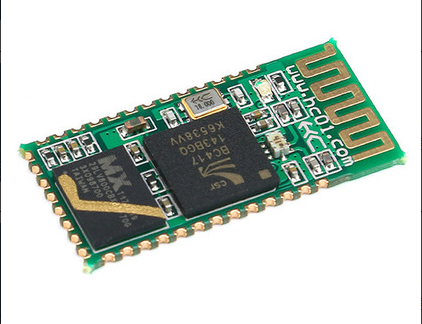
HC-05 BLE Slave Board (Classic Bluetooth Compatible)

SKU: FA2039-2
Bluetooth Protocol

Bluetooth V2.0 + EDR (Classic)

Operating Voltage

3.6V – 6.0V DC

Operating Current

30mA (Pairing); 8mA – 10mA (Connected)

Logic Level (I/O)

3.3V (VCC is 5V compatible; RX requires 3.3V logic)

Frequency Band

2.4GHz ISM Band

Modulation

GFSK (Gaussian Frequency Shift Keying)

Default Baud Rate

9600 bps

Default Pairing PIN

1234 or 0000

Sensitivity

≤ -80dBm

Transmission Power

Class 2 (+4dBm)

Interface Pins

VCC, GND, TXD, RXD, STATE, EN/KEY

Product Description
The HC-05 Slave Board is a highly reliable Bluetooth 2.0+EDR (Enhanced Data Rate) module designed to add wireless serial connectivity to any electronic system. While the standard HC-05 is famous for its Master/Slave dual-role capability, this specific Slave-Optimized Board is pre-configured and hardware-tuned for seamless “Peripheral” operation. It acts as a wireless serial bridge, allowing your hardware to “listen” for connections from smartphones, tablets, laptops, and Master Bluetooth modules.
This board is the go-to solution for developers who need a “set-and-forget” wireless link. Once paired, it functions exactly like a physical serial cable—data sent to the module’s RX pin is wirelessly transmitted to the paired device, and vice versa. Built on a high-quality breakout board with an integrated 3.3V regulator and status LED, it is fully compatible with ArduinoRaspberry Pi, and Industrial PLC systems using standard TTL serial logic.
Key Features
  • Classic Bluetooth Compatibility: Fully supports Bluetooth V2.0 + EDR for maximum compatibility with older and modern Android and Windows devices.
  • Transparent Data Transmission: Once a connection is established, the module enters a “Transparent Mode,” passing serial data back and forth without any protocol overhead.
  • Optimized Slave Firmware: Pre-configured for high-stability slave operation, ensuring fast discovery and consistent pairing with master controllers.
  • Broad Voltage Range: The onboard power management chip supports an input voltage of 3.6V to 6V, making it compatible with both 5V USB power and battery packs.
  • Industrial Build Quality: Features a heavy-duty PCB with gold-plated pins and a clear status LED for visual diagnostics (Blinking = Searching; Steady/Double-Flash = Connected).
  • Full Customization: Supports a wide range of AT commands to change the device name, pairing PIN, and baud rate to suit specific project or branding requirements.
Usage Scenarios
  • Individual & Hobbyist: Smartphone-controlled Arduino robots, wireless home automation switches, and DIY wireless data loggers for environmental sensors.
  • Business & Commercial: Wireless serial debugging for factory machinery, point-of-sale (POS) wireless receipt printers, and wireless diagnostic interfaces for automotive or medical equipment.
Q: Can this module connect to an iPhone or iPad?

No. This module uses Bluetooth Classic (2.0). Apple iOS devices only support “Bluetooth Low Energy” (BLE) for serial data. This module is perfectly compatible with Android, Windows, macOS, and Linux

Q: What is the difference between this and a standard HC-05 Master/Slave module?

This board is firmware-optimized for Slave Mode. While it can technically be switched to Master mode via AT commands, it is physically and electronically tuned to provide the most stable connection when acting as a peripheral (the device being searched for)

Q: Why can't my 5V Arduino talk to the module?

While the VCC pin accepts 5V, the RXD pin uses 3.3V logic. For long-term stability, we recommend using a simple voltage divider (two resistors) between the Arduino TX and the HC-05 RXD to drop the 5V signal to 3.3V.

Q: Can I change the Bluetooth name that shows up on my phone?

Yes. By entering AT Command Mode (holding the EN/KEY pin high or pressing the button during power-up), you can send the command AT+NAME=MyCustomDevice to personalize the module

Q: Does it support high-speed data?

The module supports baud rates up to 115200 bps for serial transmission, which is more than enough for text, sensor data, and control commands. It is not intended for high-fidelity audio or video streaming.

Q: What does the "STATE" pin do?

The STATE pin is a 3.3V output that reflects the connection status. You can connect this to an LED or a microcontroller pin to programmatically detect when a wireless connection has been established