Description
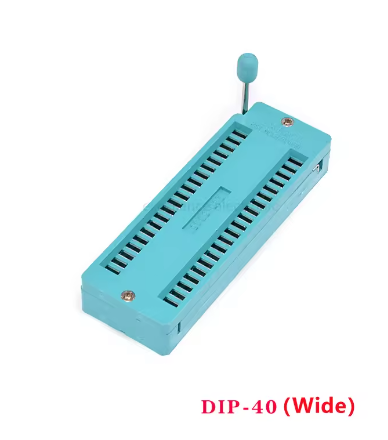
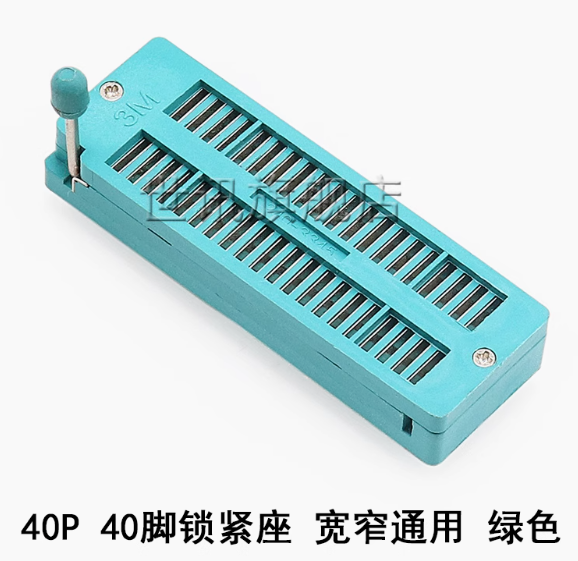
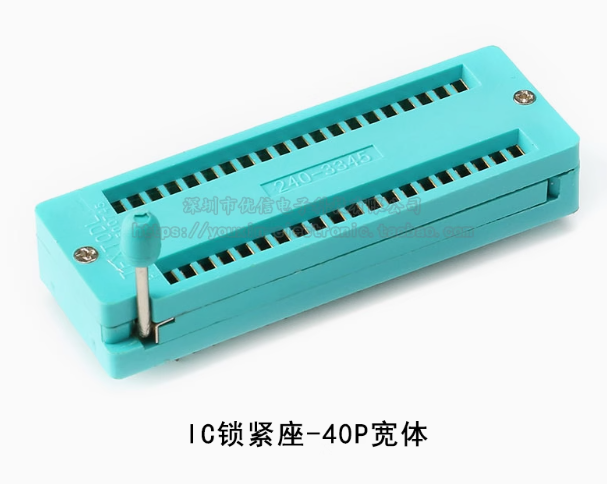
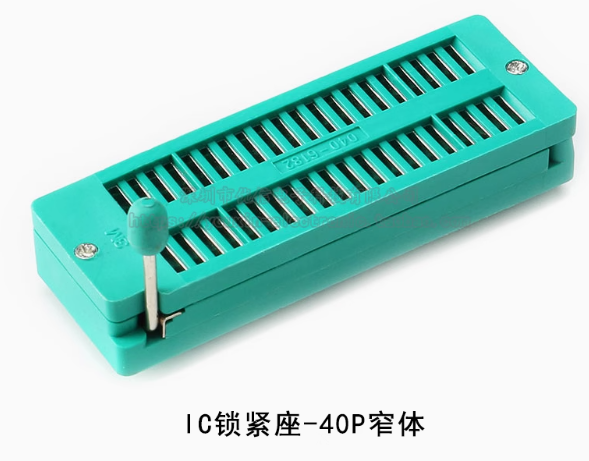
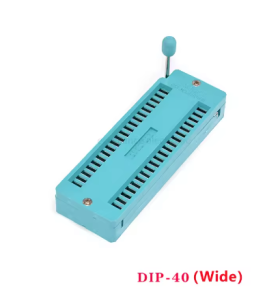
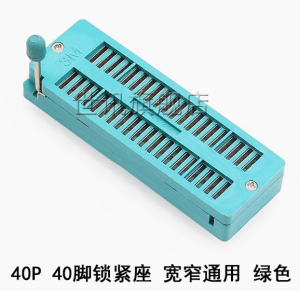
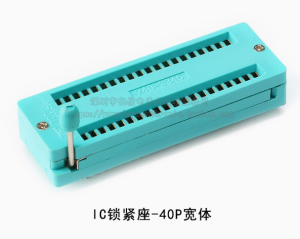
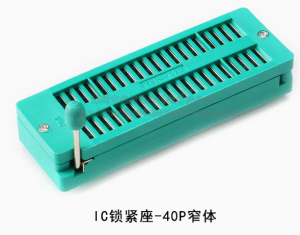
The 40-Pin Wide Body Zero Insertion Force (ZIF) Socket is a premium industrial-grade connector designed for frequent chip swapping and testing.Unlike standard IC sockets that require physical force to insert or remove components—often leading to bent or broken pins—this ZIF socket uses a specialized lever-actuated locking mechanism.
When the lever is raised, the internal contacts open completely, allowing a microcontroller (like the AT89S52 or Atmega series) or an EPROM chip to be dropped in with zero resistance. Once the lever is lowered, the socket’s high-conductivity contacts firmly grip the chip pins, ensuring a stable electrical connection. The “Wide Body” design accommodates both standard and slightly wider integrated circuits, making it an indispensable tool for programmers, development boards, and IC testing fixtures.
Key Features
- Zero Insertion Force: Eliminates mechanical stress on delicate IC pins, significantly extending the life of your chips.
- Durable Lever Action: Features a reinforced metal or high-strength plastic lever for thousands of reliable open/close cycles.
- Universal Compatibility: Designed for any dual-inline package (DIP/DIL) integrated circuit with up to 40 pins and a standard 2.54mm (0.1″) pitch.
- Wide Body Format: Specifically engineered to fit wider 0.6″ (15.24mm) row-spacing ICs, while remaining compatible with narrower 0.3″ chips.
- Gold/Tin Plated Contacts: High-quality plating ensures low contact resistance and prevents oxidation over time.
- Breadboard & PCB Friendly: Standard pin spacing allows for easy mounting onto prototype boards, specialized testers, or DIY development kits.