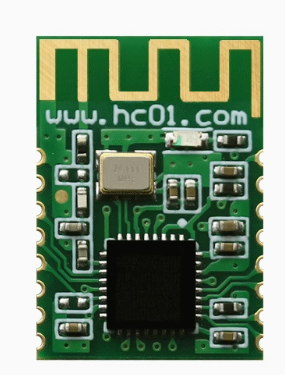
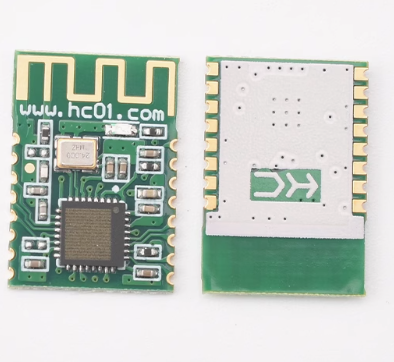
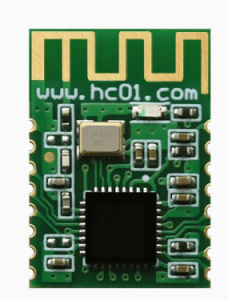
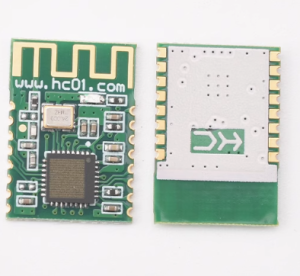
HC-04S Bluetooth Module [Original]

SKU: FA2039-5
Bluetooth Protocol

Bluetooth V2.0 + EDR (Classic)

Operating Voltage

3.6V – 6.0V DC

Operating Current

~35mA (Pairing); < 10mA (Connected)

Logic Level (I/O)

3.3V TTL (VCC is 5V compatible)

Communication Interface

UART (Universal Asynchronous Receiver/Transmitter)

Default Baud Rate

9600 bps

Default Pairing PIN

1234

Frequency Band

2.4GHz ISM Band

Transmission Range

~10 Meters (Class 2)

Modulation

GFSK (Gaussian Frequency Shift Keying)

Product Description
The Original HC-04S is a professional-grade, high-performance Bluetooth 2.0+EDR (Enhanced Data Rate) serial module specifically optimized for Industrial Slave-only operation. While standard modules prioritize versatility, the HC-04S is engineered for maximum stability and reduced latency in serial data pass-through applications.
As an “Original” series module, it features an authentic chipset that ensures strict adherence to frequency standards, resulting in a cleaner signal and fewer dropped packets in environments with heavy 2.4GHz interference. The HC-04S acts as a transparent wireless bridge: once a Master device (like a smartphone or PC) connects to it, the module simply passes TTL serial data back and forth as if there were a physical cable. It is the ideal choice for developers who need a reliable, “plug-and-play” wireless interface for high-uptime systems.
Key Features
  • Optimized Slave Operation: Pre-configured as a dedicated Slave device for instant discovery and high-speed pairing with Android, Windows, and Linux Masters.
  • Original Industrial Chipset: Superior frequency stability and thermal resistance compared to generic clones, ensuring consistent performance from -25°C to +75°C.
  • Transparent Pass-Through: No complex Bluetooth stack programming is required; simply use standard Serial.print() commands from your microcontroller.
  • Wide Power Input: The 6-pin breakout board includes an onboard 3.3V LDO regulator, allowing it to be safely powered by any 3.6V to 6.0V DC source.
  • Low Latency & High Throughput: Refined firmware reduces the “handshake” time between packets, making it suitable for real-time control and high-frequency sensor logging.
  • Status LED Diagnostics: Features a bright onboard LED that provides immediate feedback: rapid flashing (Searching), steady/slow-double flash (Connected).

Usage Scenarios
  • Business & Commercial: Wireless serial debugging for high-end CNC and industrial machinery, point-of-sale (POS) wireless peripheral connection, and secure office access control logs.
  • Single User & Hobbyist: Professional-grade wireless remote control for Arduino/Raspberry Pi projects, wireless telemetry for RC vehicles, and DIY smart-home sensor hubs.
Q: Can the HC-04S connect to an iPhone?

No. Like all Bluetooth Classic modules, the HC-04S is not supported by iOS for serial data profiles. It is fully compatible with Android, Windows, macOS, and Linux

Q: What is the difference between the HC-04 and HC-04S?

The “S” version typically features a refined firmware stack that offers slightly faster connection recovery times and improved power efficiency during active data transmission compared to the standard HC-04.

Q: How do I change the module's name or Baud Rate?

Settings can be modified using AT Commands via a serial monitor while the module is unpaired. For example, sending AT+NAME=MySensor will update the broadcast name. Note: Commands must be sent with the correct line endings (NL/CR)

Q: Is it safe to use with a 5V Arduino Uno?

While the module’s power pin (VCC) is 5V-ready, the data pins (RX/TX) are 3.3V logic. To ensure the longest lifespan for the “Original” chipset, we recommend using a voltage divider (1kΩ and 2kΩ resistors) on the RX line of the HC-04S.

Q: Does it support Master mode?

No, the HC-04S is a Slave-only module. If you need a module that can proactively search for and connect to other Bluetooth devices, please look at our HC-05 Master/Slave modules.

Q: Will it lose its settings if the battery dies?

No. All configurations (Baud Rate, Name, PIN) are stored in the module’s internal non-volatile Flash memory and are preserved through power loss